
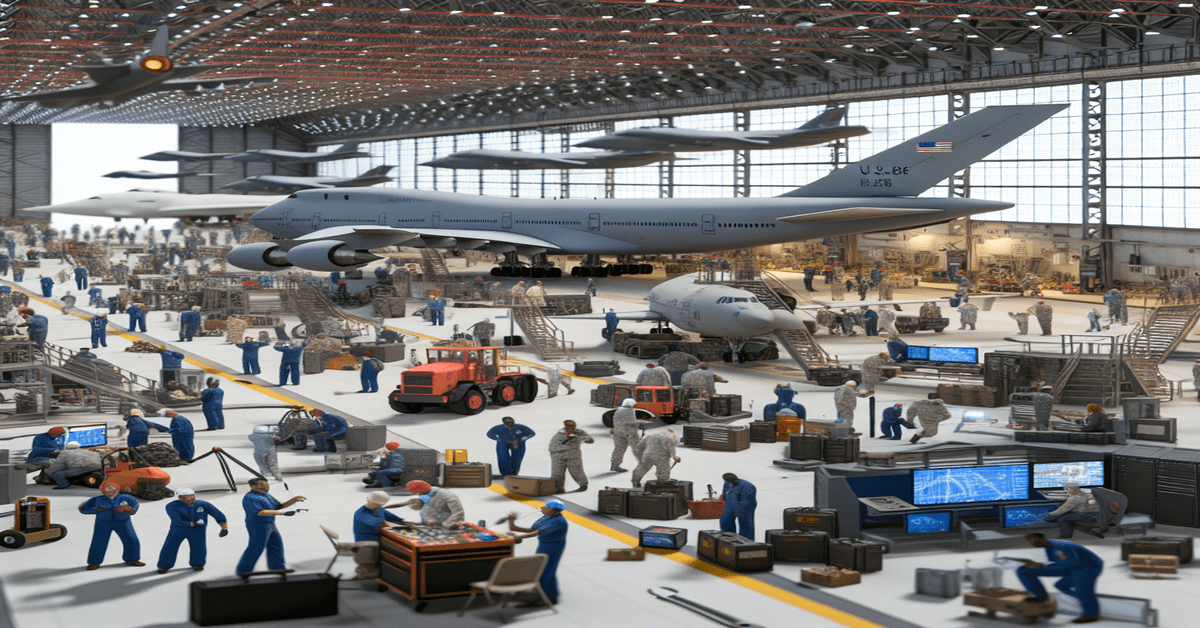
U.S. Air Force Expands C3 AI Contract to $450 Million for Predictive Maintenance and Analytics
The U.S. Air Force has significantly expanded its contract with C3 AI, increasing the ceiling from $100 million to an impressive $450 million. This substantial contract modification not only extends the potential work through October 2029 but also supports the broader deployment of C3 AI’s cutting-edge predictive analytics and aircraft maintenance platform, known as PANDA (Predictive Analytics and Decision Assistant) [1][4].
Revolutionizing Aircraft Maintenance with PANDA
PANDA is a game-changer in the world of aircraft maintenance, providing near-real-time monitoring and invaluable insights into the health of aircraft components. By leveraging the power of predictive analytics, PANDA enables the Air Force to proactively maintain its fleet, ultimately improving readiness and reducing lifecycle costs. This advanced platform is currently being applied to a wide range of Air Force aircraft, including the B-1 Lancer, C-5 Galaxy, KC-135 Stratotanker, C-17 Globemaster III, and C-130J Super Hercules [1][4].
The potential impact of PANDA on the Air Force’s operations cannot be overstated. By identifying potential issues before they escalate into costly repairs or grounded aircraft, the platform can help optimize maintenance schedules, reduce downtime, and ensure that the fleet remains mission-ready at all times. This proactive approach to maintenance not only enhances operational efficiency but also has the potential to save the Air Force millions of dollars in the long run.
PANDA: The System of Record for CBM+ and Predictive Maintenance
The Air Force Rapid Sustainment Office has recognized the immense value of PANDA, designating it as the system of record for Condition Based Maintenance Plus (CBM+) and predictive maintenance efforts. Powered by the C3 Agentic AI Platform and C3 AI Readiness application, PANDA aims to increase aircraft availability by an astonishing 25%, making it one of the largest AI deployments within the U.S. Department of Defense to date [1][4].
This designation is a testament to the effectiveness and reliability of PANDA in addressing the complex challenges of aircraft maintenance. By leveraging the power of AI and machine learning, PANDA can process vast amounts of data from various sources, including sensors, maintenance logs, and historical records, to identify patterns and anomalies that might otherwise go unnoticed. This deep analysis allows the platform to provide actionable insights and recommendations, empowering maintenance teams to make informed decisions and take proactive measures to keep the fleet in top condition.
Implications for the Aviation Industry
The expansion of the C3 AI contract with the U.S. Air Force has significant implications for the aviation industry as a whole. As one of the largest and most technologically advanced air forces in the world, the U.S. Air Force often sets the standard for best practices and innovative solutions in aircraft maintenance and operations. The successful implementation of PANDA and its designation as the system of record for CBM+ and predictive maintenance efforts is likely to inspire other military branches and commercial airlines to explore similar solutions.
Moreover, the substantial investment in PANDA and its broader deployment underscores the growing importance of AI and predictive analytics in the aviation industry. As aircraft become increasingly complex and the costs associated with maintenance continue to rise, the ability to predict and prevent issues before they occur becomes paramount. By embracing cutting-edge technologies like PANDA, the industry can not only improve safety and reliability but also reduce costs and enhance overall efficiency.
The Future of AI in Aviation
The expansion of the C3 AI contract with the U.S. Air Force is just the beginning of a new era in aviation, where AI and predictive analytics will play an increasingly crucial role. As the technology continues to evolve and mature, we can expect to see even more sophisticated applications of AI in aircraft maintenance, operations, and beyond.
For instance, AI-powered systems like PANDA could be extended to optimize fuel efficiency, improve flight planning, and enhance passenger safety. By analyzing vast amounts of data from various sources, including weather patterns, air traffic, and passenger behavior, these systems could provide valuable insights and recommendations to pilots, air traffic controllers, and airline executives, helping them make more informed decisions and improve overall performance.
Furthermore, the success of PANDA in the U.S. Air Force could pave the way for similar initiatives in other industries, such as the automotive, manufacturing, and energy sectors. The principles of predictive maintenance and AI-driven analytics are applicable across a wide range of domains, and the lessons learned from the Air Force’s experience with PANDA could help guide the development and implementation of similar solutions in other fields.
Conclusion
The expansion of the C3 AI contract with the U.S. Air Force represents a significant milestone in the adoption of AI and predictive analytics in the aviation industry. With the broader deployment of PANDA and its designation as the system of record for CBM+ and predictive maintenance efforts, the Air Force is poised to reap the benefits of enhanced fleet readiness, reduced lifecycle costs, and improved operational efficiency.
As the aviation industry continues to evolve and face new challenges, the successful implementation of AI-powered solutions like PANDA will be crucial in ensuring the safety, reliability, and sustainability of aircraft operations. By embracing these cutting-edge technologies and investing in their development and deployment, the industry can position itself for success in the years to come.
What are your thoughts on the expanding role of AI in aircraft maintenance and operations? Have you seen similar initiatives in your organization or industry? Share your experiences and insights in the comments below, and let’s continue the conversation on how AI can revolutionize the way we approach maintenance and beyond.
#AircraftMaintenance #PredictiveAnalytics #ArtificialIntelligence #USAF #C3AI
-> Original article and inspiration provided by LeadsProMax.ai
-> Connect with one of our LeadsProMax.ai Strategists today at LeadsProMax.ai
