
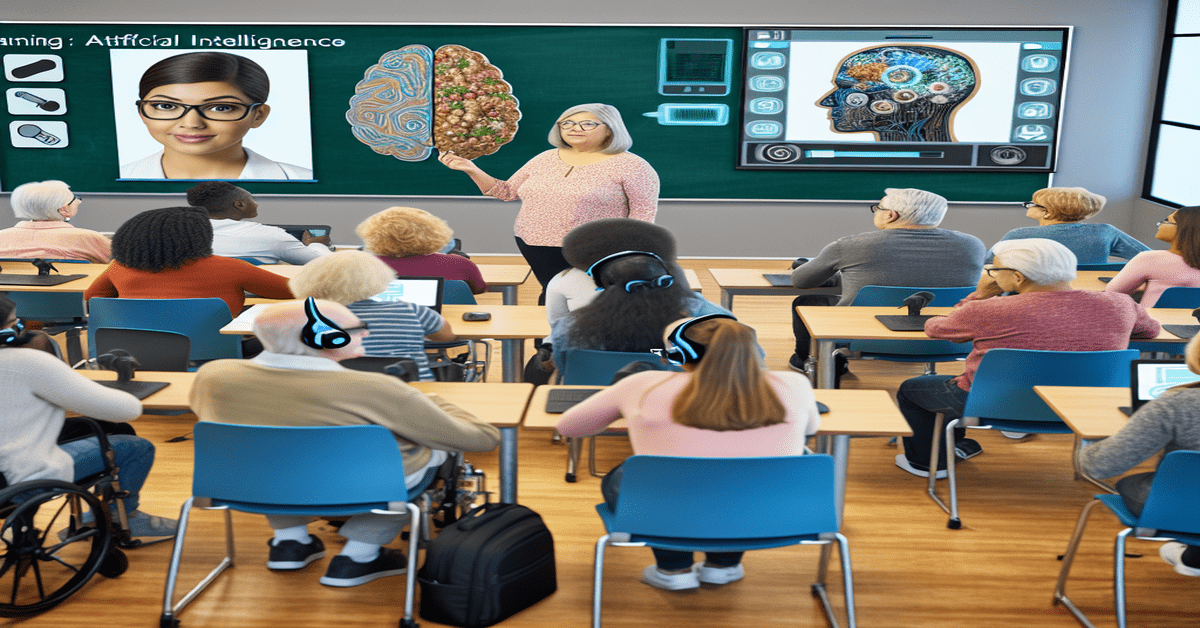
Empowering Seniors in the Age of AI: Navigating Benefits, Risks, and the Future
In a world where artificial intelligence (AI) is rapidly transforming our daily lives, older adults in the United States are facing a unique challenge: adapting to a technology that is both foreign and increasingly ubiquitous. As AI continues to shape the way we communicate, access information, and make decisions, it is crucial for seniors to understand its impact on their lives. Recognizing this need, classes are being held across the country to educate seniors about AI, addressing both its potential benefits and the risks it poses.
The Promise of AI for Seniors
For many older adults, AI offers a wealth of opportunities to improve their quality of life. One of the most significant benefits is the potential to alleviate loneliness, a common issue among seniors. AI-powered chatbots and virtual assistants can provide companionship and support, helping to combat feelings of isolation and depression. Additionally, AI can facilitate medical appointments and help seniors manage their health more effectively. By providing reminders for medication, tracking vital signs, and even detecting early signs of illness, AI has the potential to revolutionize healthcare for older adults.
However, the benefits of AI extend beyond personal well-being. As more services move online, AI can help seniors navigate complex systems and access essential resources. From ordering groceries to booking transportation, AI-powered tools can simplify everyday tasks and help seniors maintain their independence. Moreover, AI can help bridge the digital divide by providing intuitive interfaces and personalized support, ensuring that older adults are not left behind in an increasingly technology-driven world.
The Risks of AI: Misinformation, Scams, and Deception
While the benefits of AI are significant, the technology also poses serious risks, particularly for older adults. One of the most pressing concerns is the spread of misinformation and scams. Seniors are often targeted by fraudsters who use AI-generated content to deceive them, whether through fake news articles, phishing emails, or social media posts. These scams can have devastating consequences, from financial losses to emotional distress.
Another risk is the potential for AI to be used to manipulate public opinion and deceive voters. **Deepfakes**, highly realistic AI-generated videos, can be used to spread false information and influence political outcomes. For seniors who may be less familiar with the capabilities of AI, distinguishing between real and fake content can be a daunting task. As a result, it is crucial for older adults to approach information with a **healthy skepticism** and to verify sources before accepting them as true.
Empowering Seniors Through Education
To help seniors navigate the complex landscape of AI, classes are being offered across the United States. These classes aim to provide a balanced perspective on the technology, highlighting both its benefits and its risks. By fostering a healthy skepticism and encouraging critical thinking, educators hope to empower seniors to engage with AI on their own terms.
One of the key goals of these classes is to demystify AI and help seniors understand how it works. By providing clear explanations and real-world examples, educators can help older adults feel more comfortable with the technology and its applications. Additionally, the classes emphasize the importance of verifying information and not relying solely on AI-generated content. By teaching seniors to question sources and seek out reliable information, educators can help them avoid falling victim to scams and misinformation.
The Future of AI and Seniors
As AI continues to advance, it is clear that it will play an increasingly important role in the lives of seniors. From healthcare to communication to entertainment, AI has the potential to transform the way older adults live and interact with the world. However, it is crucial that this transformation is guided by a commitment to empowering seniors and protecting their well-being.
To ensure that seniors are not left behind in the age of AI, it is essential to continue providing education and support. This may involve expanding access to classes, developing user-friendly tools and interfaces, and working to combat misinformation and scams. Additionally, it is important to recognize that not all seniors will embrace AI in the same way. Some may be eager to adopt new technologies, while others may be more hesitant. By providing a range of options and support systems, we can ensure that every senior has the opportunity to engage with AI on their own terms.
Ultimately, the goal should be to create a future in which seniors are empowered to harness the benefits of AI while being protected from its risks. By working together – educators, technologists, policymakers, and seniors themselves – we can build a world in which older adults are able to thrive in the age of artificial intelligence. It is a challenge that requires collaboration, compassion, and a commitment to lifelong learning, but it is one that we must embrace if we are to create a more inclusive and equitable future for all.
#ArtificialIntelligence #SeniorEducation #EmpoweringSeniors #DigitalLiteracy
-> Original article and inspiration provided by Opahl Technologies
-> Connect with one of our AI Strategists today at Opahl Technologies