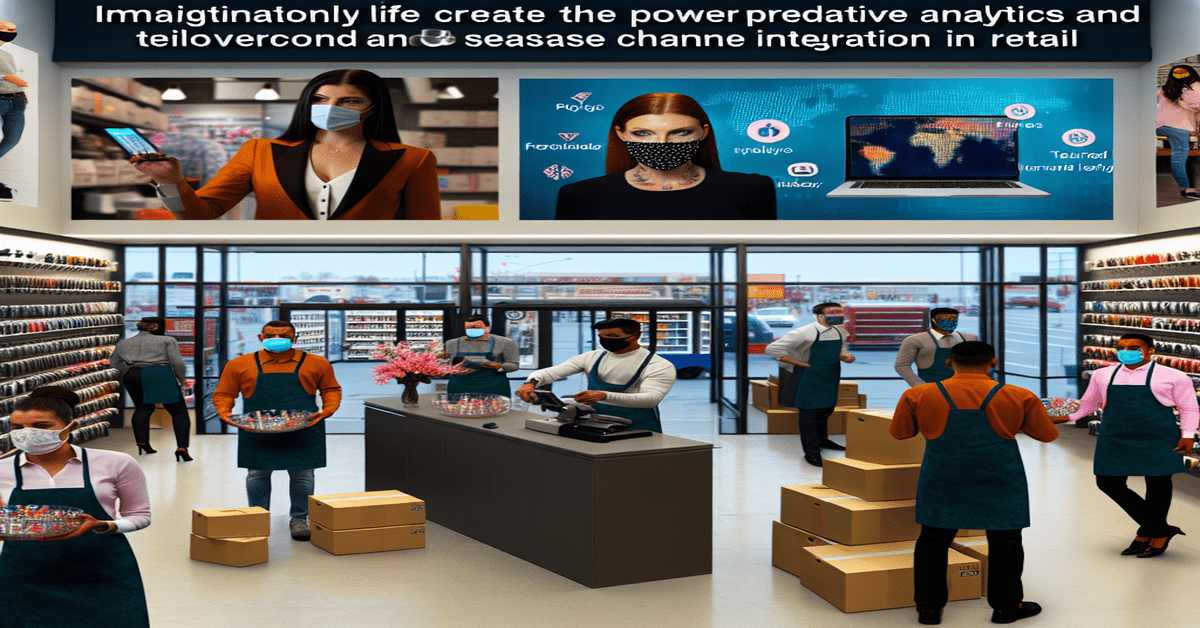
Unlocking Retail Intelligence: The Power of Predictive Analytics and Seamless Channel Integration
In the ever-evolving world of retail, staying ahead of the curve is crucial for success. As consumer preferences continue to shift and technology advances at a rapid pace, retailers must adapt and innovate to remain competitive. Two key factors driving this transformation are **predictive analytics** and **seamless channel integration**. By harnessing the power of these cutting-edge technologies, retailers can unlock a wealth of insights and opportunities, ultimately leading to enhanced customer experiences and improved business performance.
The Rise of Predictive Analytics in Retail
Predictive analytics has emerged as a game-changer in the retail industry, enabling businesses to make data-driven decisions and stay ahead of the competition. By leveraging vast amounts of data and advanced algorithms, retailers can gain valuable insights into consumer behavior, market trends, and operational efficiency.
One of the most significant benefits of predictive analytics is **enhanced demand forecasting**. By analyzing historical sales data, customer preferences, and external factors such as weather and economic conditions, retailers can accurately predict future demand for products. This allows them to optimize inventory levels, reduce waste, and ensure that the right products are available at the right time. According to a study by McKinsey, retailers who effectively implement demand forecasting can reduce inventory costs by up to 30% while improving customer satisfaction[3].
Moreover, predictive analytics enables retailers to deliver **personalized experiences** to their customers. By analyzing customer data such as purchase history, browsing behavior, and demographic information, retailers can tailor product recommendations, promotions, and marketing campaigns to individual preferences. This level of personalization not only enhances customer satisfaction but also drives loyalty and repeat purchases. A report by Accenture found that 91% of consumers are more likely to shop with brands that offer relevant recommendations and personalized experiences[2].
Seamless Channel Integration: Breaking Down Barriers
In today’s omnichannel retail landscape, customers expect a seamless and consistent experience across all touchpoints, whether they are shopping online, in-store, or through mobile devices. Seamless channel integration is the key to meeting these expectations and delivering a unified customer experience.
By integrating their various channels, retailers can provide customers with a cohesive and convenient shopping journey. For example, a customer might research a product online, check its availability in-store through a mobile app, and then complete the purchase in person. Through seamless integration, retailers can ensure that the customer’s preferences and purchase history are accessible across all channels, enabling personalized recommendations and a smooth transition between touchpoints.
Furthermore, channel integration allows retailers to gather **real-time insights** into customer behavior and preferences. By analyzing data from multiple channels, retailers can identify trends, optimize product assortment, and make informed decisions to improve the overall customer experience. This data-driven approach not only enhances customer satisfaction but also drives operational efficiency and cost savings.
The Synergy of Predictive Analytics and Channel Integration
When predictive analytics and seamless channel integration are combined, the results can be transformative for retailers. By leveraging the insights gained from predictive analytics across integrated channels, retailers can create a virtuous cycle of continuous improvement and innovation.
For instance, predictive analytics can help retailers identify the most effective marketing channels and optimize their campaigns accordingly. By analyzing customer data across integrated channels, retailers can determine which channels drive the highest engagement and conversion rates, allowing them to allocate resources more efficiently. Additionally, predictive analytics can help retailers anticipate customer needs and proactively offer relevant products and services through the most appropriate channels.
Moreover, the combination of predictive analytics and channel integration enables retailers to deliver **hyper-personalized experiences** to their customers. By leveraging data from multiple touchpoints, retailers can create comprehensive customer profiles that include preferences, behaviors, and purchase history. This deep understanding of individual customers allows retailers to provide tailored recommendations, offers, and experiences that resonate on a personal level, ultimately driving customer loyalty and long-term value.
Embracing the Future of Retail
As the retail landscape continues to evolve, embracing predictive analytics and seamless channel integration is no longer optional—it is a necessity for survival and success. Retailers who invest in these technologies and strategies will be well-positioned to navigate the challenges and opportunities of the future.
However, implementing these technologies is not without its challenges. Retailers must overcome data silos, integrate disparate systems, and develop the skills and capabilities necessary to leverage predictive analytics effectively. It requires a cultural shift towards data-driven decision-making and a willingness to experiment and iterate based on insights.
Despite these challenges, the benefits of predictive analytics and seamless channel integration are clear. By unlocking the power of data and delivering seamless experiences across channels, retailers can differentiate themselves in a crowded market, build lasting customer relationships, and drive sustainable growth.
As the retail industry continues to transform, those who embrace the power of predictive analytics and seamless channel integration will be the ones who thrive in the face of change. The future of retail belongs to those who can harness the vast amounts of data at their disposal, deliver personalized experiences across channels, and continuously adapt to the evolving needs and preferences of their customers.
So, retailers, the time to act is now. Embrace the power of predictive analytics and seamless channel integration, and unlock the full potential of your business. The future of retail is in your hands, and with the right strategies and technologies, the possibilities are endless.
#RetailIntelligence #PredictiveAnalytics #ChannelIntegration
-> Original article and inspiration provided by ReviewAgent.ai
-> Connect with one of our AI Strategists today at ReviewAgent.ai