
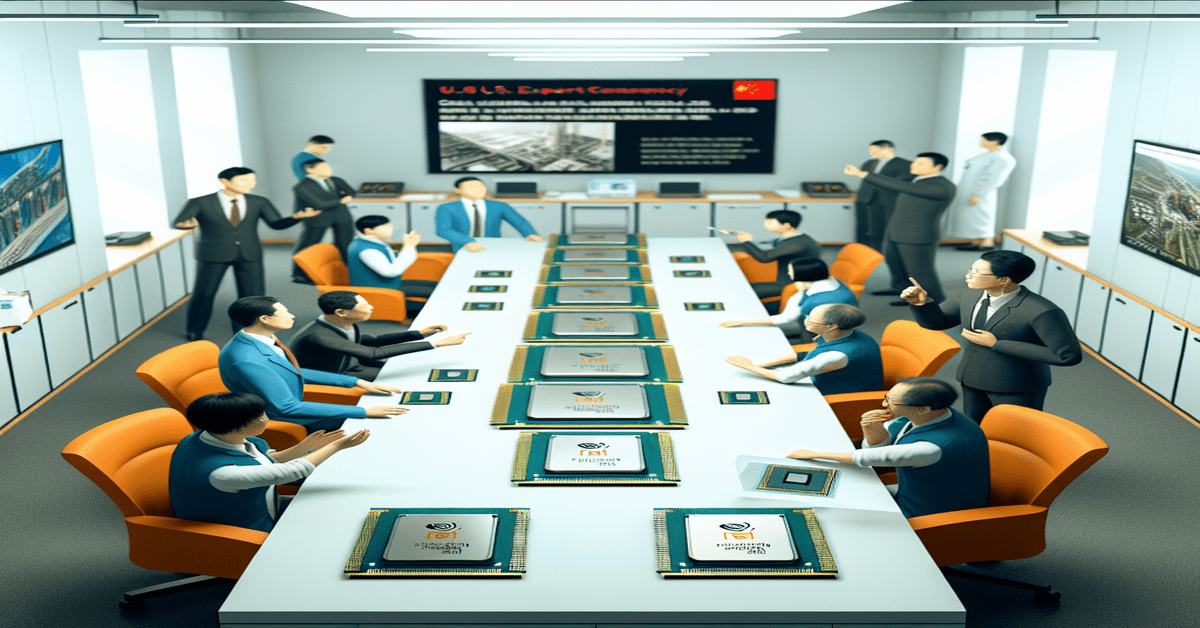
China’s Growing Concerns Over Nvidia’s H20 AI Chips
In a recent development, China has taken a significant step towards safeguarding its technological sovereignty by urging local companies, especially state-owned enterprises and private firms involved in government or national security work, to refrain from using Nvidia’s H20 AI chips. This guidance, as reported by Bloomberg News, reflects China’s growing concerns over reliance on American technology for sensitive applications.
While this move does not impose an outright ban on the use of these chips, it clearly indicates China’s determination to reduce its dependence on foreign technology, particularly in the realm of artificial intelligence. The Chinese authorities have sent official notices requiring firms to justify their purchase of Nvidia H20 chips, encouraging them to prefer domestic alternatives like Huawei’s chips instead.
The Pressure on Chinese Companies
The pressure on Chinese companies to comply with this guidance is palpable. Giants like Alibaba and ByteDance have reportedly been questioned regarding their Nvidia chip orders, highlighting the extent of the government’s scrutiny. This move is not just about protecting national security interests but also about fostering the growth of China’s domestic chip industry.
Nvidia, for its part, has emphasized that the H20 chip is “not a military product or for government infrastructure.” The company has also noted that China has sufficient domestic chip supply to meet its needs. However, the reality is that Nvidia has not shipped H20 chips to China for months, and the company hopes for clearer export control rules to compete fairly in the Chinese market.
The Background: U.S. Export Controls and Trade Negotiations
The background to this development is complex, involving a delicate interplay of trade policies, national security concerns, and technology competition between the United States and China. Last month, the U.S. lifted a ban on selling the H20 chip to China, making it the most advanced AI chip Nvidia can sell to that market under current U.S. export controls.
The Trump administration had initially blocked sales of this “less powerful” chip—designed to limit Chinese AI advancement compared to Nvidia’s more capable models—but reversed that policy as part of trade negotiations. However, the reversal did not put an end to the ongoing national security debates surrounding the sale of advanced technology to China.
Security Concerns and the Push for Domestic Alternatives
Chinese state media have recently highlighted security concerns around these chips, though Nvidia denies the presence of any “backdoors” allowing remote access or control. Regardless of the validity of these concerns, they have undoubtedly contributed to China’s push for domestic alternatives.
The message from Beijing is clear: Chinese companies, especially those involved in sensitive government and security work, must prioritize the use of domestic technology over foreign imports. This is not just about protecting national security but also about building a strong and self-sufficient domestic tech industry.
Implications for the AI Industry
China’s move to discourage the use of Nvidia’s H20 chips has significant implications for the AI industry. As one of the world’s largest markets for AI technology, China’s preferences and policies can shape the trajectory of the industry as a whole.
If Chinese companies do indeed shift towards domestic alternatives, it could lead to a bifurcation of the global AI chip market. We may see a future where Chinese AI systems are powered by homegrown chips, while the rest of the world continues to rely on offerings from companies like Nvidia.
This development also highlights the growing geopolitical tensions surrounding advanced technology. As nations compete for technological supremacy, we can expect to see more instances of governments intervening in the market to protect their national interests.
The Road Ahead
China’s guidance on Nvidia’s H20 chips is just one piece of a larger puzzle. As the world’s two largest economies continue to navigate the complex landscape of trade, technology, and national security, we can expect to see more developments like this in the future.
For companies operating in this space, the message is clear: navigating the geopolitical complexities of the AI industry is no longer optional. Firms must be prepared to adapt to changing regulations and shifting political winds if they want to succeed in this dynamic and increasingly high-stakes environment.
As for Nvidia, the company finds itself in a challenging position. While it has emphasized its willingness to comply with all relevant regulations, it also clearly hopes for a more stable and predictable regulatory environment. Nvidia’s experience serves as a cautionary tale for other tech companies: in an era of heightened geopolitical tensions, even the most successful firms can find themselves caught in the crossfire.
Conclusion
China’s move to discourage the use of Nvidia’s H20 chips is a significant development in the ongoing battle for technological supremacy. It reflects China’s growing concerns over reliance on foreign technology and its determination to build a strong and self-sufficient domestic tech industry.
As this story continues to unfold, it will be fascinating to see how other players in the AI industry respond. Will we see a shift towards domestic alternatives in other countries as well? How will companies like Nvidia adapt to this changing landscape?
One thing is certain: the geopolitics of AI is becoming increasingly complex, and companies that want to succeed in this space will need to be nimble, adaptable, and politically savvy. The future of AI will not just be shaped by technological innovation but also by the actions of governments and the choices of individual companies. As we watch this story unfold, we are witnessing a crucial chapter in the history of one of the most transformative technologies of our time.
Stay tuned for more updates on this developing story, and don’t forget to share your thoughts in the comments below. How do you think China’s move will impact the global AI industry? What other geopolitical tensions do you see shaping the future of technology? Let’s keep the conversation going.
#ChinaTech #AIChips #TechSovereignty #Nvidia #Geopolitics
-> Original article and inspiration provided by Reuters
-> Connect with one of our AI Strategists today at Opahl Technologies
