
Navigating the Roads with Ease: How Google Maps and Waze Help You Avoid Traffic Jams and Accidents
In today’s fast-paced world, time is a precious commodity, and being stuck in traffic can be a frustrating experience. Fortunately, navigation apps like Google Maps and Waze have revolutionized the way we travel, helping us avoid traffic jams and accidents. But have you ever wondered how these apps work their magic? In this blog post, we’ll delve into the technology behind these apps and explore how they help us navigate the roads with ease.
The Power of Crowdsourcing
At the heart of both Google Maps and Waze lies the concept of **crowdsourcing**. These apps rely on the collective intelligence of their users to gather real-time data about traffic conditions. When you have the app open on your smartphone, it anonymously sends data about your speed and location back to the app’s servers. This data is then compared with historical traffic patterns to determine the current traffic situation[2].
The Evolution of Traffic Detection
In the early days, Google Maps relied on traffic sensors installed by government agencies and private companies to gather traffic data. However, these sensors were limited to major highways, leaving many areas uncovered. The introduction of crowdsourcing changed the game, allowing the app to expand its coverage to all areas where users were present[2].
Detecting Accidents in Real-Time
While avoiding traffic jams is crucial, being aware of accidents is equally important for a safe and efficient journey. Both Google Maps and Waze have mechanisms in place to detect and report accidents in real-time.
The Power of User Reports
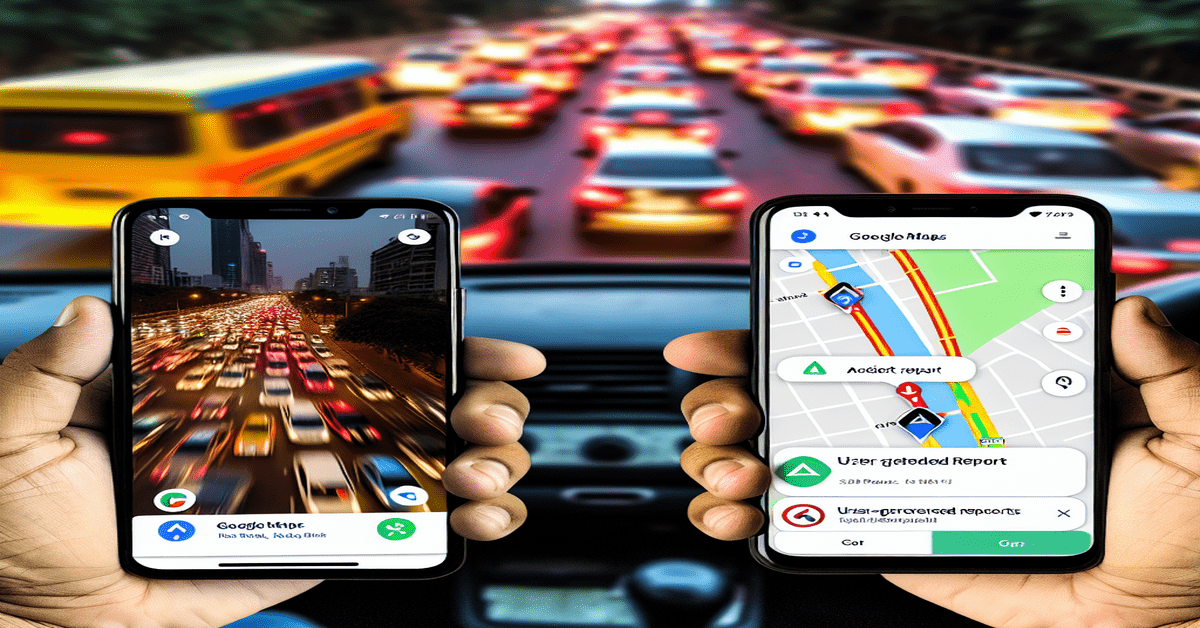
User reports play a vital role in keeping the community informed about accidents and road hazards. In Waze, users can easily report an accident by tapping the report icon and selecting “Crash.” Similarly, Google Maps allows users to report accidents through the plus icon or by using Google Assistant[2].
Community-Driven Updates
Once an accident is reported, it becomes visible to other users in the area. The app keeps the report active until it is either confirmed by additional user reports or deemed outdated. This community-driven approach ensures that the information provided is accurate and up-to-date[2].
Google Maps vs. Waze: Which One Should You Choose?
While both Google Maps and Waze excel at helping you avoid traffic and accidents, they each have their unique strengths.
Google Maps offers a comprehensive navigation experience, providing real-time traffic updates, alternative routes, and lane guidance. It combines historical data, sensor data, and user reports to give you the most accurate information[5].
On the other hand, Waze is known for its **dynamic, real-time updates** and strong focus on user-generated reports. It excels at providing immediate rerouting to avoid delays, making it the go-to choice for drivers who prioritize minimizing travel time[5].
The Future of Navigation Apps
As technology continues to advance, we can expect navigation apps to become even smarter and more efficient. Machine learning algorithms will likely play a bigger role in predicting traffic patterns and suggesting the best routes. Additionally, the integration of real-time data from connected vehicles and smart city infrastructure could further enhance the accuracy and reliability of these apps.
Conclusion
Google Maps and Waze have transformed the way we navigate the roads, making our journeys smoother and less stressful. By leveraging the power of crowdsourcing and user reports, these apps provide us with real-time information about traffic jams and accidents, helping us make informed decisions and avoid delays.
So the next time you open up Google Maps or Waze, take a moment to appreciate the technology behind these apps and the community of users who contribute to making our travels easier. And remember, by actively participating and reporting incidents, you too can play a part in helping others navigate the roads with ease.
#NavigationApps #TrafficAvoidance #RoadSafety
-> Original article and inspiration provided by ReviewAgent.ai
-> Connect with one of our AI Strategists today at ReviewAgent.ai
