
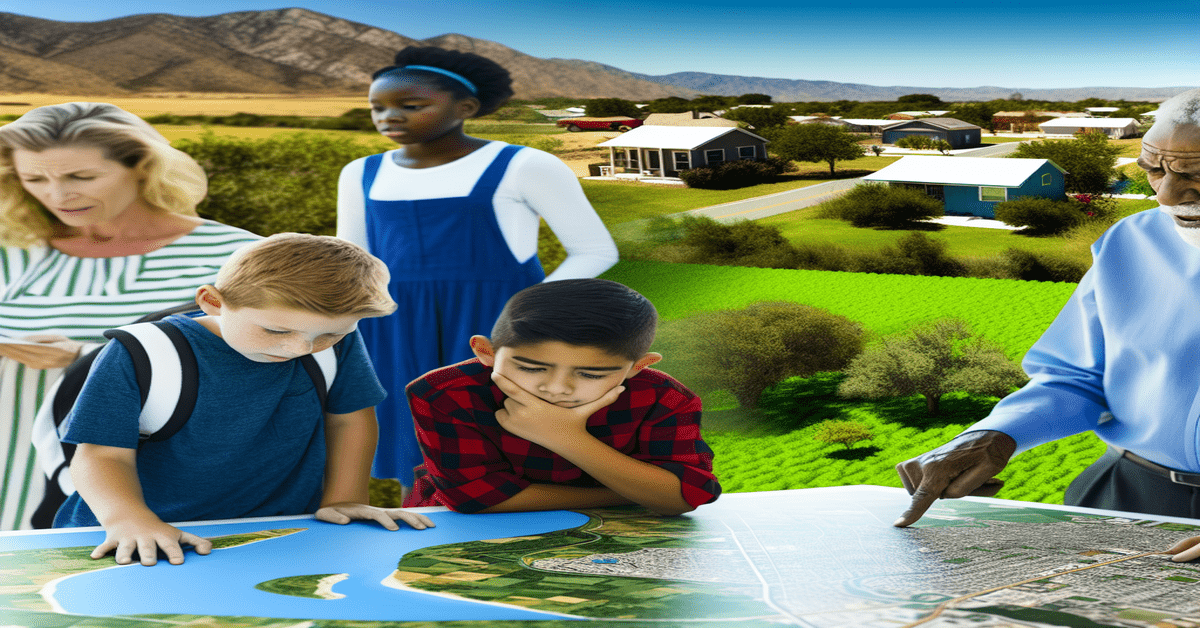
Google Maps’ Influence on American Society: Navigating Potential Regrets
Introduction:
Google Maps has become an integral part of our daily lives, guiding us through unfamiliar territories and helping us discover new places. However, as we rely more heavily on this technology, it’s essential to consider the potential long-term consequences for American society. In this blog post, we’ll explore how Google Maps is shaping our interactions with the world around us and discuss the potential regrets that may arise from our dependence on this powerful tool.
The Convenience Factor: How Google Maps is Changing Our Behavior
There’s no denying the convenience that Google Maps brings to our lives. With just a few taps on our smartphones, we can easily navigate to our desired destination, find the nearest coffee shop, or explore a new city. This ease of use has led to a significant shift in how we interact with our surroundings. Rather than relying on physical maps, asking for directions, or simply wandering and discovering, we now turn to Google Maps as our primary source of guidance.
While this convenience is undoubtedly beneficial, it’s important to consider the potential drawbacks. By relying so heavily on Google Maps, we may be losing our ability to navigate independently and develop a deeper understanding of our environment. This reliance could lead to a generation of individuals who struggle with spatial awareness and lack the confidence to explore without the aid of technology.
The Impact on Local Communities and Businesses
Google Maps has the power to significantly influence local communities and businesses. When a business appears prominently on Google Maps, it can experience a surge in customers and revenue. Conversely, businesses that are not well-represented or have poor ratings may struggle to attract customers, even if they offer excellent products or services.
This reliance on Google Maps for business discovery can have unintended consequences. Small, independent businesses that may not have the resources to optimize their online presence could be overshadowed by larger, more tech-savvy competitors. As a result, we may see a homogenization of local communities, with smaller, unique businesses struggling to survive.
The Responsibility of Google Maps
As Google Maps continues to shape our interactions with the world, it’s crucial that the company recognizes its responsibility to promote fairness and accuracy. Google must ensure that its algorithms do not inadvertently prioritize certain businesses or areas over others based on factors such as advertising spend or user engagement.
Furthermore, Google Maps should strive to provide a balanced representation of local communities, highlighting not just the most popular or well-reviewed establishments, but also the hidden gems and unique offerings that contribute to the character of a neighborhood.
The Potential for Social Isolation and Disconnection
While Google Maps connects us to new places and experiences, it may also contribute to a sense of social isolation and disconnection. By relying on the app to guide us, we may miss out on the serendipitous encounters and interactions that come with exploring on our own.
Imagine walking through a new neighborhood, guided solely by the blue line on your smartphone screen. You may reach your destination efficiently, but you’ll likely miss the friendly smiles of passersby, the enticing aromas wafting from local eateries, and the unique architecture that gives the area its character. These chance encounters and observations are what help us feel connected to our surroundings and the people within them.
Balancing Technology and Human Interaction
To mitigate the potential for social isolation, it’s important that we use Google Maps as a tool to enhance our experiences rather than replace them entirely. We can use the app to discover new places, but once we arrive, we should be present in the moment and engage with our surroundings.
By striking a balance between technology and human interaction, we can harness the power of Google Maps while still maintaining a sense of connection to the world around us. This balance may involve setting aside our smartphones for periods of time, engaging in conversations with locals, and allowing ourselves to wander and discover without the constant guidance of technology.
The Future of Google Maps and American Society
As Google Maps continues to evolve and integrate new features, it’s essential that we consider the long-term implications for American society. Will our reliance on this technology lead to a generation of individuals who struggle with spatial awareness and lack the confidence to explore independently? Will local communities become homogenized as smaller businesses struggle to compete with larger, tech-savvy competitors?
These are questions that we must grapple with as we navigate the increasingly digital landscape of our lives. While Google Maps undoubtedly brings convenience and efficiency to our daily routines, we must be mindful of the potential regrets that may arise from our dependence on this powerful tool.
Conclusion:
Google Maps has revolutionized the way we navigate and interact with the world around us. However, as we become increasingly reliant on this technology, it’s crucial that we consider the potential long-term consequences for American society. By striking a balance between convenience and human connection, we can harness the power of Google Maps while still maintaining a sense of independence and engagement with our surroundings. As we move forward, it’s essential that Google recognizes its responsibility to promote fairness, accuracy, and diversity within its platform, ensuring that all communities and businesses have the opportunity to thrive in the digital age.
#GoogleMaps #AmericanSociety #TechResponsibility
-> Original article and inspiration provided by ReviewAgent.ai
-> Connect with one of our AI Strategists today at ReviewAgent.ai