
The Limitations of AI Agents: Insights from LangChain
In recent years, the rapid advancements in artificial intelligence (AI) have led to the development of increasingly sophisticated AI agents capable of processing vast amounts of information and generating human-like text. However, despite these impressive feats, AI agents still struggle to achieve human-level performance in complex tasks that require the seamless integration of multiple tools. A prime example of this limitation is highlighted by LangChain, a platform that aims to bridge the gap between large language models and various external tools.
The Tool Overwhelm Problem
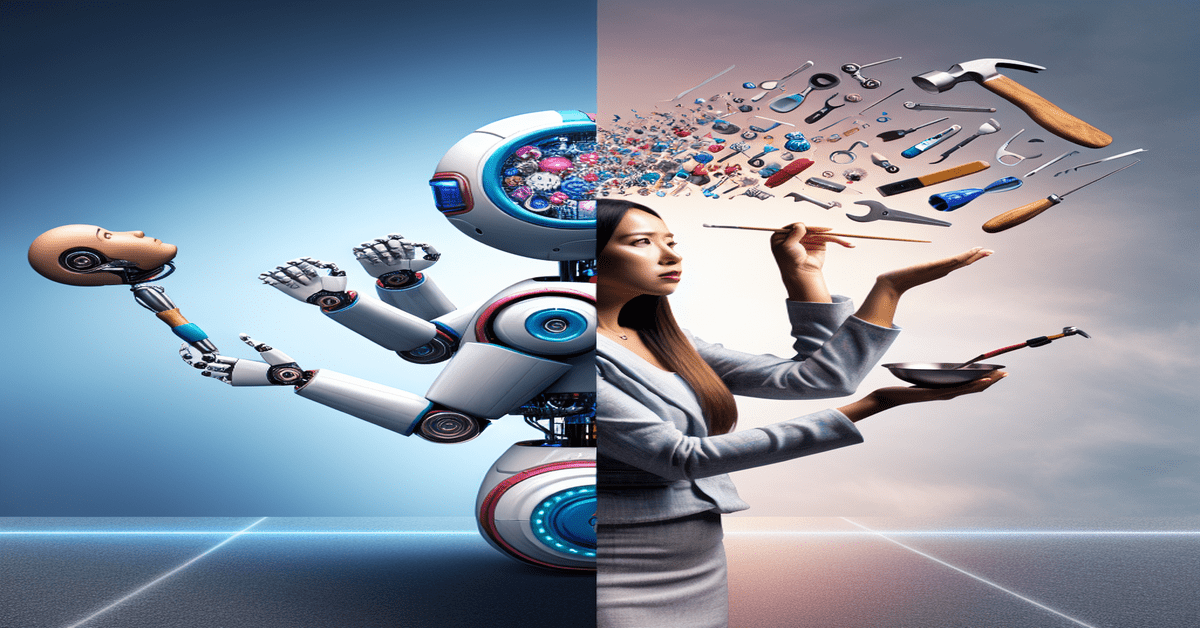
One of the most significant challenges faced by AI agents is their inability to effectively manage and utilize the plethora of tools available to them. As LangChain demonstrates, while AI agents can process and generate impressive amounts of text, they often struggle when it comes to integrating with and navigating multiple tools simultaneously. This **tool overwhelm** leads to inefficiencies and errors, preventing AI agents from performing tasks as smoothly and intuitively as humans do.
The root of this problem lies in the fact that humans have an innate ability to select and use appropriate tools for specific tasks without consciously thinking about it. We can seamlessly switch between various tools and applications, utilizing them in the most efficient manner possible. In contrast, AI agents lack this intuitive understanding of tool management, leading to confusion and suboptimal performance when faced with a wide array of tools.
The Need for Improved Tool Integration
To bridge the gap between AI agents and human-level performance, researchers and developers must focus on improving the ability of these agents to navigate and utilize a wide range of tools efficiently. This requires not only advancements in the underlying AI technology but also the development of more intuitive and streamlined interfaces that allow AI agents to interact with tools in a more human-like manner.
One potential approach to addressing this challenge is to develop AI systems that can learn from human behavior and decision-making processes when it comes to tool selection and usage. By observing how humans navigate complex tool ecosystems, AI agents could potentially develop more intuitive and efficient strategies for managing and integrating multiple tools.
The Future of AI Agent Development
As the LangChain platform highlights, the path to achieving human-level performance in AI agents is not without its obstacles. However, by recognizing and addressing the limitations of current AI systems, particularly in the context of tool management, we can pave the way for future advancements that bring us closer to the goal of truly intelligent and efficient AI agents.
Some key areas of focus for future research and development in this field may include:
1. **Intuitive Tool Integration**: Developing AI systems that can seamlessly integrate with a wide range of tools and applications, mimicking the intuitive tool management capabilities of humans.
2. **Adaptive Learning**: Creating AI agents that can learn from human behavior and decision-making processes, allowing them to develop more efficient strategies for navigating complex tool ecosystems.
3. **Specialized Tool Sets**: Designing AI agents with specialized tool sets tailored to specific industries or tasks, reducing the complexity of tool management and enabling more focused and efficient performance.
As we continue to push the boundaries of AI technology, it is crucial that we remain mindful of the current limitations and challenges faced by AI agents. By addressing these limitations head-on and focusing on the development of more intuitive and efficient tool management capabilities, we can unlock the true potential of AI and pave the way for a future in which AI agents can work alongside humans in seamless and productive collaboration.
#ArtificialIntelligence #AIAgents #ToolManagement #LangChain
-> Original article and inspiration provided by VentureBeat
-> Connect with one of our AI Strategists today at Opahl Technologies
