
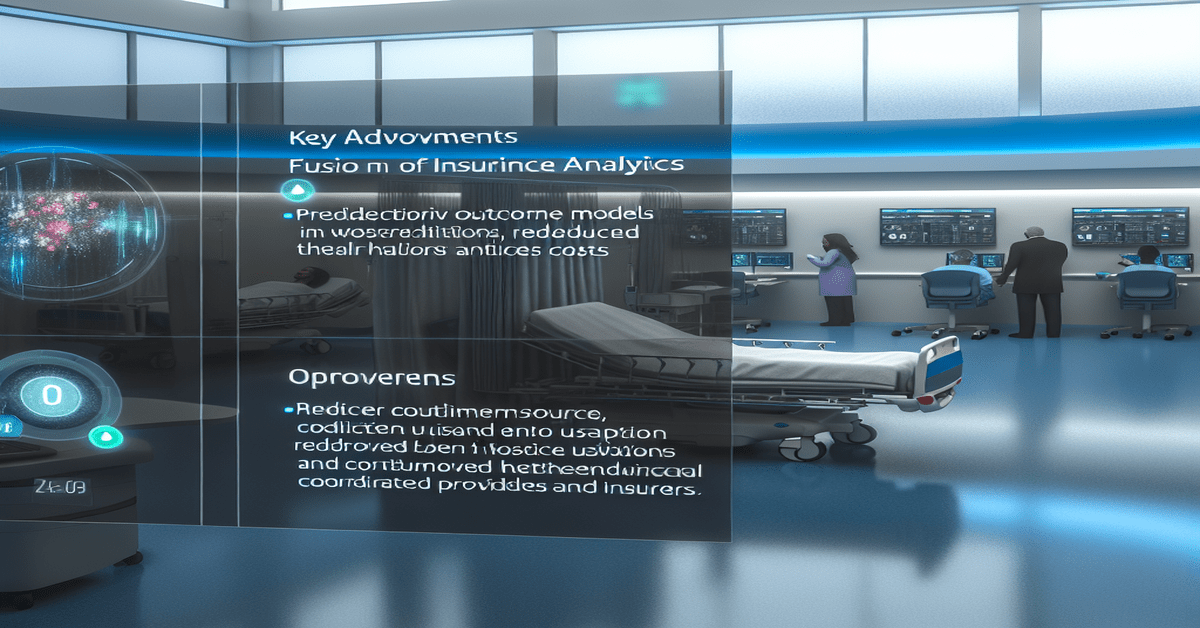
Data Analytics: Revolutionizing Healthcare and Insurance Industries
In today’s fast-paced, technology-driven world, data analytics is transforming various industries, and healthcare and insurance are no exception. By leveraging the power of data, these sectors are experiencing a significant shift towards more efficient, transparent, and consumer-centric practices. From improving patient care to optimizing risk evaluation and ensuring regulatory compliance, the impact of data analytics in healthcare and insurance is undeniable.
The Power of Predictive Analytics
One of the most influential applications of data analytics in healthcare is predictive analytics. By analyzing vast amounts of patient data, medical facilities can develop **predictive models** that help identify potential health risks and outcomes. These models enable healthcare providers to take proactive measures, such as early interventions and personalized treatment plans, ultimately improving patient care and reducing healthcare costs.
A prime example of the effectiveness of predictive analytics is the work of Divya Chockalingam, a leading figure in healthcare analytics. Chockalingam developed predictive patient outcome models that led to a remarkable **15% reduction in hospital readmissions** and a **20% decrease in healthcare costs** within just one year. By accurately identifying patients at high risk of readmission, healthcare providers can allocate resources more effectively and ensure timely follow-up care, resulting in better patient outcomes and significant cost savings.
Optimizing Resource Allocation
In addition to predictive analytics, data analytics plays a crucial role in optimizing resource allocation in healthcare facilities. By analyzing data on patient flow, bed occupancy, and staffing levels, hospitals can make data-driven decisions to improve operational efficiency. Chockalingam’s work in this area led to an impressive **18% improvement in bed usage** and a **22% reduction in patient wait times**. These enhancements not only streamline hospital operations but also contribute to a **10% increase in patient satisfaction**.
Efficient resource allocation is particularly important in times of crisis, such as the COVID-19 pandemic. By leveraging real-time data analytics, healthcare facilities can quickly adapt to changing demands, ensure adequate staffing, and manage the distribution of essential medical supplies. This agility and responsiveness are critical in providing timely and effective care to patients during challenging times.
Transforming the Insurance Industry
The insurance industry is also undergoing a significant transformation thanks to data analytics. By analyzing vast amounts of customer data, insurers can develop more accurate risk assessment models, leading to **fairer pricing** and **improved customer segmentation**. This data-driven approach enables insurance companies to offer personalized products and services that better meet the needs of their customers.
Moreover, data analytics helps insurers detect and prevent fraudulent claims, which is a significant concern in the industry. By identifying patterns and anomalies in claim data, insurance companies can flag suspicious activities and take appropriate action, ultimately reducing financial losses and protecting honest policyholders.
The Future of Healthcare and Insurance Analytics
As the healthcare and insurance industries continue to evolve, the role of data analytics will only become more prominent. Chockalingam emphasizes the importance of **integrated data systems** and **real-time analytics** to further enhance efficiency and decision-making. She also advocates for stronger coordination between healthcare providers and insurers to ensure seamless data sharing and collaboration.
Looking ahead, the fusion of artificial intelligence (AI) and machine learning with data analytics holds immense potential. AI-powered analytics can help identify complex patterns, predict future trends, and provide personalized recommendations for patients and policyholders. As these technologies advance, we can expect even more significant improvements in patient care, risk management, and operational efficiency.
Conclusion
The integration of data analytics in healthcare and insurance is revolutionizing these industries, creating smarter, more secure, and accessible services that benefit both providers and consumers. By harnessing the power of data, healthcare facilities can improve patient outcomes, optimize resource allocation, and reduce costs. Similarly, insurers can enhance risk assessment, prevent fraud, and offer personalized products and services.
As we move forward, it is crucial for healthcare providers and insurers to embrace data analytics and invest in the necessary infrastructure and talent to leverage its full potential. By doing so, they can position themselves at the forefront of innovation and deliver exceptional value to their patients and customers.
#HealthcareAnalytics #InsuranceAnalytics #DataDrivenInsights
-> Original article and inspiration provided by LeadsProMax.ai
-> Connect with one of our LeadsProMax.ai Strategists today at LeadsProMax.ai
