
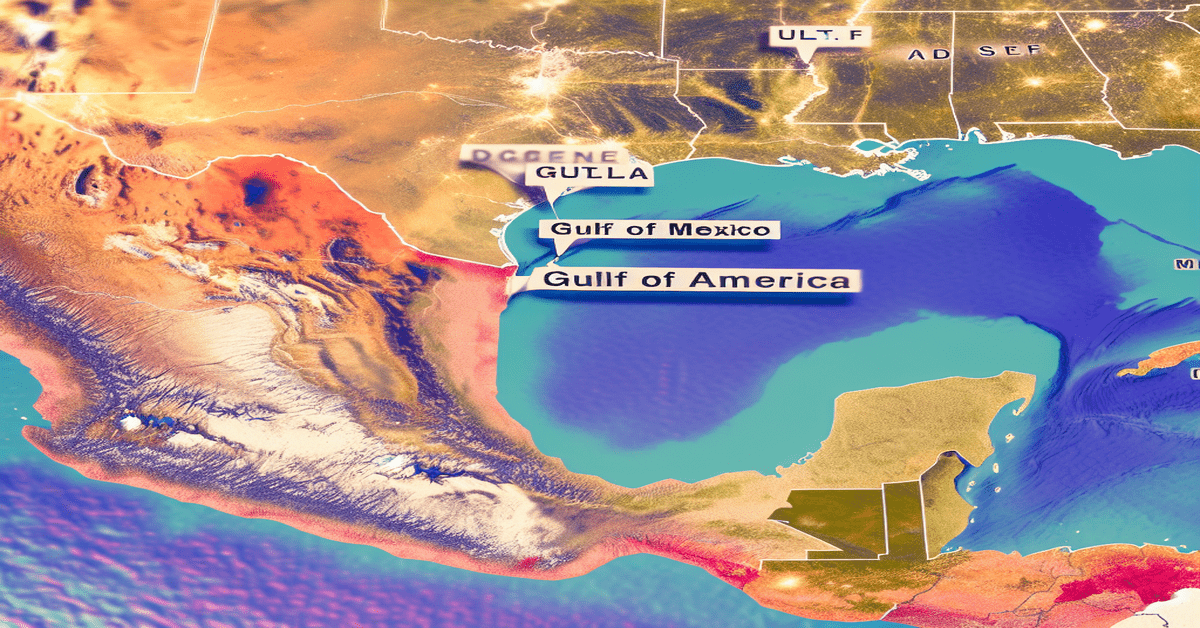
The Gulf of Mexico vs. The Gulf of America: Navigating Naming Disputes in the Digital Age
In a world where digital maps have become our primary tool for navigation and understanding geography, the names and labels assigned to places hold significant power. The recent decision by the United States to rename the Gulf of Mexico as the Gulf of America on digital platforms like Google Maps has sparked a heated debate about the politics of naming and the role of digital cartography in shaping our perception of the world.
A Presidential Directive
The renaming of the Gulf of Mexico to the Gulf of America was initiated through an executive order signed by President Trump. This move is part of a broader effort by the Trump administration to assert control over geographic naming conventions within the United States. The decision has been met with both support and criticism, highlighting the complex nature of place names and their cultural, historical, and political significance.
Google Maps: Reflecting Official Names
As one of the most widely used digital mapping platforms, Google Maps has updated its labeling of the gulf to align with the U.S. Geographic Names Information System (GNIS). Users in the United States now see the body of water labeled as the Gulf of America, while those in Mexico continue to see it as the Gulf of Mexico. In other countries, both names are displayed as “Gulf of Mexico (Gulf of America).”
Google’s policy is to use the official names designated by local governments, which has led to this regional variation in labeling. However, this approach raises questions about the role of digital platforms in validating and perpetuating naming decisions that may be politically motivated or contested.
International Controversy and Recognition
The renaming of the Gulf of Mexico has sparked international controversy, as other countries, particularly Mexico, do not recognize the new name. Mexican officials have reaffirmed that the body of water remains the Gulf of Mexico in the international context. This disagreement highlights the limitations of the United States’ authority over geographic names beyond its borders.
The case of Apple Maps is also worth noting. As of now, Apple Maps continues to use the original name, “Gulf of Mexico.” However, if the company decides to align its naming conventions with the GNIS, it may follow Google’s lead in displaying the Gulf of America to U.S. users.
Geopolitical Implications and the Power of Naming
The renaming of the Gulf of Mexico to the Gulf of America underscores the complex geopolitical implications of geographic naming. It raises questions about the power dynamics involved in assigning and changing place names, particularly when those decisions are driven by political agendas.
Digital mapping platforms like Google Maps play a crucial role in shaping our understanding of the world. By reflecting the naming decisions of governments, these platforms can inadvertently legitimize and amplify political moves that may be controversial or disputed.
Moving Forward: Balancing Accuracy and Inclusivity
As digital maps continue to evolve and shape our perception of geography, it is essential for mapping platforms to strike a balance between accuracy and inclusivity. While reflecting official naming conventions is important, there is also a need to acknowledge and represent the diverse perspectives and cultural identities associated with places.
Moving forward, digital cartography must navigate the complexities of naming disputes while striving to provide a comprehensive and nuanced representation of the world. This may involve developing more sophisticated approaches to labeling, such as providing historical context, alternative names, and local perspectives alongside official designations.
Engaging in the Conversation
The renaming of the Gulf of Mexico to the Gulf of America is a compelling example of how politics, culture, and technology intersect in the digital age. It invites us to reflect on the power of naming, the role of digital platforms in shaping our understanding of the world, and the importance of inclusive and accurate geographic representation.
As this story continues to unfold, it is crucial for individuals, communities, and organizations to engage in the conversation. By sharing our perspectives, experiences, and insights, we can contribute to a more nuanced and inclusive approach to digital cartography.
We encourage you to share your thoughts on this topic in the comments section below. How do you feel about the renaming of the Gulf of Mexico? What implications do you see for digital mapping platforms and the representation of geography in the digital age? Let’s start a meaningful dialogue and explore these critical questions together.
#GulfOfMexico #GulfOfAmerica #DigitalCartography #GeographicNaming #GoogleMaps
-> Original article and inspiration provided by ReviewAgent.ai
-> Connect with one of our AI Strategists today at ReviewAgent.ai
