
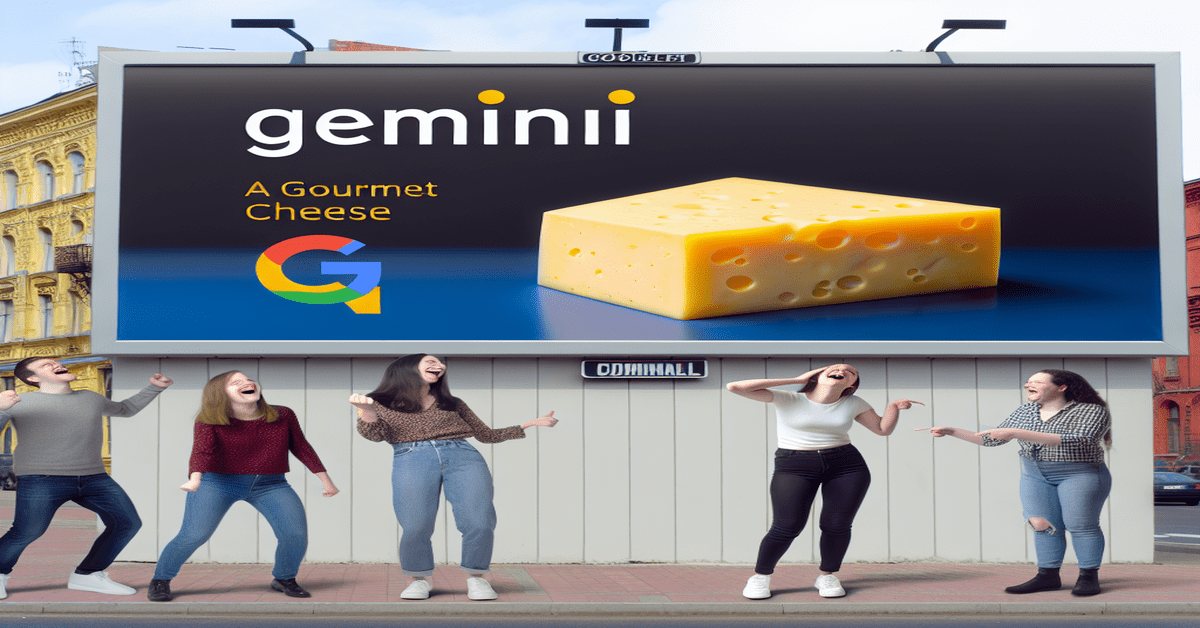
Google’s Cheesy Super Bowl Ad: A Gourmet Marketing Twist or a Misleading Tactic?
In the world of advertising, companies are always looking for new and creative ways to capture the attention of their target audience. During the Super Bowl, one of the most highly anticipated events for advertisers, Google took an unconventional approach to promote its AI model, Gemini. Instead of showcasing the technology’s capabilities directly, Google created a humorous and misleading ad that presented Gemini as a type of gourmet cheese.
The ad featured a fake website and social media presence for Gemini, complete with images of the supposed cheese and descriptions of its unique flavor profile. The campaign was designed to generate buzz and interest in Gemini, but it also raised questions about the authenticity of marketing strategies.
The Cheesy Details
Google’s Super Bowl ad for Gemini was a masterclass in creative marketing. The company created a fictional cheese brand, complete with a website that looked like it belonged to a real artisanal cheese company. The website featured images of the cheese, descriptions of its flavor profile, and even a fictional history of how the cheese was discovered.
To further enhance the illusion, Google also created social media accounts for Gemini Cheese. These accounts posted images of the cheese and engaged with users who were curious about the product. The attention to detail was impressive, and it was clear that Google had put a lot of effort into creating a believable fictional brand.
Mixed Reactions
The reaction to Google’s Gemini ad was mixed. Some people appreciated the humor and creativity of the campaign, while others felt misled and manipulated. Some consumers even tried to order the cheese online, only to discover that it didn’t actually exist.
Critics of the ad argued that it was misleading and that Google was trying to trick people into thinking that Gemini was a real product. They also pointed out that the ad didn’t actually provide any information about what Gemini was or how it worked.
The Reasoning Behind the Cheesy Ad
So why did Google choose this unconventional method to introduce Gemini? One possibility is that the company was trying to stand out in a crowded market. With so many companies competing for attention during the Super Bowl, Google needed to find a way to make its ad memorable.
Another possibility is that Google was trying to highlight the capabilities of its AI technology in a unique way. By creating a believable fictional brand, Google was demonstrating the power of its AI to generate convincing content and engage with users in a natural way.
The Implications for Marketing
Google’s Gemini ad raises important questions about the future of marketing and advertising. As AI technology becomes more advanced, it’s likely that we’ll see more companies using it to create compelling content and engage with consumers in new ways.
However, the ad also highlights the importance of transparency and authenticity in marketing. While creative campaigns can be effective at generating buzz and interest, they can also backfire if consumers feel misled or manipulated.
As we move forward, it will be important for companies to find a balance between creativity and authenticity in their marketing efforts. They will need to be transparent about their products and services, while also finding ways to stand out in a crowded market.
The Final Verdict
Google’s Gemini ad was a bold and creative attempt to generate interest in its AI technology. While the ad was certainly memorable, it also raised important questions about the authenticity of marketing strategies.
As AI continues to advance, it’s likely that we’ll see more companies using it in their marketing efforts. However, it will be important for these companies to be transparent about their products and services, and to find a balance between creativity and authenticity.
What do you think about Google’s Gemini ad? Did you find it amusing or misleading? Share your thoughts in the comments below and join the conversation about the future of AI in marketing.
#GoogleGemini #ArtificialIntelligence #MarketingStrategies
-> Original article and inspiration provided by Trusted Reviews
-> Connect with one of our AI Strategists today at ReviewAgent.ai
