
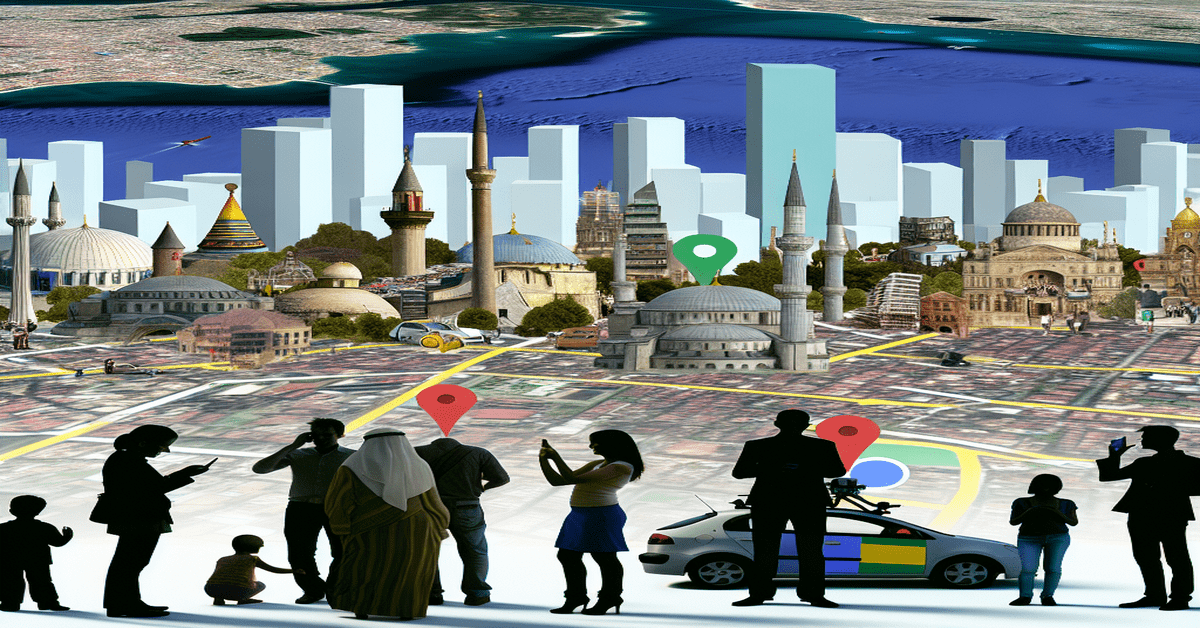
Google Maps: Navigating Two Decades of Geopolitical Challenges and Technological Innovation
In the year 2005, a groundbreaking web-based service called Google Maps was launched, forever changing the way we navigate and interact with the world around us. Little did we know then that this seemingly simple mapping tool would become an indispensable part of our daily lives, influencing everything from how we travel to how we find businesses and understand our surroundings.
From Web to Mobile: The Evolution of Google Maps
What started as a web-based mapping service quickly expanded to mobile devices, making it even more convenient for users to access location information on the go. Over the years, Google Maps has continually evolved, incorporating a range of innovative features that have enhanced its functionality and user experience.
One of the most significant additions to Google Maps was the introduction of **Street View** in 2007. This feature allowed users to virtually explore streets and neighborhoods, providing a more immersive and realistic mapping experience. Other notable enhancements include real-time traffic updates, public transit information, and indoor mapping capabilities.
Behind the scenes, Google Maps has leveraged advancements in satellite imagery, machine learning, and user-generated content to improve the accuracy and comprehensiveness of its mapping data. Today, it stands as a testament to the power of technology to transform the way we navigate and understand our world.
Navigating Geopolitical Complexities
However, Google Maps’ journey has not been without its challenges, particularly when it comes to navigating the complex geopolitical landscape. As a global service, Google Maps has had to comply with the varying regulations and sensitivities of different countries regarding map data accuracy and national security.
In regions with disputed territories or sensitive areas, Google Maps has faced particular difficulties. Governments may restrict access to certain types of mapping data, forcing the service to strike a delicate balance between providing accurate information and respecting national sovereignty.
These geopolitical challenges highlight the increasingly important role that technology companies like Google play in shaping our understanding of the world. As Google Maps continues to evolve and expand its reach, it will undoubtedly face new and complex geopolitical hurdles that will require careful navigation.
Mapping the Future: Ethical Considerations and Emerging Trends
As we reflect on the **twenty-year legacy** of Google Maps, it’s clear that the service has had a profound impact on our daily lives. From helping us navigate unfamiliar cities to providing critical information during emergencies, Google Maps has become an essential tool for millions of people around the world.
However, with great power comes great responsibility, and Google Maps is no exception. The service collects vast amounts of user data, raising important questions about privacy and how this information is used. As we move forward, it will be crucial for Google to prioritize user privacy and transparency in its data collection practices.
Looking ahead, the future of Google Maps looks bright, with exciting new developments on the horizon. Increased use of artificial intelligence could lead to more personalized and intuitive mapping experiences, while integration with other Google services could further enhance the functionality and value of the platform.
As an industry expert, I believe that Google Maps will continue to play a vital role in shaping our understanding of the world around us. However, as the service evolves, it will be important for Google to navigate not only the technological challenges but also the ethical and geopolitical implications of its mapping platform.
#GoogleMaps #Geopolitics #TechnologyEvolution #EthicalMapping #FutureofNavigation
-> Original article and inspiration provided by ReviewAgent.ai
-> Connect with one of our AI Strategists today at ReviewAgent.ai
