
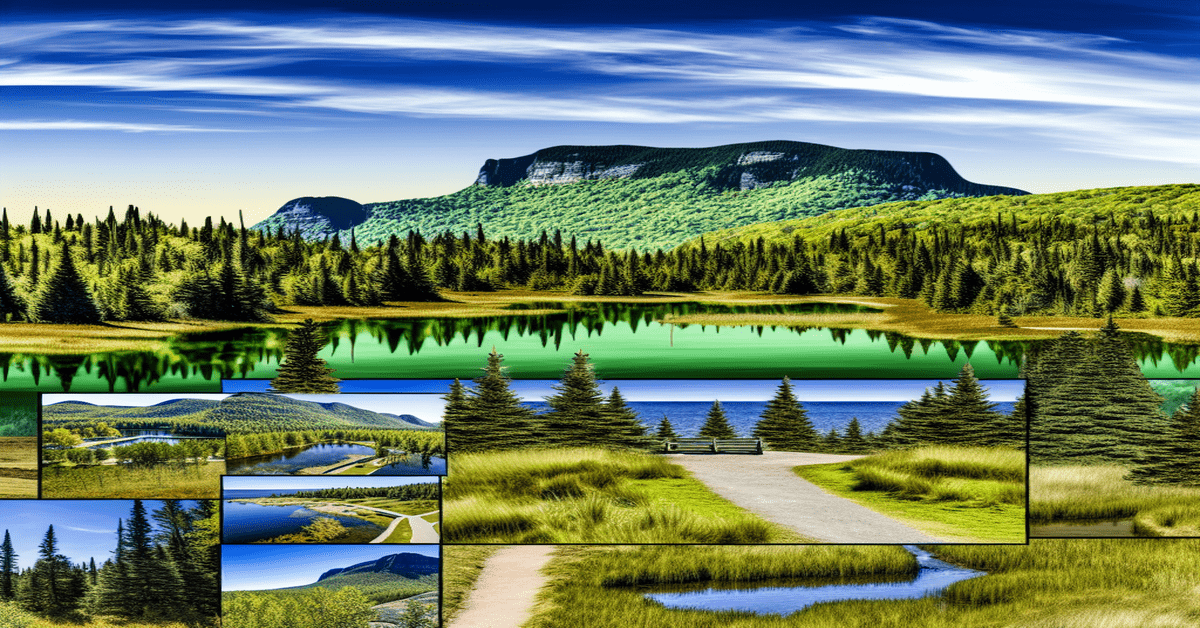
Google Maps’ Mislabeling of Canadian Provincial Parks Sparks Controversy
Google Maps has recently come under fire in Canada after users discovered that the popular navigation platform had incorrectly labeled many of the country’s provincial parks as “state parks.” This misclassification, which according to Google, is a longstanding error and not a recent change, has nonetheless managed to stir up quite a controversy, particularly in light of the current political climate and U.S. President Donald Trump’s comments about annexing Canada as the 51st state [1][2].
The issue first came to light when Canadian users began noticing the incorrect labels on Google Maps and took to social media to express their concern and frustration. Many interpreted the mislabeling as a politically motivated slight against Canada’s sovereignty, given the recent rhetoric from the U.S. president [1][2].
Google Responds to Backlash
In response to the backlash, Google quickly issued a statement clarifying that the “state park” labels were not a recent addition but rather a longstanding error that had gone unnoticed for years. The company assured users that it was actively working on updating the labels to accurately reflect the parks’ provincial status and to avoid any further confusion [1][4].
Despite Google’s assurances, many Canadians remained skeptical and called for the company to take swift action in correcting the issue. British Columbia’s Environment Minister, Tamara Davidson, was among those who spoke out, emphasizing that Canada would “never be the 51st state” and requesting that Google add a unique “provincial park” category to its maps [1][2].
Cartographic Bias or Intentional Slight?
While the initial reaction from many Canadians was one of outrage and suspicion, some experts have suggested that the mislabeling is more likely a result of a broader “cartographic bias” rather than an intentional threat to Canada’s sovereignty. Reuben Rose-Redwood, a geography professor at the University of Victoria, noted that Google Maps’ use of U.S. terminology may simply reflect the company’s American roots and not necessarily a politically motivated decision [2].
This theory is supported by the fact that the “state park” labels have apparently existed on Google Maps for years without drawing much attention. It was only in the context of the current political tensions between the U.S. and Canada that the issue came to the forefront [1][2][4].
The Importance of Accurate Representation
Regardless of the underlying reasons for the mislabeling, the controversy highlights the importance of accurate representation in digital platforms like Google Maps. As more and more people rely on these tools for navigation and information, it is crucial that they provide a true and unbiased picture of the world.
For Canadians, the incorrect labeling of their provincial parks struck a nerve not only because of the political implications but also because of the significance these parks hold as symbols of national pride and identity. By mislabeling them as “state parks,” Google Maps was effectively erasing a piece of Canadian heritage and replacing it with American terminology [2].
Moving Forward
As Google works to correct the labeling error, it is clear that the company will need to be more vigilant in ensuring the accuracy and cultural sensitivity of its maps moving forward. This incident serves as a reminder that even seemingly small details can have significant implications when it comes to representing the world we live in.
For Canadians, the resolution of this issue will hopefully bring a sense of relief and validation, knowing that their provincial parks will be accurately represented on one of the world’s most widely used navigation platforms. And for Google, it is an opportunity to demonstrate its commitment to providing a fair and unbiased service to users around the globe.
#GoogleMaps #CanadaParks #CartographicBias
As digital platforms continue to shape our understanding and experience of the world, it is more important than ever that we hold them accountable for the information they provide. By working together to ensure accurate and culturally sensitive representation, we can create a more inclusive and respectful online environment for all.
So, what are your thoughts on the Google Maps controversy? Have you noticed any other instances of cartographic bias or misrepresentation in digital platforms? Share your experiences and ideas in the comments below, and let’s continue the conversation about the importance of accurate and fair representation in the digital age.
-> Original article and inspiration provided by WestCentralOnline
-> Connect with one of our AI Strategists today at ReviewAgent.ai
