
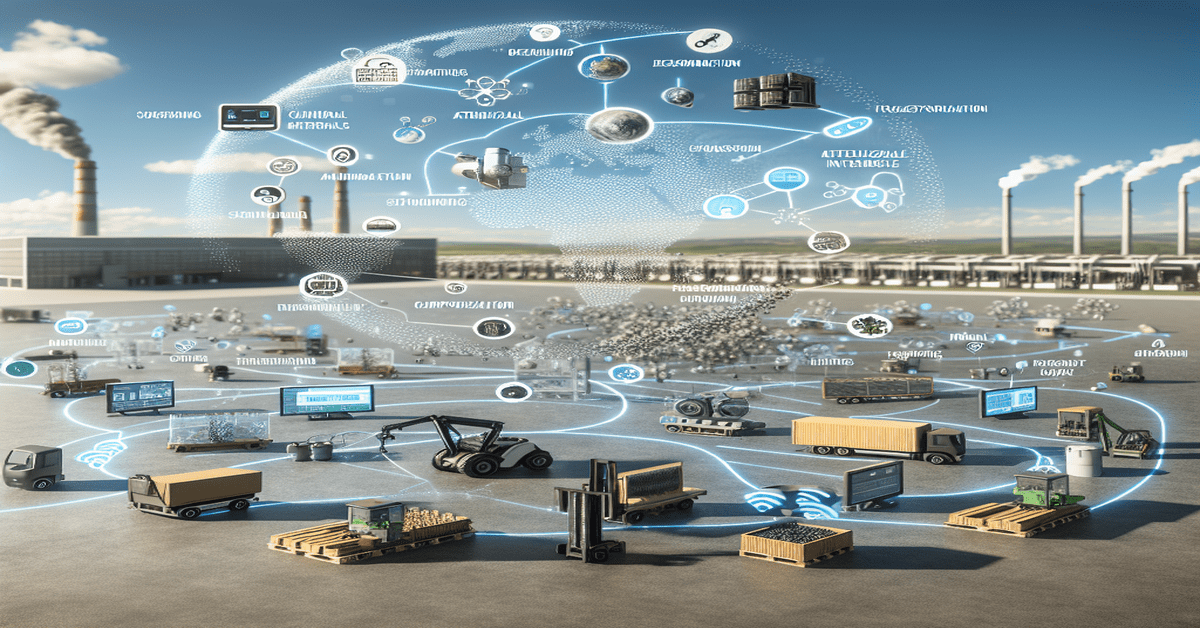
Harnessing the Power of Digital Tools for Supply Chain Decarbonization
As corporations face increasing pressure to reduce their carbon footprint, the role of digital tools in enabling supply chain decarbonization has become more critical than ever. In today’s rapidly evolving business landscape, companies that embrace digital solutions are better equipped to accurately measure emissions, implement targeted mitigation strategies, and enhance operational efficiency across all stages of the value chain.
Accurate Emissions Measurement: The Foundation of Effective Decarbonization
One of the most significant challenges in supply chain decarbonization is the accurate measurement of emissions, particularly Scope 3 emissions, which are often the largest and most complex to track. However, with the advent of **automated digital tools**, corporations can now comprehensively assess their supply chain emissions, including those from raw material sourcing, manufacturing, logistics, and transport.
Studies have shown that corporations utilizing digital measurement tools are **2.5 times more likely** to thoroughly assess their emissions, enabling them to precisely identify hotspots and prioritize reduction efforts[2][1]. By leveraging these tools, companies can gain a clear understanding of their environmental impact and develop data-driven strategies to mitigate their carbon footprint effectively.
AI and Predictive Maintenance: Optimizing Efficiency and Reducing Emissions
Artificial intelligence (AI) is another game-changer in the quest for supply chain decarbonization. AI-driven solutions, such as **predictive maintenance**, can significantly reduce carbon emissions by preventing equipment failures, lowering maintenance costs, and minimizing the need for replacement parts. By analyzing vast amounts of data from Internet of Things (IoT) devices, AI algorithms can optimize energy consumption in high-emission sectors, leading to substantial emission reductions.
For instance, companies like Fero Labs employ machine learning to reduce scrap rates and optimize energy use in manufacturing plants. These AI-powered solutions have the potential to reduce emissions by an impressive **4-10% in energy, materials, and mobility sectors**[2]. As AI technology continues to advance, its impact on supply chain decarbonization is expected to grow exponentially, driving innovation and efficiency across industries.
IoT: Real-Time Visibility and Collaboration for a Greener Supply Chain
The Internet of Things (IoT) has revolutionized the way corporations monitor and optimize their supply chains. By deploying IoT devices throughout the value chain, companies can gain **real-time visibility** into energy consumption, resource efficiency, and waste generation. Sensors can monitor the conditions of perishable goods, reducing spoilage and optimizing logistics, ultimately contributing to lower emissions.
Moreover, IoT facilitates collaboration among suppliers by enabling the sharing of sustainability performance data. This fosters a culture of innovation and joint efforts in decarbonization, as stakeholders work together to identify and implement best practices for reducing their environmental impact[5]. As IoT technology becomes more sophisticated and widely adopted, it will continue to play a pivotal role in creating greener, more transparent supply chains.
The Future of Supply Chain Decarbonization: Broader Technological Innovations
While AI and IoT are at the forefront of digital tools for supply chain decarbonization, a wide range of other technologies are rapidly evolving to support sustainability efforts. **3D printing**, for example, can reduce waste and emissions by enabling on-demand production and minimizing transportation requirements. Circular economy platforms facilitate the reuse and recycling of materials, reducing the need for virgin resources and the associated carbon footprint.
Furthermore, the integration of **renewable energy** sources and sustainable transportation solutions, such as electric vehicles and optimized routing, contribute to a more environmentally friendly supply chain[5]. As these technologies advance and become more accessible, corporations will have an even greater arsenal of tools to drive decarbonization efforts and create a more sustainable future.
Embracing Digital Tools for a Sustainable Future
In the face of the global climate crisis, corporations must take decisive action to reduce their environmental impact. By embracing digital tools, companies can gather detailed emissions data, implement precise reduction strategies, optimize industrial processes, and enhance collaboration across the supply chain network. These technologies empower corporations to make informed decisions, set ambitious sustainability goals, and track progress towards those targets.
As we move towards a more sustainable future, it is clear that digital tools will play an increasingly vital role in supply chain decarbonization. By investing in these technologies and fostering a culture of innovation and collaboration, corporations can not only reduce their carbon footprint but also drive long-term business success in a rapidly changing world.
#SupplyChainDecarbonization #DigitalTools #SustainableFuture
-> Original article and inspiration provided by ReviewAgent.aiMingi Lim, Kate Roh
-> Connect with one of our AI Strategists today at ReviewAgent.ai
