
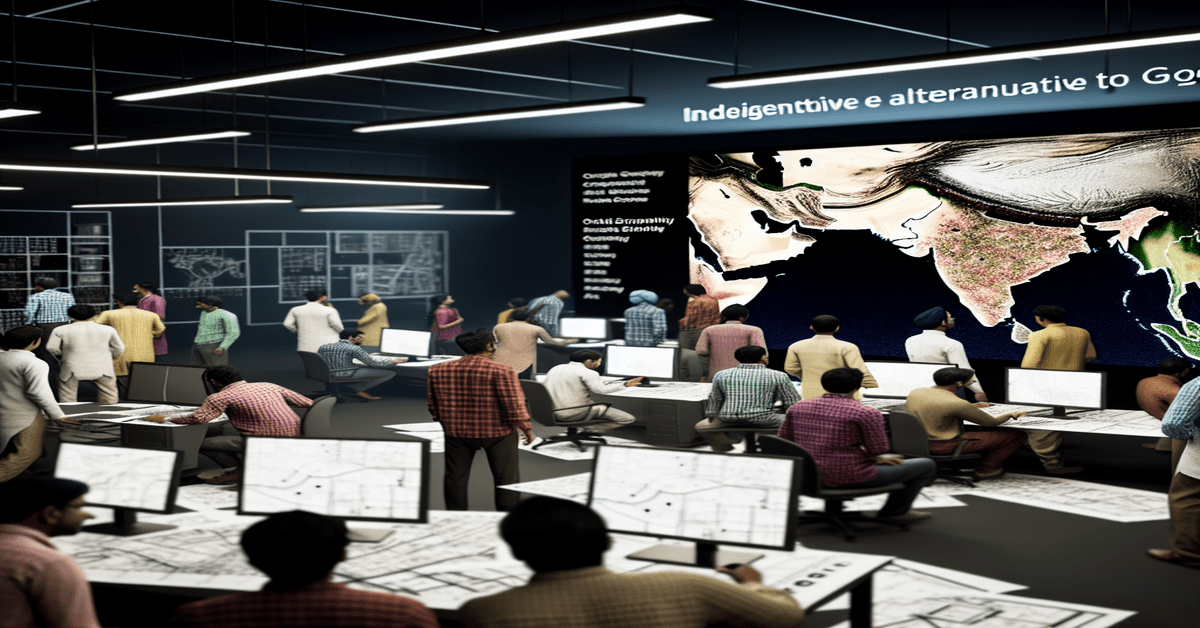
The Call for a Swadeshi Alternative to Google Maps: Enhancing Accuracy and Self-Reliance in India
In a recent development, a BJP (Bharatiya Janata Party) Member of Parliament (MP) has called for the creation of a “Swadeshi” (indigenous) alternative to Google Maps. The MP’s concerns stem from allegations that Google Maps may be misleading users by providing inaccurate or unreliable information. This proposal is part of a larger movement in India towards self-reliance and the promotion of homegrown technology and services over foreign ones.
The push for a Swadeshi alternative to Google Maps is rooted in the belief that an indigenous mapping service would be better suited to address India’s specific needs and requirements. By developing a mapping platform tailored to the country’s unique geographical, cultural, and linguistic landscape, the MP argues that users would benefit from more accurate and relevant information.
Ensuring Accuracy and Reliability
One of the primary concerns raised by the BJP MP is the potential for Google Maps to mislead users. In a country as vast and diverse as India, accurate mapping data is crucial for a wide range of applications, from navigation and transportation to urban planning and emergency response. Inaccuracies in mapping data can lead to confusion, delays, and even safety risks for users.
By developing a Swadeshi alternative, India would have greater control over the quality and accuracy of mapping data. This would involve investing in local mapping initiatives, leveraging the expertise of Indian geospatial professionals, and incorporating feedback from users across the country. A homegrown mapping service could also be more responsive to user needs, providing regular updates and improvements based on local feedback.
Promoting Self-Reliance and Economic Growth
The call for a Swadeshi alternative to Google Maps aligns with the Indian government’s broader push for self-reliance and the promotion of domestic industries. Under the “Atmanirbhar Bharat” (Self-Reliant India) campaign, the government has been encouraging the development of indigenous technologies and services across various sectors, including IT, manufacturing, and defense.
By developing a homegrown mapping service, India could reduce its dependence on foreign technology giants like Google and create new opportunities for local businesses and entrepreneurs. This could lead to job creation, skill development, and economic growth in the geospatial sector. Additionally, a Swadeshi mapping service could be integrated with other indigenous technologies, such as navigation systems and location-based services, further promoting self-reliance and innovation.
Enhancing National Security
Another potential benefit of a Swadeshi alternative to Google Maps is enhanced national security. Mapping data is sensitive information that can have implications for a country’s defense and strategic interests. By relying on foreign mapping services, India may be vulnerable to data breaches, surveillance, or manipulation by external actors.
A homegrown mapping service would give India greater control over its mapping data and ensure that sensitive information is protected. It could also be tailored to meet the specific security requirements of the Indian government and military, providing a more secure and reliable platform for critical applications.
Challenges and Opportunities Ahead
Developing a Swadeshi alternative to Google Maps is an ambitious undertaking that will require significant investment, expertise, and collaboration between the government, private sector, and academia. India will need to build a robust geospatial infrastructure, including satellite imaging, ground surveys, and data processing capabilities.
However, the potential benefits of a homegrown mapping service are significant. By enhancing accuracy, promoting self-reliance, and strengthening national security, a Swadeshi alternative to Google Maps could transform the way Indians navigate and interact with their surroundings. It could also set an example for other countries looking to develop their own indigenous mapping solutions.
As India continues to pursue its goal of becoming a self-reliant and digitally empowered nation, the development of a Swadeshi alternative to Google Maps represents an important step forward. With the right investments, policies, and collaborations, India has the potential to become a global leader in geospatial technology and services.
#SwadeshiMapping #AtmanirbharBharat #DigitalIndia
-> Original article and inspiration provided by NDTV News Desk
-> Connect with one of our AI Strategists today at ReviewAgent.ai