
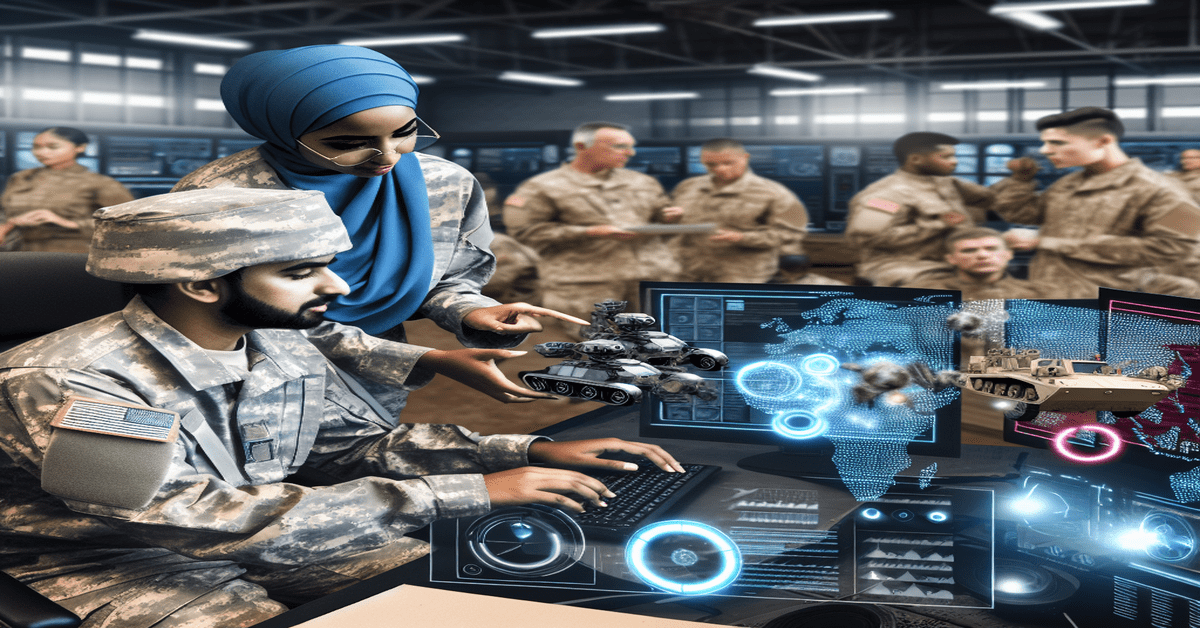
Transforming the Future of Army Acquisition: Autonomy and Predictive Analytics Take Center Stage
The U.S. Army is on the cusp of a significant transformation in its acquisition strategy, with a heightened focus on integrating cutting-edge technologies like autonomy and predictive analytics. This shift is poised to revolutionize military capabilities and streamline acquisition processes, ensuring the Army remains at the forefront of technological advancement and readiness.
Harnessing the Power of AI and Machine Learning
Central to the Army’s new acquisition plan is the emphasis on leveraging artificial intelligence (AI) and machine learning (ML) to transition from reactive to proactive approaches. One notable area where this shift is evident is in logistics, where predictive analytics allows for the strategic positioning of supplies and resources ahead of need[3]. By anticipating requirements and optimizing supply chain management, the Army can significantly enhance its operational efficiency and effectiveness.
The integration of AI and ML is not limited to logistics alone. The Army is actively exploring the potential of these technologies across various domains, from intelligence gathering and analysis to decision support systems. By harnessing the power of data and advanced algorithms, the Army aims to gain a competitive edge in an increasingly complex and dynamic operational environment.
Autonomy: The Key to Enhanced Operational Effectiveness
Another pivotal aspect of the Army’s acquisition plan is the prioritization of autonomy in developing future capabilities. As the nature of warfare evolves, the need for systems that can operate with minimal human intervention becomes increasingly crucial. Autonomous systems offer the potential to enhance operational effectiveness, reduce risk to personnel, and enable faster decision-making in high-pressure situations[4].
The Army recognizes the transformative potential of autonomy and is actively investing in research and development efforts to advance this technology. From unmanned aerial vehicles (UAVs) to ground-based robots, the integration of autonomous systems is expected to reshape the battlefield and provide the Army with unparalleled flexibility and adaptability.
Establishing a Centralized AI/ML Ecosystem
To facilitate the seamless integration of AI and ML technologies across the force, the Army is undertaking initiatives like Project Linchpin. This ambitious project aims to establish a centralized AI/ML ecosystem that supports all Army programs, enabling secure and efficient deployment of these cutting-edge technologies[4].
By creating a unified framework for AI and ML development and deployment, Project Linchpin will streamline the adoption of these technologies and ensure consistency and interoperability across various Army systems. This centralized approach will not only accelerate innovation but also foster collaboration and knowledge sharing among different programs and stakeholders.
Managing Risks and Developing a Skilled Workforce
As the Army embraces autonomy and predictive analytics, it is also mindful of the associated risks and challenges. To address these concerns, the Army is developing an AI Layered Defense Framework, which will provide a comprehensive approach to managing the risks associated with AI systems[4]. This framework will ensure the responsible and ethical deployment of AI technologies, addressing issues such as bias, transparency, and accountability.
Moreover, the Army recognizes the critical importance of having a skilled and knowledgeable acquisition workforce to drive this technological transformation. As part of its broader 500-day plan starting in 2024, the Army is investing in training and development programs to equip its personnel with the necessary skills and expertise in emerging technologies[4]. By fostering a culture of continuous learning and adaptability, the Army aims to build a workforce that can effectively leverage autonomy and predictive analytics to enhance military capabilities.
Transforming the Army’s Mindset and Approach
Beyond the technological aspects, the Army’s acquisition transformation is also about fundamentally shifting its mindset and approach to defense acquisition. The Army aims to become a “better customer” by removing bureaucratic barriers and adopting new, agile methodologies that can keep pace with rapid technological advancements and evolving security challenges[5].
This transformation requires a cultural shift within the Army, encouraging innovation, collaboration, and a willingness to embrace change. By fostering a more adaptive and responsive acquisition process, the Army can better align its capabilities with the dynamic nature of modern warfare and ensure it remains at the forefront of military innovation.
The Future of Army Acquisition
The U.S. Army’s new acquisition plan, with its emphasis on autonomy and predictive analytics, represents a bold step towards modernizing and transforming military capabilities. By leveraging the power of AI, ML, and autonomous systems, the Army is positioning itself to meet the challenges of the future battlefield and maintain its technological superiority.
As the Army continues to implement this visionary plan, it will undoubtedly face obstacles and challenges along the way. However, with a clear strategic vision, a commitment to innovation, and a skilled and adaptable workforce, the Army is well-positioned to navigate this transformative journey successfully.
The integration of autonomy and predictive analytics in Army acquisition is not just about adopting new technologies; it is about fundamentally reshaping the way the Army operates and responds to evolving threats. By embracing this transformation, the Army is setting the stage for a future where it can rapidly adapt to changing circumstances, make data-driven decisions, and maintain a decisive advantage on the battlefield.
As we look ahead, it is clear that the future of Army acquisition lies in the seamless integration of cutting-edge technologies like autonomy and predictive analytics. By harnessing the power of these innovations, the Army will be better equipped to protect the nation’s interests, support its allies, and defend against emerging threats in an increasingly complex and uncertain world.
#ArmyAcquisition #AutonomyInDefense #PredictiveAnalytics #MilitaryInnovation #FutureTech
-> Original article and inspiration provided by LeadsProMax.aiSarah Sybert
-> Connect with one of our LeadsProMax.ai Strategists today at LeadsProMax.ai
