How AI & Analytics are Transforming Supply Chain Resilience
In today’s rapidly evolving business landscape, supply chain resilience has become a critical factor for success. As companies navigate through uncertainties and disruptions, the integration of Artificial Intelligence (AI) and advanced analytics is revolutionizing the way supply chains operate. By leveraging these cutting-edge technologies, organizations can enhance their ability to predict, adapt, and thrive in the face of challenges.
Predictive Disruption Mitigation: Staying Ahead of the Curve
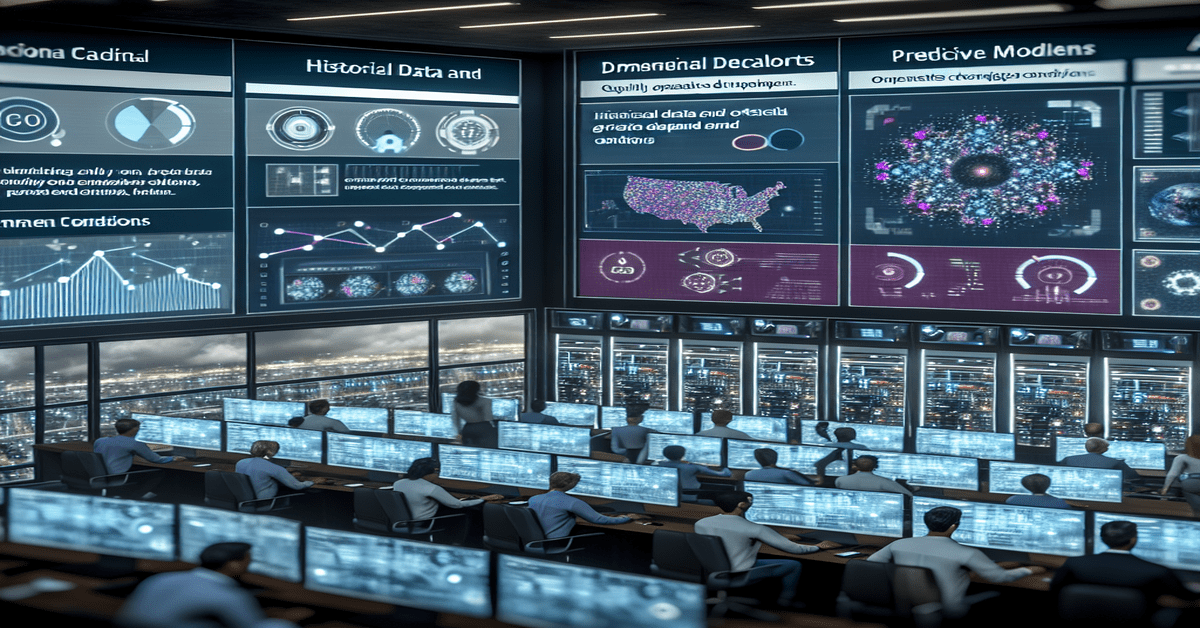
One of the most significant transformations brought about by AI and analytics is the ability to intelligently forecast and mitigate supply chain disruptions. Gone are the days of reactive problem-solving; now, companies can adopt a proactive approach by harnessing the power of real-time data and **predictive models**. By analyzing vast amounts of information from various sources, AI algorithms can identify potential risks and bottlenecks before they escalate into full-blown crises.
Imagine a scenario where a natural disaster strikes a key supplier’s location. Traditionally, this would lead to significant delays and disruptions throughout the supply chain. However, with AI-powered predictive analytics, companies can anticipate such events and take proactive measures. They can quickly identify alternative suppliers, reroute shipments, and adjust production schedules to minimize the impact on their operations. This level of foresight and agility is a game-changer in today’s volatile business environment.
Improved Decision-Making: Insights at Your Fingertips
Another transformative aspect of AI and analytics in supply chain management is the ability to synthesize vast amounts of data and provide comprehensive insights to decision-makers. In the past, managers often had to rely on intuition and limited information when making critical decisions. However, with the advent of AI, they now have access to real-time, data-driven insights that enable them to make **evidence-based decisions** quickly and confidently.
For instance, let’s consider a company facing a sudden spike in demand for a particular product. Traditionally, this would require manual analysis of sales data, inventory levels, and production capacity to determine the best course of action. With AI, however, the system can instantly analyze historical data, market trends, and customer behavior to provide actionable recommendations. This could include suggestions for optimal inventory levels, production scheduling, and even dynamic pricing strategies to maximize profitability.
Agility and Flexibility: The Cornerstone of Resilience
The integration of AI and analytics transforms supply chains from rigid, reactive systems into agile, proactive ones. This agility is crucial for withstanding disruptions and adapting to changing market conditions. By continuously monitoring and analyzing data from various touchpoints, AI enables companies to detect anomalies, anticipate challenges, and respond swiftly.
For example, let’s say a company experiences a sudden shortage of raw materials due to a supplier’s production issues. With AI-powered supply chain management, the system can quickly identify alternative suppliers, assess their capacity and lead times, and automatically place orders to ensure a seamless flow of materials. This level of **flexibility** allows companies to maintain their operations without significant interruptions, even in the face of unexpected challenges.
Enhancing Traditional Resilience Capabilities
AI and analytics amplify traditional resilience capabilities by enhancing detection, response, and deployment. In the past, detecting disruptions often relied on manual monitoring and reporting, which could be time-consuming and prone to errors. With AI, companies can leverage **real-time monitoring** and anomaly detection to identify potential issues as they emerge.
Once a disruption is detected, AI can assist in designing effective response strategies. By simulating various scenarios and analyzing their potential outcomes, AI can help decision-makers choose the most optimal course of action. This could involve identifying alternative suppliers, adjusting production schedules, or even redesigning supply chain networks to mitigate risks.
Moreover, AI streamlines the deployment of response strategies. By automating key processes and providing real-time guidance to supply chain stakeholders, AI ensures that decisions are executed swiftly and effectively. This minimizes the time lag between detection and action, allowing companies to bounce back from disruptions more quickly.
AI Applications in Action
Let’s explore some specific AI applications that are transforming supply chain resilience:
1. **Predictive Maintenance**: AI-powered predictive maintenance systems monitor equipment in real-time, analyzing sensor data and historical patterns to predict potential failures. This allows companies to schedule maintenance proactively, avoiding unexpected downtime and extending the lifespan of their assets.
2. **Dynamic Demand Forecasting**: AI algorithms can analyze historical sales data, market trends, and external factors to generate accurate demand forecasts. By predicting future demand patterns, companies can optimize their inventory levels, reducing the risk of stockouts or overstocking.
3. **Enhanced Decision-Making**: AI can integrate data from multiple supply chain touchpoints, such as production, logistics, and customer service, to provide holistic insights. This enables managers to make informed decisions quickly, considering the impact on the entire supply chain network.
The Future of Supply Chain Resilience
As AI and analytics continue to evolve, the future of supply chain resilience looks promising. The synergy between **generative AI** (gathering insights and simulating scenarios) and **agentic AI** (autonomous decision-making) can create powerful feedback loops for strategic adaptation and risk mitigation.
Generative AI can analyze vast amounts of structured and unstructured data, identifying patterns and generating actionable insights. It can simulate various scenarios, predicting potential outcomes and recommending optimal strategies. On the other hand, agentic AI can autonomously execute decisions based on predefined rules and real-time data analysis.
By combining these two aspects of AI, companies can create self-learning supply chain systems that continuously adapt to changing conditions. These systems can analyze complex data sets, identify emerging risks, and make autonomous adjustments to supply chain operations in real-time. This level of agility and responsiveness will be crucial for navigating the challenges of the future.
Conclusion
The integration of AI and analytics in supply chain management is not just a trend; it is a transformative force that is reshaping the way companies operate. By leveraging these technologies, organizations can enhance their resilience, agility, and decision-making capabilities. From predictive disruption mitigation to improved insights and flexibility, AI is empowering supply chains to withstand the test of time.
As we move forward, the companies that embrace AI and analytics will be the ones that thrive in the face of uncertainties. By investing in these technologies and building a culture of data-driven decision-making, organizations can position themselves for success in the ever-evolving business landscape.
So, what steps is your company taking to harness the power of AI and analytics in supply chain management? Share your thoughts and experiences in the comments below, and let’s engage in a discussion on how we can collectively build more resilient and adaptive supply chains for the future.
#SupplyChainResilience #AITransformation #AnalyticsPower
-> Original article and inspiration provided by ReviewAgent.ai
-> Connect with one of our AI Strategists today at ReviewAgent.ai
