
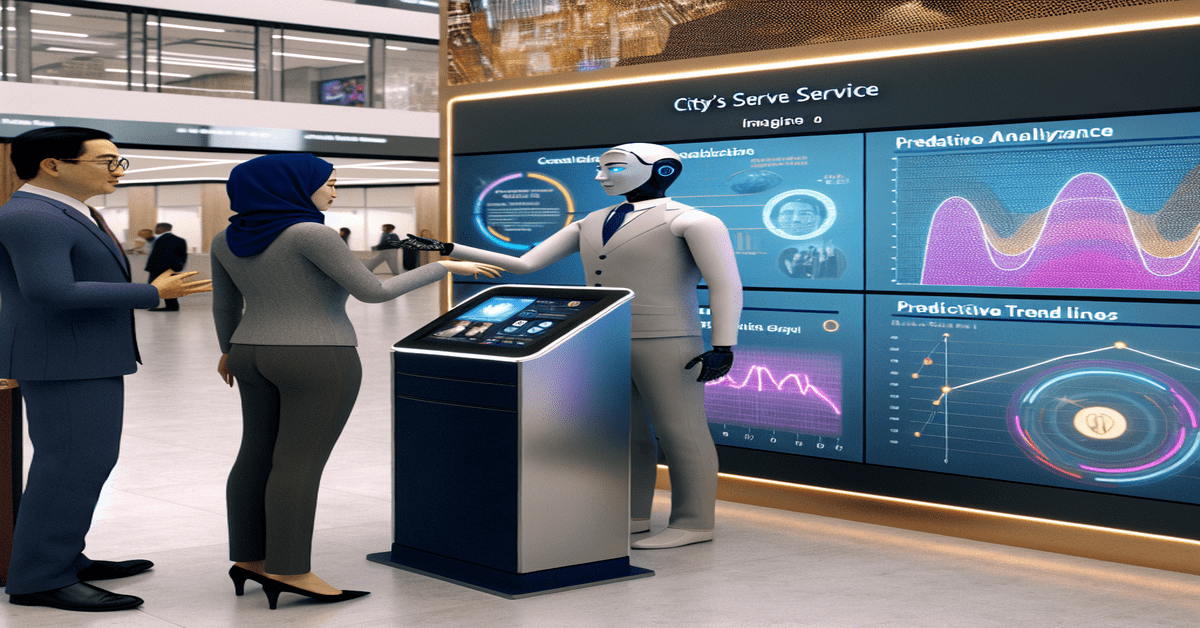
The AI Revolution in Citizen Services: Transforming Public Sector Efficiency and Engagement
The rapid expansion of artificial intelligence (AI) in government services is transforming the way citizens interact with public agencies. As governments increasingly adopt AI to enhance service delivery, operational efficiency, and citizen engagement, the citizen services AI market is experiencing unprecedented growth. According to a recent report, the market was valued at USD 8.25 billion in 2024 and is projected to reach a staggering USD 65.83 billion by 2030, growing at a compound annual growth rate (CAGR) of 41.36%[1].
Drivers of AI Adoption in Citizen Services
The push for digital transformation and the need for cost reduction are major catalysts driving the growth of AI in citizen services[1][2]. Governments are recognizing the potential of AI to streamline processes, reduce human error, and deliver faster, more cost-effective services. The primary applications of AI in this sector include:
– **Virtual assistance:** Chatbots and virtual assistants provide round-the-clock support, improving accessibility and reducing the need for physical offices and human intervention[1][2].
– **Predictive analytics:** By analyzing service demand trends, predictive analytics enables better planning and resource allocation, leading to more efficient and personalized citizen interactions[1][2].
– Automated application handling
– Intelligent case management
– Public safety monitoring[1]
The Benefits of AI for Government and Citizens
The integration of AI into public services offers numerous benefits for both government agencies and the citizens they serve. By automating repetitive administrative tasks such as scheduling, data entry, and request handling, AI reduces human error and processing times, resulting in faster and more cost-effective services[1][2]. Virtual assistants provide continuous support, improving accessibility and reducing the need for physical offices and human intervention[1][2].
Moreover, predictive analytics enables data-driven decision making, allowing governments to better plan and allocate resources based on service demand trends. This leads to more efficient and personalized citizen interactions[1][2]. As a result, citizens experience enhanced satisfaction and trust in government services, as AI solutions streamline processes, deliver accurate information, and enable more personalized communication[1][2].
The Global Impact of AI on Public Service
The adoption of AI in public services is a global trend, with countries around the world striving to deliver smarter, more efficient, and citizen-centric services as part of broader digital transformation efforts[1][4]. The impact of AI on public service is far-reaching, as it revolutionizes government operations by improving efficiency, reducing costs, and enhancing the overall citizen experience[1][2][4].
As governments continue to invest in AI technologies, it is essential to address potential challenges such as data privacy, algorithmic bias, and the need for skilled workforce development. By proactively addressing these concerns and fostering public-private partnerships, governments can harness the full potential of AI to create a more responsive, efficient, and citizen-centric public sector.
The Future of Citizen Services
The rapid growth of the citizen services AI market is a testament to the transformative power of artificial intelligence in the public sector. As more governments embrace AI technologies, we can expect to see a significant shift in the way public services are delivered and experienced by citizens. The integration of **predictive analytics** and **virtual assistants** will continue to revolutionize government operations, leading to increased efficiency, cost savings, and improved citizen satisfaction[1][2][4].
As we look towards the future, it is clear that AI will play a pivotal role in shaping the citizen services landscape. Governments that proactively adopt and invest in AI technologies will be well-positioned to deliver the smart, efficient, and citizen-centric services that the public demands. By embracing the AI revolution, the public sector can usher in a new era of governance that prioritizes innovation, responsiveness, and continuous improvement.
#CitizenServicesAI #GovernmentInnovation #DigitalTransformation
-> Original article and inspiration provided by LeadsProMax.aiResearch and Markets
-> Connect with one of our LeadsProMax.ai Strategists today at LeadsProMax.ai
