
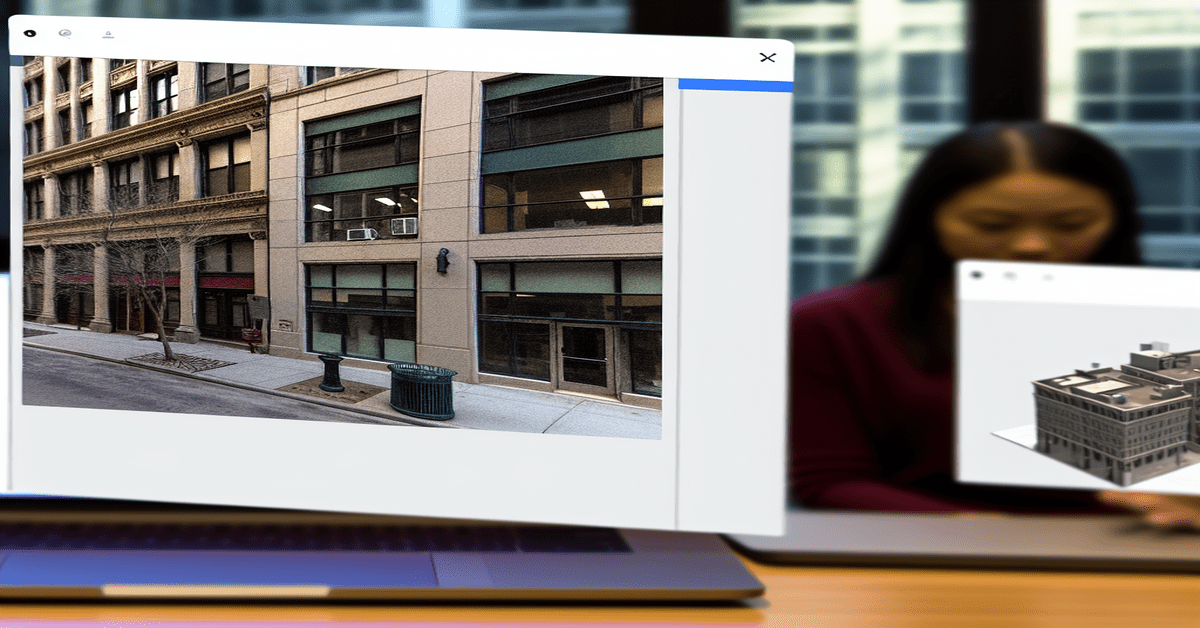
AI Unveils the Secrets Behind Building Facades: How Google Street View and Machine Learning are Revolutionizing Urban Analysis
In a groundbreaking development, researchers at the University of Toronto have harnessed the power of artificial intelligence (AI) to unlock a wealth of information about buildings, extending far beyond what meets the eye. By leveraging Google Street View images and advanced machine learning techniques, this innovative approach enables the prediction of crucial building attributes, such as age and interior floor area, with remarkable accuracy[1][2].
Peering Beyond the Facade: The Magic of AI
The research team, led by experts in urban analytics and AI, has developed a pioneering method that employs deep learning models trained on exterior building images. These sophisticated models can infer a wide range of characteristics that are not physically visible, providing invaluable insights into the hidden aspects of our built environment[1][3].
One of the most impressive feats of this AI-driven approach is its ability to estimate a building’s age and internal square footage with astonishing precision. The deep learning models have achieved an accuracy of around 70% for age prediction and an impressive 80% for floor area estimation[1][3]. These results underscore the immense potential of AI in unveiling the secrets that lie behind the facades of our cities.
Unlocking Sustainability and Resilience Insights
The implications of this technological breakthrough extend far beyond mere curiosity. By accurately predicting building attributes, this AI-based method enables a deeper understanding of the materials used in construction, the embodied carbon footprint, and the resource consumption patterns of our urban landscapes[1][2].
Armed with this knowledge, urban planners, policymakers, and sustainability experts can make more informed decisions to foster sustainable development and mitigate the environmental impact of our cities. The ability to estimate greenhouse gas emissions and assess the resilience of our infrastructure is crucial in the face of climate change and the pressing need for sustainable urban growth[1][2].
Cost-Effective and Scalable Urban Analysis
One of the most significant advantages of this AI-driven approach is its cost-effectiveness and scalability. Traditional methods of collecting building data often involve expensive and labor-intensive surveys, with costs running into millions of dollars. In contrast, by leveraging publicly available Google Street View imagery, this innovative technique can gather comprehensive building data at a fraction of the cost, approximately $1,000[2].
This cost-efficiency opens up new possibilities for large-scale urban analysis, enabling researchers and planners to study entire cities or even regions with unprecedented detail and accuracy. The ability to analyze vast amounts of building data at a low cost has the potential to revolutionize the way we understand and shape our urban environments[2].
Overcoming Challenges with AI’s Predictive Power
Predicting building age and interior layout from diverse exterior images is no easy feat. Factors such as renovations, varying facade materials, and architectural styles can pose significant challenges to accurate estimations. However, the AI models developed by the University of Toronto researchers have demonstrated a remarkable ability to navigate these complexities[1][3].
By leveraging visual cues such as window placement, architectural elements, and other subtle indicators, the deep learning models can approximate building age and interior characteristics with practical accuracy. This predictive power highlights the immense potential of AI in extracting meaningful insights from seemingly limited data sources[1][3].
A New Era of Urban Analytics
The groundbreaking work of the University of Toronto researchers marks a significant milestone in the field of urban analytics. By combining the vast repository of Google Street View images with the power of AI, this innovative approach opens up new avenues for understanding and analyzing our built environment[1][2][3].
The ability to infer detailed building attributes from readily available street-level imagery has the potential to transform the way we plan, design, and manage our cities. From sustainable urban development to infrastructure resilience assessments, this technology empowers decision-makers with valuable insights that were previously difficult or impossible to obtain[1][2][3].
As we navigate the challenges of rapid urbanization and the urgent need for sustainable development, the fusion of AI and urban analytics offers a promising path forward. By harnessing the power of machine learning and publicly available data sources, we can unlock the hidden stories behind building facades and pave the way for smarter, more resilient cities.
It is an exciting time for urban planners, policymakers, and sustainability advocates as this cutting-edge technology ushers in a new era of data-driven decision-making. With the ability to peer beyond the surface and uncover the secrets of our built environment, we stand at the threshold of a transformative journey towards more sustainable, livable, and resilient urban futures.
Embrace the power of AI and join the conversation on how this remarkable innovation can shape the cities of tomorrow. Share your thoughts, experiences, and ideas in the comments below, and let us collectively explore the vast potential of this groundbreaking technology.
#UrbanAnalytics #ArtificialIntelligence #SustainableCities #GoogleStreetView #MachineLearning
-> Original article and inspiration provided by ReviewAgent.ai
-> Connect with one of our AI Strategists today at ReviewAgent.ai