
Revolutionizing Pediatric Care: How Machine Learning is Saving Young Lives
In the ever-evolving landscape of healthcare, the safety and well-being of our youngest patients remain a top priority. Hospitals and medical professionals constantly seek innovative ways to improve care quality and reduce adverse events in pediatric units. Now, a groundbreaking machine learning model is poised to transform the way we assess and mitigate risks for hospitalized children.
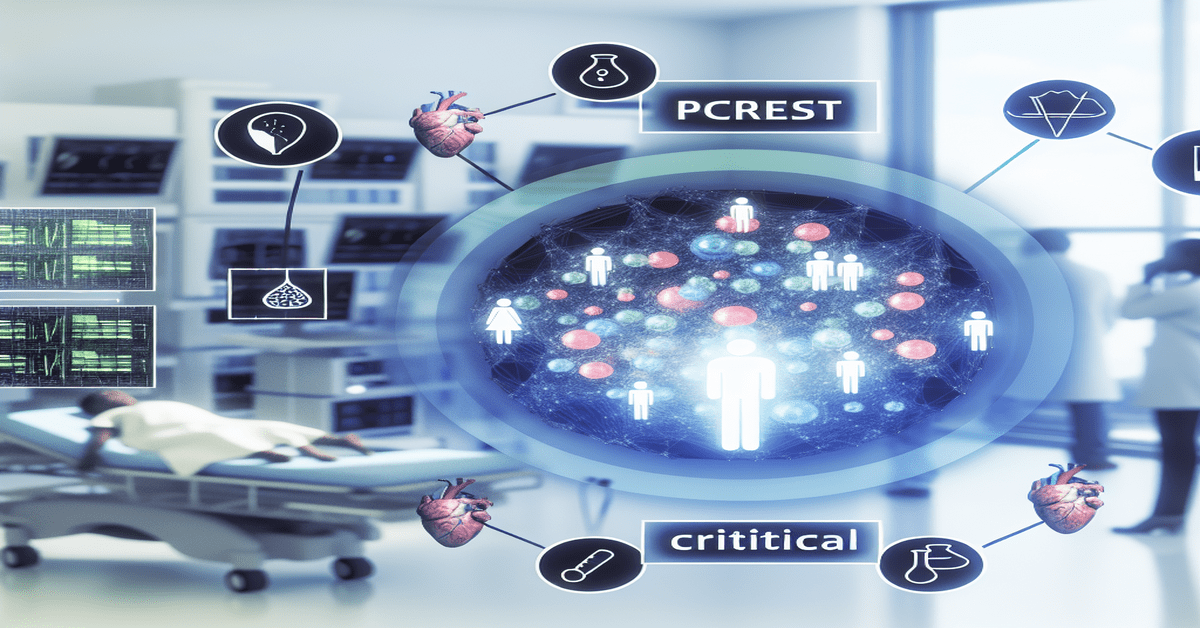
Introducing the pediatric Critical Event Risk Evaluation and Scoring Tool (pCREST), a cutting-edge solution developed by a team of researchers determined to address the limitations of existing pediatric risk assessment tools. By leveraging the power of electronic health record (EHR) data from over 135,000 pediatric admissions across three tertiary care centers, pCREST offers a comprehensive and consistent approach to risk evaluation[1][2].
The Challenges of Fragmented Risk Assessment
Traditionally, pediatric risk assessment tools have been plagued by fragmentation and inconsistency, varying widely between hospital units. This lack of standardization has made it difficult for healthcare providers to effectively identify and respond to potential critical events in a timely manner. The consequences of such fragmentation can be severe, leading to delayed interventions and increased morbidity and mortality among young patients.
pCREST aims to bridge these gaps by providing a unified, hospital-wide view of risk. By continuously assessing crucial factors such as patient age, hospital unit, vital signs, laboratory results, and prior comorbidities, the model offers a holistic and real-time evaluation of each child’s unique risk profile[1][2].
The Power of Machine Learning
To develop pCREST, researchers compared various modeling approaches, including regression-based models, an extreme gradient-boosted (XGB) model, and deep learning models. The XGB-based pCREST model emerged as the clear winner, demonstrating superior performance in predicting critical events within a 12-hour window of a vital sign or laboratory result observation[1][2].
The model’s **ability to discriminate** between high-risk and low-risk patients was particularly impressive, outperforming other approaches in clinically relevant metrics. This level of accuracy is crucial in enabling healthcare providers to make timely and informed decisions, potentially intervening before a critical event occurs.
Validation Across Hospital Units
One of the key strengths of pCREST is its **applicability across multiple hospital units**. Rather than being limited to specific departments, the model has been validated in various pediatric care settings, offering a comprehensive and reliable risk assessment tool for all hospitalized children[1][2].
This wide-ranging validation is a significant step forward in standardizing pediatric risk assessment, ensuring that healthcare providers have access to consistent and accurate information regardless of the unit in which a child is being treated.
The Impact on Pediatric Care
The implications of pCREST for the pediatric healthcare industry are profound. By providing more accurate and continuous risk stratification, the model empowers healthcare providers to make timely clinical decisions and potentially reduce morbidity and mortality in hospitalized children[1][2].
Moreover, the success of pCREST highlights the immense potential of machine learning in revolutionizing healthcare. As we continue to harness the power of data and advanced analytics, we can expect to see more innovative solutions that improve patient outcomes and transform the way we deliver care.
A Call to Action
The development of pCREST represents a significant milestone in the quest to ensure the safety and well-being of hospitalized children. As healthcare professionals, it is our responsibility to embrace such groundbreaking technologies and integrate them into our clinical practice.
By adopting tools like pCREST, we can enhance our ability to identify and mitigate risks, ultimately providing the highest quality of care to our youngest patients. Let us come together as a community of healthcare providers, researchers, and innovators to champion the widespread implementation of this life-saving technology.
Together, we can shape a future where every hospitalized child receives the timely and personalized care they deserve, thanks to the power of machine learning and the dedication of those who strive to make a difference in pediatric healthcare.
#PediatricHealthcare #MachineLearning #PatientSafety
-> Original article and inspiration provided by Anuja Vaidya
-> Connect with one of our LeadsProMax.ai Strategists today at LeadsProMax.ai
