
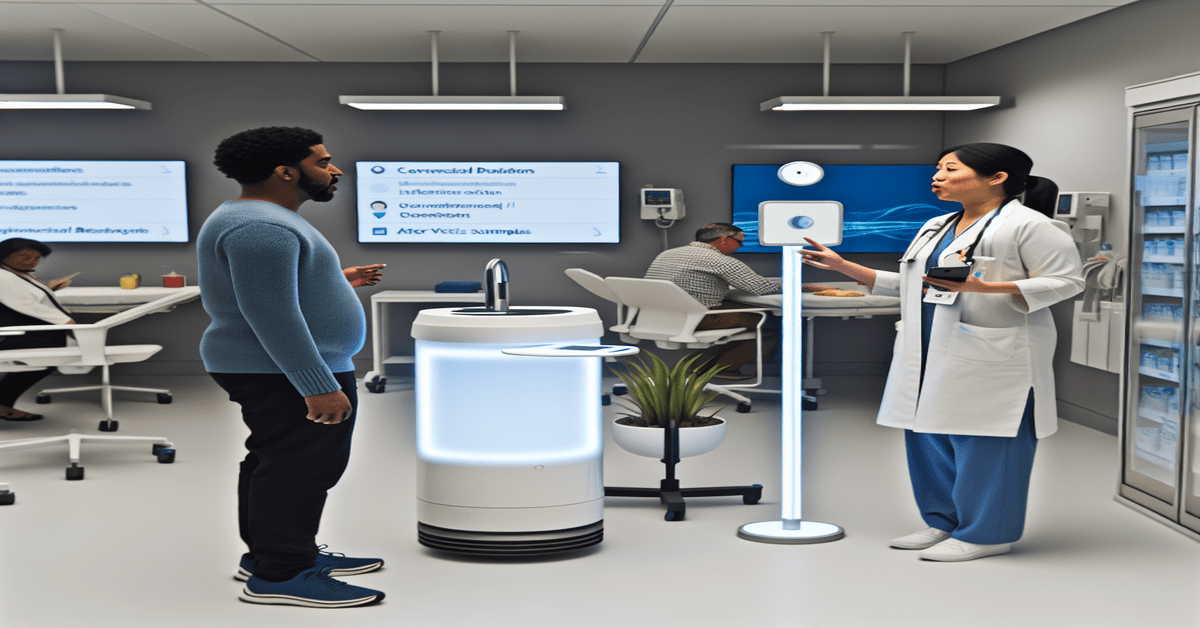
The Future of Healthcare: AI’s Transformative Impact on Medical Diagnostics
The healthcare industry is on the cusp of a revolution, and Artificial Intelligence (AI) is leading the charge. As AI continues to evolve and integrate with medical diagnostics, it’s reshaping the way we approach patient care, disease detection, and treatment planning. With the global AI in Medical Diagnostics Market projected to reach a staggering USD 22.6 billion by 2035[1], it’s clear that this technology is not just a passing trend but a game-changer in the world of healthcare.
Predictive Analytics: Unlocking the Power of Data
One of the most significant ways AI is transforming medical diagnostics is through its ability to harness the power of predictive analytics. By analyzing vast amounts of patient data, including medical records, genetic information, and lifestyle factors, AI algorithms can identify patterns and predict potential health risks with remarkable accuracy. This not only allows for earlier detection of diseases but also enables healthcare providers to develop personalized treatment plans tailored to each patient’s unique needs.
Imaging Precision: Enhancing Diagnostic Accuracy
Another area where AI is making significant strides is in medical imaging. With the development of sophisticated AI-powered tools, radiologists and pathologists can now analyze medical images with unparalleled precision. From detecting subtle abnormalities in X-rays and CT scans to identifying cancer cells in biopsy samples, AI is revolutionizing the field of diagnostic imaging. By reducing the risk of human error and improving the speed and accuracy of diagnoses, AI is ultimately leading to better patient outcomes and more efficient healthcare delivery.
Market Trends and Growth Drivers
The rapid expansion of the AI in diagnostics market is a testament to the technology’s immense potential. North America, in particular, has emerged as a dominant force, thanks to significant investments in AI research and development. However, the growth of this market is not limited to any one region. Governments around the world are recognizing the benefits of AI in healthcare and are implementing initiatives to support its adoption. Moreover, cross-industry collaborations between technology companies, healthcare providers, and research institutions are further driving innovation and accelerating the deployment of AI solutions.
Another key factor propelling the growth of AI in medical diagnostics is the increasing prevalence of chronic diseases. As the global population ages and lifestyle-related health issues become more common, the demand for efficient and accurate diagnostic tools is soaring. AI’s ability to process large volumes of data and identify early warning signs of diseases such as diabetes, heart disease, and cancer is proving invaluable in managing these conditions and improving patient outcomes.
Technological Innovations: Pushing the Boundaries
At the heart of AI’s transformative potential in medical diagnostics are the ongoing technological innovations in the field. From **deep learning** algorithms that can analyze complex medical datasets to natural language processing techniques that can extract insights from unstructured medical records, AI is continually evolving to meet the challenges of modern healthcare.
One particularly exciting development is the integration of AI with **wearable devices** and remote monitoring systems. By collecting real-time data on patients’ vital signs, activity levels, and other health indicators, AI algorithms can provide continuous monitoring and early detection of potential health issues. This not only improves patient outcomes but also reduces the burden on healthcare systems by preventing unnecessary hospitalizations and emergency room visits.
Looking Ahead: The Future of AI in Medical Diagnostics
As we look to the future, it’s clear that AI will continue to shape the landscape of medical diagnostics. With the market projected to reach USD 22.6 billion by 2035, there is no doubt that this technology will become an integral part of healthcare delivery. However, it’s important to note that AI is not a replacement for human expertise but rather a powerful tool to augment and support the work of healthcare professionals.
To fully realize the potential of AI in medical diagnostics, it’s crucial that we continue to invest in research and development, foster collaborations between industry stakeholders, and address the ethical and regulatory challenges that arise with the deployment of these technologies. By doing so, we can harness the power of AI to revolutionize healthcare, improve patient outcomes, and ultimately, save lives.
As healthcare professionals, researchers, and technology enthusiasts, it’s an exciting time to be at the forefront of this transformation. By staying informed about the latest advancements in AI and actively engaging in discussions about its applications in medical diagnostics, we can shape the future of healthcare and make a meaningful impact on the lives of patients around the world.
So, let’s embrace the possibilities, collaborate with our peers, and together, unlock the full potential of AI in medical diagnostics. The future of healthcare is here, and it’s up to us to make it a reality.
#AIinHealthcare #MedicalDiagnostics #InnovationinMedicine
-> Original article and inspiration provided by ReviewAgent.aiMetatech Insights – Market Research Industry
-> Connect with one of our AI Strategists today at ReviewAgent.ai