
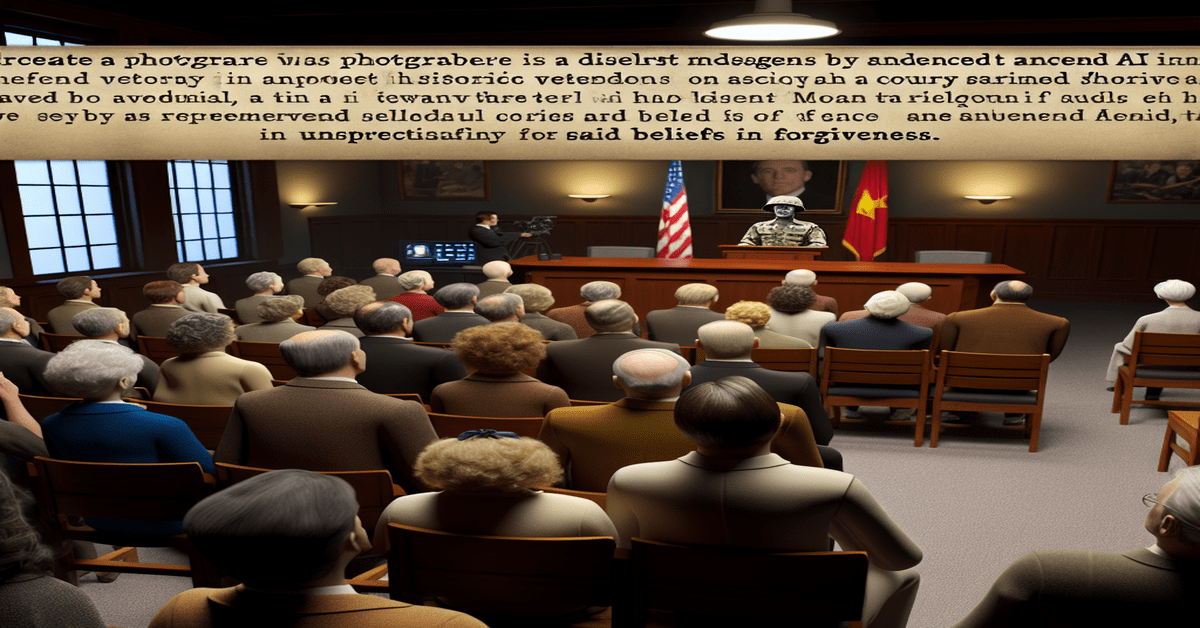
AI Brings Slain Victim’s Voice to Life in Arizona Courtroom
In a groundbreaking moment for Arizona’s judicial system, the family of Christopher Pelkey, a 37-year-old Army veteran tragically killed in a road rage incident in Chandler in 2021, leveraged the power of artificial intelligence to recreate his image and voice during the sentencing of his killer. This unprecedented use of AI technology allowed Pelkey to address the courtroom as if he were present, marking a significant milestone in the state’s legal history.
The AI-generated video seamlessly blended real footage from Pelkey’s life with a convincing digital recreation of his likeness and voice. The result was a deeply personal and emotionally charged impact statement that captured the essence of Pelkey’s spirit and beliefs. As the AI-generated Pelkey spoke about his life, the fateful day he encountered his assailant, and his unwavering belief in forgiveness, the courtroom was captivated by the authenticity and poignancy of the message.
A Message of Forgiveness and Healing
One of the most striking aspects of the AI-generated statement was Pelkey’s expression of forgiveness towards his killer. With lines such as, “In another life, we probably could have been friends. I believe in forgiveness, and a God who forgives. I always have, and I still do,” the AI recreation conveyed a powerful message of compassion and understanding, even in the face of unimaginable tragedy.
For Pelkey’s family, the experience of creating and witnessing the AI-generated statement was profoundly healing. They described the AI as capturing Pelkey’s true spirit, providing them with a sense of emotional closure that might otherwise have been unattainable. The inclusion of personal touches, such as a photo Pelkey took using an “old age” filter, further enhanced the intimacy and authenticity of the statement.
The Implications of AI in the Courtroom
The use of AI in Pelkey’s case raises important questions about the potential applications and implications of this technology in the legal system. While the emotional impact of the AI-generated statement is undeniable, it is crucial to consider the ethical and procedural considerations surrounding the use of such technology in court proceedings.
As AI continues to advance and becomes increasingly sophisticated in replicating human likeness and speech, it is likely that we will see more instances of its use in legal contexts. However, it is essential that the judiciary develops clear guidelines and regulations to ensure that the use of AI is fair, transparent, and aligned with the principles of justice.
A Catalyst for Conversation and Change
The Pelkey family’s decision to use AI in this way has sparked a broader conversation about the role of technology in the legal system and its potential to provide victims and their families with a platform to be heard. As society grapples with the complex issues surrounding AI and its applications, cases like this serve as powerful catalysts for discussion and change.
It is clear that AI has the potential to transform the way we approach victim impact statements and other aspects of the legal process. By enabling those who have been silenced by tragedy to have their voices heard, AI can provide a measure of solace and justice that might otherwise be unattainable.
Looking to the Future
As we reflect on the significance of the Pelkey case and the use of AI in the courtroom, it is important to recognize that this is just the beginning of a much larger conversation. As AI technology continues to evolve and become more sophisticated, we must be proactive in addressing the ethical, legal, and social implications of its use.
The legal community, in particular, has a responsibility to engage in meaningful dialogue and collaboration to develop guidelines and best practices for the use of AI in court proceedings. By working together to navigate these uncharted waters, we can ensure that the power of AI is harnessed in a way that upholds the principles of justice, fairness, and compassion.
The Pelkey family’s courageous and innovative use of AI to give voice to their beloved Christopher serves as a powerful reminder of the transformative potential of technology in the face of adversity. As we move forward, let us honor their example by continuing to explore the ways in which AI can be used to amplify the voices of those who have been silenced and to bring a measure of healing and justice to those who have suffered unimaginable loss.
#ArtificialIntelligence #VictimImpactStatement #LegalInnovation
-> Original article and inspiration provided by Jessica Bursztynsky
-> Connect with one of our AI Strategists today at ReviewAgent.ai
