
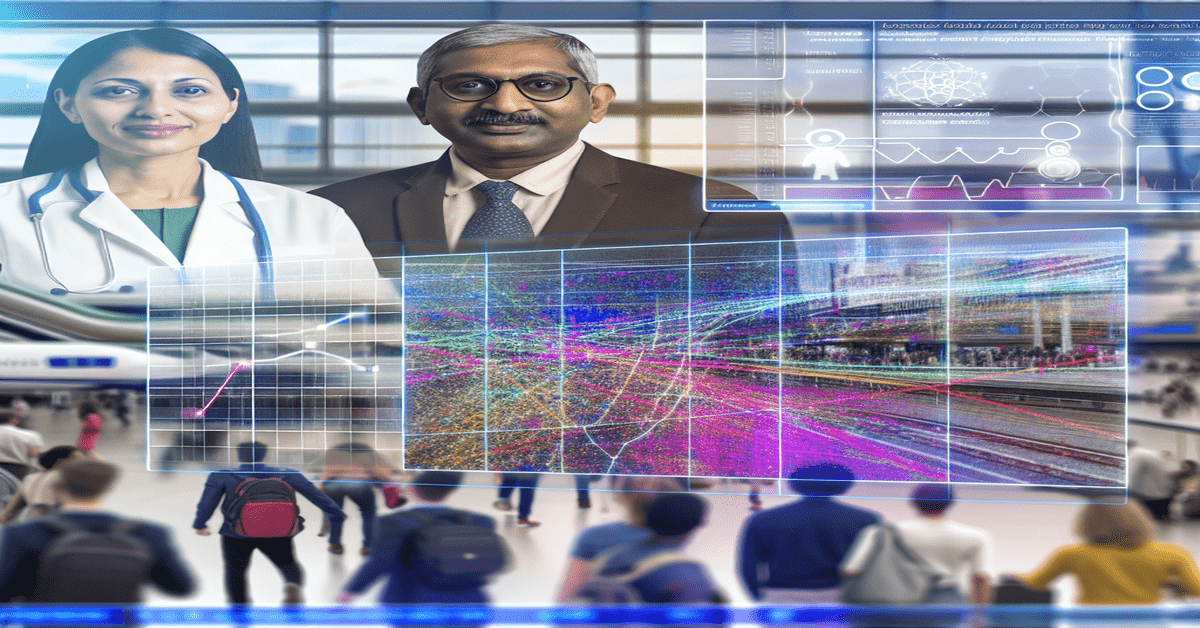
Predictive Models: The Future of Curbing Disease Spread in Urban Hubs
In an era where global connectivity and rapid urbanization have become the norm, the threat of disease outbreaks looms larger than ever. As we’ve seen with recent pandemics, the spread of pathogens can have devastating consequences on public health, economies, and social stability. However, cutting-edge research by Tulasi Naga Subhash Polineni offers a glimmer of hope in the form of **predictive models** that could revolutionize how we manage disease spread in urban hubs.
The Power of AI-Driven Predictive Modeling
At the heart of Polineni’s research lies the application of artificial intelligence (AI) to predict and mitigate disease outbreaks. By leveraging machine learning techniques, his team has developed sophisticated models that can analyze vast amounts of data on population dynamics and mobility patterns to forecast the potential spread of pathogens.
What sets this approach apart is its focus on **high-density populations**, such as those found in airports and other transportation hubs. These environments are particularly vulnerable to disease transmission due to the constant flow of people from diverse locations, making them critical points of intervention for public health efforts.
Airline Populations: A Case Study in Predictive Modeling
To validate the effectiveness of their predictive models, Polineni and his team conducted a case study focusing on airline passenger moving patterns. By analyzing real-time data on passenger flows and potential contact points, they were able to simulate outbreak scenarios and assess the accuracy of their predictions.
The results were promising, with the models demonstrating a high degree of precision in identifying potential disease transmission routes and estimating the **risk levels** associated with different passenger movements. This level of granularity could prove invaluable in developing targeted interventions to curb the spread of diseases in urban hubs.
Real-Time Monitoring: The Key to Proactive Response
Another crucial aspect of Polineni’s research is the emphasis on **real-time monitoring** of disease outbreaks. By continuously analyzing population data and detecting surge events, his team’s models can provide early warning signs of potential outbreaks, allowing public health authorities to take proactive measures to contain the spread.
This proactive approach is a significant departure from traditional reactive measures, which often struggle to keep pace with the rapid spread of diseases in urban environments. By identifying potential outbreaks before they spiral out of control, predictive models could help save countless lives and minimize the economic and social disruption caused by disease spread.
The Broader Implications of AI in Healthcare
While Polineni’s research specifically addresses disease spread in urban hubs, his work is part of a broader trend of applying AI to healthcare challenges. In fact, his interests extend beyond predictive modeling to include the use of **deep learning and generative AI** in sports medicine, particularly in developing personalized rehabilitation protocols and injury prevention strategies for professional athletes[5].
These applications underscore the vast potential of AI in improving public health and medical outcomes across multiple domains. As we continue to grapple with the challenges posed by globalization and urbanization, the development of predictive models and other AI-driven solutions will be crucial in ensuring the health and well-being of populations worldwide.
The Way Forward
As exciting as these developments are, it’s important to recognize that the implementation of predictive models in real-world settings will require close collaboration between researchers, public health authorities, and policymakers. It will also necessitate a commitment to ethical and responsible use of AI, ensuring that these powerful tools are deployed in a manner that respects individual privacy and promotes equity in healthcare access.
Nevertheless, the work of researchers like Tulasi Naga Subhash Polineni offers a compelling vision of a future where we can harness the power of AI to protect public health and build more resilient communities. As we move forward, it’s crucial that we continue to support and invest in this groundbreaking research, recognizing its potential to transform how we approach disease prevention and control in an increasingly interconnected world.
#PredictiveModeling #DiseaseControl #UrbanHealth #AIinHealthcare
-> Original article and inspiration provided by Outlook India
-> Connect with one of our AI Strategists today at ReviewAgent.ai