Empowering Resilience with AI: Insights from BCAW+R 2025
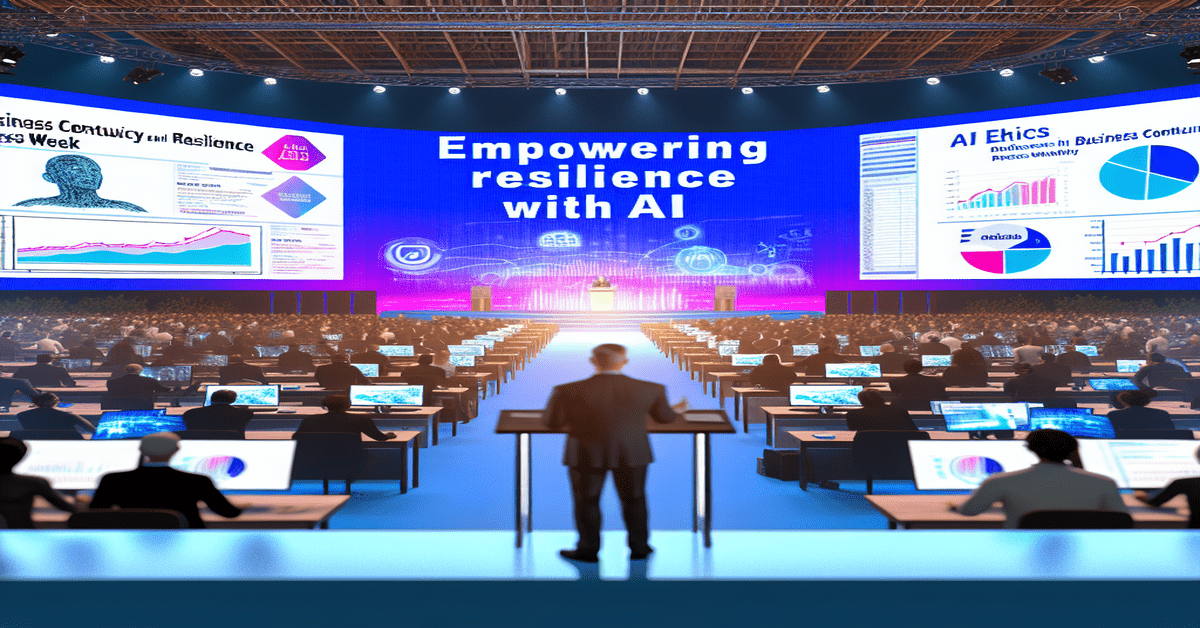
The Business Continuity and Resilience Awareness Week (BCAW+R) 2025 kicked off with a bang on May 19th, focusing on the theme “Empowering Resilience with AI.” As the world continues to navigate through uncertain times, the importance of building resilient businesses has never been more apparent. This year’s event delved into how AI is revolutionizing the way organizations approach business continuity and resilience.
Predictive Analytics and Forecasting: The Future of Resilience
The first day of BCAW+R 2025 was dedicated to exploring the role of **predictive analytics and forecasting** in enhancing resilience strategies. In an eye-opening session, industry experts highlighted how AI-driven predictive analytics is transforming the way organizations detect emerging threats, model crisis scenarios, and make informed decisions faster.
Imagine a world where your organization can anticipate potential disruptions before they occur, giving you ample time to prepare and mitigate risks. That’s precisely what AI-powered predictive analytics enables. By analyzing vast amounts of data from various sources, such as social media, news outlets, and internal systems, AI algorithms can identify patterns and anomalies that may indicate potential threats on the horizon.
Modeling Crisis Scenarios: Preparing for the Worst
One of the most significant advantages of AI in business continuity planning is its ability to model crisis scenarios. By simulating various disruptions, such as natural disasters, cyber-attacks, or supply chain failures, organizations can assess their readiness and identify vulnerabilities in their resilience strategies.
AI algorithms can process massive amounts of data, considering multiple variables and dependencies, to generate realistic crisis scenarios. This enables organizations to stress-test their business continuity plans, identify gaps, and make necessary improvements before a real crisis strikes.
AI Ethics: A New Factor in Business Continuity
While AI offers tremendous potential for enhancing resilience, it also introduces new ethical considerations that organizations must address. BCAW+R 2025 featured a thought-provoking webinar on “AI ethics, a new factor in business continuity,” emphasizing the importance of incorporating ethical principles into business continuity planning.
As organizations increasingly rely on AI for critical decision-making, it becomes crucial to ensure that the algorithms are fair, transparent, and accountable. Biased or opaque AI systems can lead to unintended consequences and exacerbate existing inequalities. Therefore, organizations must prioritize **ethical AI development** and establish governance frameworks to mitigate potential risks.
Building Trust in AI-Driven Resilience
To fully harness the power of AI in building resilient businesses, organizations must foster trust among stakeholders. This involves being transparent about how AI is used, ensuring data privacy and security, and engaging in open dialogue with employees, customers, and regulators.
Building trust in AI-driven resilience strategies requires a multi-faceted approach. Organizations must invest in employee training to promote AI literacy and empower individuals to understand and engage with AI systems effectively. Additionally, establishing clear communication channels and providing opportunities for feedback and concerns to be addressed is essential.
The Path Forward: Embracing AI for Resilient Businesses
As BCAW+R 2025 continues, it becomes evident that AI is not just a buzzword but a transformative force in building resilient businesses. By leveraging the power of predictive analytics, modeling crisis scenarios, and prioritizing ethical considerations, organizations can enhance their ability to anticipate, prepare for, and recover from disruptions.
However, embracing AI for resilience is not a one-time event; it is an ongoing journey. Organizations must continuously assess and adapt their AI strategies to keep pace with the evolving threat landscape and technological advancements. Collaboration and knowledge sharing among industry peers, as facilitated by events like BCAW+R, are crucial in driving collective progress.
As we move forward, it is essential to recognize that AI is not a silver bullet for resilience. It is a powerful tool that, when combined with human expertise and judgment, can significantly enhance an organization’s ability to navigate uncertainty and thrive in the face of adversity.
So, let’s embrace the future of resilience, powered by AI, and build businesses that can withstand the tests of time. Join the conversation, share your insights, and be part of the movement towards a more resilient future.
#Resilience #AI #BusinessContinuity #BCAWR2025
-> Original article and inspiration provided by The BCI
-> Connect with one of our AI Strategists today at ReviewAgent.ai