
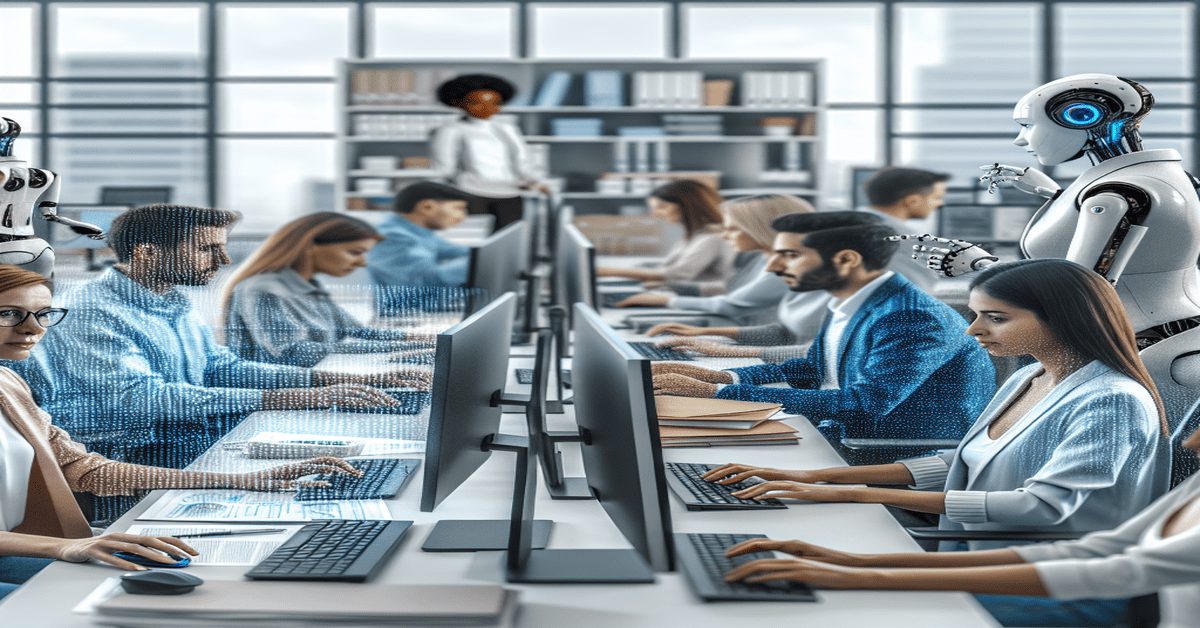
The AI Revolution: Embracing the Augmented Workforce
In recent years, artificial intelligence (AI) has emerged as a transformative force, reshaping industries and redefining the way we work. As we stand on the cusp of a new era, it is becoming increasingly clear that the integration of AI into our workplaces is not just a passing trend but a fundamental shift in the way we approach work. With a projected market size of $826.7 billion by 2030, the rise of the augmented workforce is no longer a distant future but a present reality.
The Power of AI Integration
The integration of AI into various workplace environments is revolutionizing the way we perform tasks and make decisions. From automating repetitive processes to enhancing decision-making capabilities, AI is proving to be a valuable asset across industries. **By leveraging the power of machine learning algorithms and natural language processing, AI-powered systems are capable of analyzing vast amounts of data, identifying patterns, and providing insights that would otherwise be impossible for humans to discern.**
One of the most significant advantages of AI integration is its ability to streamline workflows and boost productivity. By automating mundane and time-consuming tasks, AI frees up human employees to focus on more strategic and high-value activities. This shift in focus allows organizations to optimize their resources and drive innovation, ultimately leading to increased competitiveness and growth.
The Rise of the Augmented Workforce
The concept of an augmented workforce, where humans and AI work hand in hand, is rapidly gaining traction. In this new paradigm, AI is not seen as a replacement for human workers but rather as a powerful tool that enhances their capabilities. By leveraging the strengths of both humans and machines, organizations can achieve unprecedented levels of efficiency and effectiveness.
One of the key areas where AI is making a significant impact is in the realm of decision-making. **By analyzing vast amounts of data and identifying patterns that may not be immediately apparent to human analysts, AI can provide valuable insights and recommendations that inform strategic decisions.** This augmented decision-making process allows organizations to make more informed choices, reduce risks, and seize opportunities that may have otherwise been overlooked.
Real-World Applications
The applications of AI in the workplace are vast and varied. From sourcing and hiring to customer service and quality control, AI is being deployed across a wide range of functions. In the realm of human resources, AI-powered tools are revolutionizing the way companies identify and attract top talent. By analyzing resumes and conducting initial screenings, AI can help streamline the recruitment process and ensure that only the most qualified candidates are considered for open positions.
In customer service, AI-powered chatbots and virtual assistants are becoming increasingly sophisticated, allowing organizations to provide 24/7 support to their customers. These intelligent systems can handle a wide range of queries and provide personalized responses, freeing up human agents to focus on more complex and nuanced interactions.
Another area where AI is making significant strides is in the field of quality control. **By leveraging computer vision and machine learning algorithms, AI-powered systems can detect defects and anomalies in products with unparalleled accuracy.** This not only improves the overall quality of goods but also reduces the risk of costly recalls and reputational damage.
Preparing for the Future of Work
As AI continues to evolve and become more integrated into our workplaces, it is crucial for organizations and individuals alike to adapt and prepare for the future of work. The shift from a traditional 9-to-5 workday to an AI-augmented workforce will require significant upskilling and reskilling efforts. Employees will need to develop new skills and competencies to work effectively alongside AI systems and leverage their capabilities to drive business outcomes.
For business leaders, the rise of the augmented workforce presents both challenges and opportunities. On one hand, the integration of AI requires significant investments in technology and talent. On the other hand, the potential benefits in terms of increased efficiency, productivity, and innovation are immense. To stay ahead of the curve, leaders must embrace the change and develop strategies that harness the power of AI while also fostering a culture of continuous learning and adaptation.
Conclusion
The rise of the augmented workforce is not a distant future but a present reality. As AI continues to transform the way we work, it is essential for organizations and individuals to embrace the change and adapt to the new paradigm. By leveraging the power of AI and fostering a culture of continuous learning, we can unlock new levels of efficiency, innovation, and growth. The future of work is here, and those who embrace the augmented workforce will be the ones who thrive in the digital age.
#AugmentedWorkforce #AIRevolution #FutureOfWork
-> Original article and inspiration provided by Hacker Noon
-> Connect with one of our AI Strategists today at Opahl Technologies