
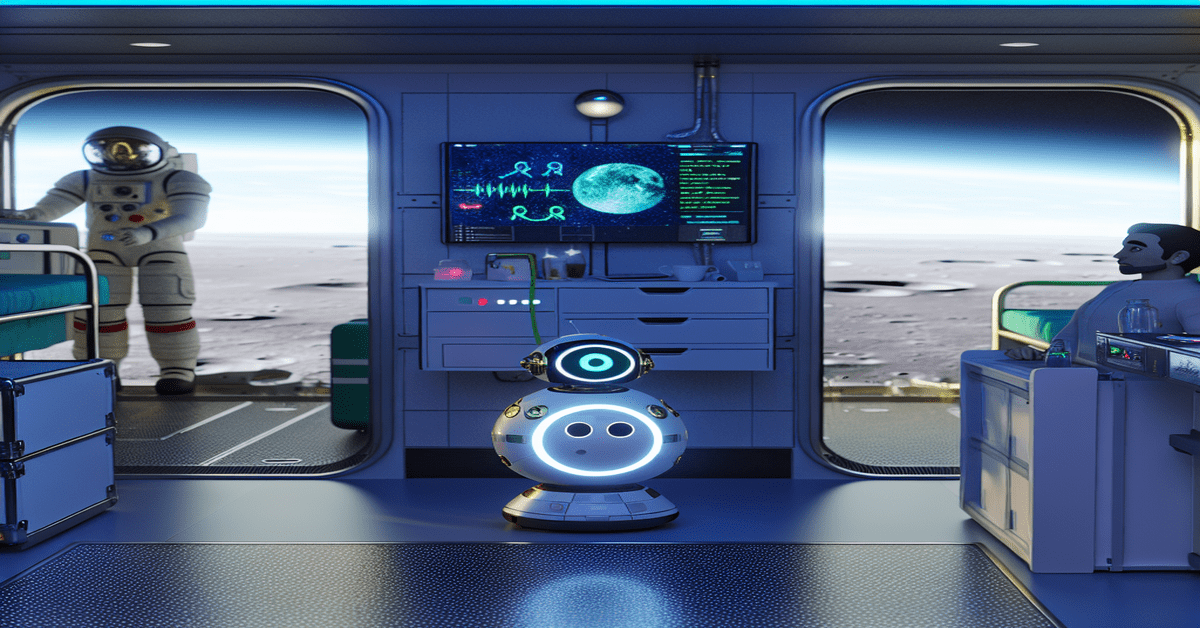
NASA and Google Collaborate on AI-Powered Medical Assistant for Space Missions
In an exciting development, NASA and Google are joining forces to revolutionize healthcare in space. The two industry giants are collaborating to develop and test an AI-powered medical assistant called the Crew Medical Officer Digital Assistant (CMO-DA). This cutting-edge technology aims to support astronauts’ health on long-duration space missions, such as upcoming journeys to the Moon and Mars[1][2][3][4][5].
The CMO-DA leverages the power of natural language processing and machine learning to provide real-time assistance to astronauts. By analyzing reported symptoms, the AI tool can help diagnose conditions and suggest appropriate treatments. It also offers clinical decision support, which is especially crucial when communication delays or limited contact with Earth-based doctors make immediate medical consultation impossible[1][2][3][4][5].
Trained on Spaceflight Medical Literature
To ensure its effectiveness, the CMO-DA has undergone extensive training using spaceflight medical literature. This comprehensive knowledge base allows the AI to accurately assess and respond to a wide range of medical scenarios that astronauts may encounter during their missions[1][2][3][5].
The AI has been put to the test through simulated clinical scenarios, demonstrating its reliable diagnostic capability based on the symptoms reported by the astronauts. By providing detailed data and predictive analytics, the CMO-DA aims to enhance the decision-making autonomy of the onboard medical officer and flight surgeons[1][2][3][5].
Collaboration with Medical Experts
NASA and Google recognize the importance of collaborating with medical experts to refine the CMO-DA model. They are actively working with healthcare professionals to broaden the AI’s accuracy and usability. This collaborative effort ensures that the CMO-DA is not only technologically advanced but also aligns with the best practices and guidelines of the medical community[1][2][3][5].
Critical for Long-Duration Space Missions
The development of the CMO-DA comes at a crucial time as NASA prepares for ambitious space missions, including trips to Mars. These missions pose unique challenges, such as communication delays of up to 40 minutes each way and the impossibility of quick medical evacuation. In such scenarios, a robust onboard AI medical system like the CMO-DA becomes a critical component for managing health incidents autonomously[1][2][3].
By providing real-time support and guidance, the CMO-DA empowers astronauts to make informed decisions about their health and well-being, even in the face of communication delays and limited access to Earth-based medical expertise[1][2][3].
Potential Applications on Earth
While the primary focus of the CMO-DA is to support astronauts during space missions, the technology has the potential to revolutionize healthcare in remote or resource-limited environments on Earth. The AI-powered medical assistant could be adapted to assist healthcare providers in areas where access to medical expertise is limited, enabling timely diagnosis and treatment[1][2][3].
The Future of Healthcare in Space and Beyond
The collaboration between NASA and Google on the CMO-DA represents a significant step forward in the field of space medicine. By harnessing the power of artificial intelligence, this innovative medical assistant has the potential to transform healthcare delivery not only in space but also in remote areas on Earth.
As the development and testing of the CMO-DA progress, it is clear that this technology will play a vital role in ensuring the health and safety of astronauts during long-duration space missions. It also opens up exciting possibilities for improving healthcare access and outcomes in underserved communities worldwide.
The partnership between NASA and Google showcases the incredible potential of combining expertise from different industries to solve complex challenges. As we look to the future of space exploration and healthcare innovation, the CMO-DA serves as a shining example of what can be achieved through collaboration, ingenuity, and a shared commitment to pushing the boundaries of what is possible.
#SpaceMedicine #AIHealthcare #NASAGoogleCollaboration
-> Original article and inspiration provided by PYMNTS
-> Connect with one of our AI Strategists today at Opahl Technologies
