
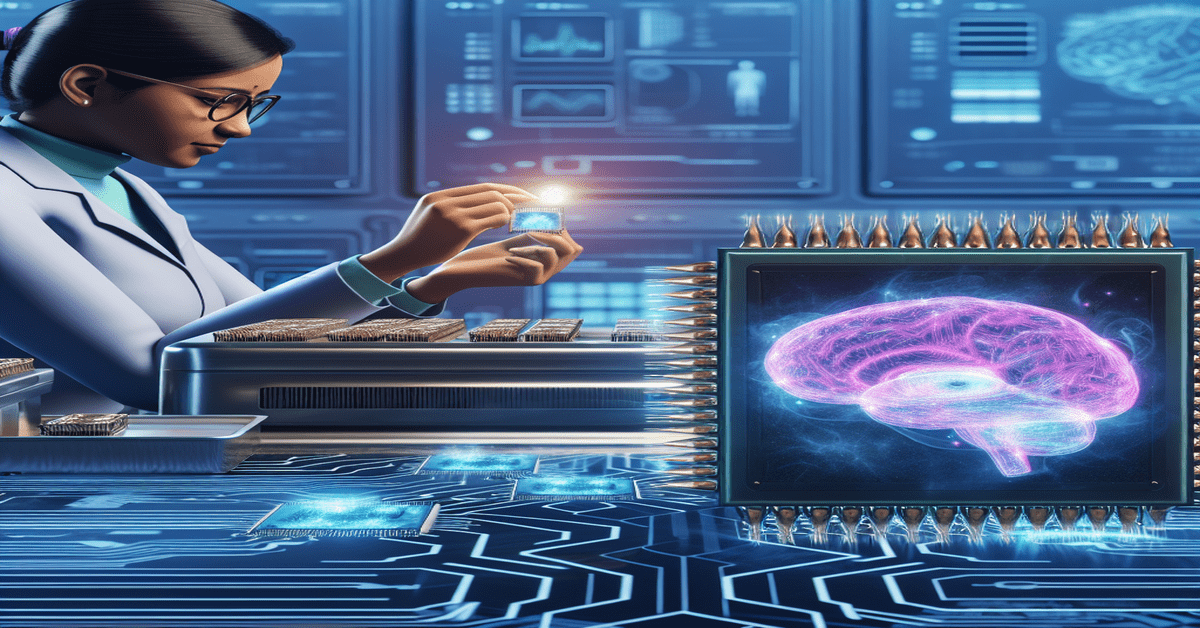
The Future of AI: Brain-Inspired Chips Revolutionizing Energy-Efficient Computing
In the rapidly evolving world of artificial intelligence (AI), the demand for powerful, energy-efficient computing solutions has never been greater. As AI continues to permeate every aspect of our lives, from smartphones to smart homes, the need for innovative technologies that can keep pace with this growth is becoming increasingly apparent. Enter Professor Hussam Amrouch and his groundbreaking brain-inspired AI chip, a game-changer in the realm of energy-efficient, on-device computations.
Mimicking the Brain’s Neural Networks
The human brain is a marvel of efficiency, capable of processing vast amounts of information while consuming minimal energy. Professor Amrouch’s AI chip takes inspiration from this biological wonder, mimicking the brain’s neural networks to enable more efficient data processing. By emulating the way neurons communicate and process information, the chip can perform complex computations while consuming significantly less power than traditional AI systems.
Enhancing Cybersecurity through On-Device Processing
One of the key advantages of Professor Amrouch’s brain-inspired AI chip is its ability to perform **on-device computations**. In an era where data privacy and security are of utmost importance, this feature is a game-changer. By processing data directly on the device, rather than relying on centralized data centers, the chip reduces the risk of data breaches and enhances overall **cybersecurity**. This decentralized approach to AI computing not only protects sensitive information but also reduces the latency associated with data transmission, enabling faster, more responsive AI applications.
Enabling AI in Off-Grid Environments
The **energy-efficient** nature of Professor Amrouch’s AI chip opens up a world of possibilities for AI applications in **off-grid environments**. From remote agricultural monitoring to disaster relief efforts, the ability to perform AI computations without relying on power-hungry data centers is a significant breakthrough. By reducing the energy requirements of AI systems, this technology has the potential to bring the benefits of AI to communities and regions that have traditionally been underserved due to limited energy resources.
Aligning with Industry Trends
Professor Amrouch’s brain-inspired AI chip is not an isolated innovation; it aligns with broader efforts within the industry to address the high energy demands of AI systems. Organizations like DARPA are actively supporting the development of **low-power analogue AI chips**, recognizing the need for more efficient AI computing solutions. These initiatives aim to leverage advanced semiconductor technologies and edge computing to reduce the energy consumption of AI applications, making them more sustainable and accessible.
The Potential Impact on Industries
The implications of brain-inspired AI chips like Professor Amrouch’s are far-reaching, with the potential to revolutionize industries across the board. From healthcare to transportation, energy-efficient AI computing can enable the development of smart, responsive systems that can adapt to real-world conditions in real-time. For example, in the automotive industry, brain-inspired AI chips could power advanced driver assistance systems (ADAS) and autonomous vehicles, enabling safer, more efficient transportation. In the healthcare sector, these chips could enable the development of portable, AI-powered diagnostic tools that can be used in remote or resource-limited settings.
Looking to the Future
As we look to the future of AI, it is clear that energy-efficient computing will play a crucial role in shaping the landscape. Professor Amrouch’s brain-inspired AI chip is a significant step forward in this direction, showcasing the potential for innovative technologies to address the challenges associated with AI’s growing energy demands. As the industry continues to evolve, we can expect to see more groundbreaking advancements in AI chip technology, paving the way for a future where AI is not only more powerful but also more sustainable and accessible.
#BrainInspiredAI #EnergyEfficientComputing #FutureOfAI
-> Original article and inspiration provided by Ron Schmelzer
-> Connect with one of our AI Strategists today at Opahl Technologies