
Revolutionizing Maritime Navigation: The Google Maps of the Sea
In a world increasingly focused on sustainability and reducing carbon emissions, the shipping industry has long been a significant contributor to global greenhouse gas emissions. However, a groundbreaking innovation from an Australian professor at the University of New South Wales (UNSW) is set to change the game. This cutting-edge navigation system, aptly described as “Google Maps for the sea,” aims to revolutionize the way cargo ships navigate the oceans, leading to substantial reductions in fuel consumption and carbon emissions.
Harnessing the Power of Ocean Currents
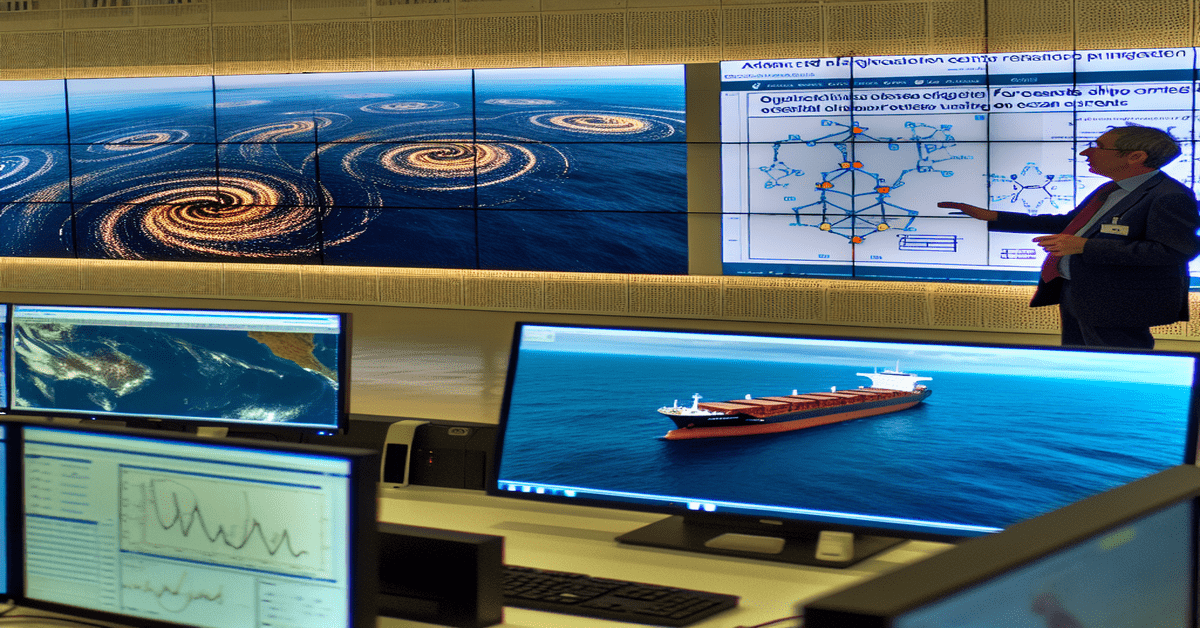
Professor Katy Tant, a researcher at UNSW, has developed a sophisticated navigation system that leverages the immense power of ocean currents to optimize shipping routes. By tapping into the kinetic energy of swirling eddies, which make up a significant portion of the ocean’s energy, this system enables cargo ships to chart the most efficient paths between ports.
Optimizing Routes for Efficiency
Traditional shipping routes often prioritize the shortest distance between ports, disregarding the potential benefits of ocean currents. However, Professor Tant’s system takes a different approach. By analyzing real-time satellite data and employing artificial intelligence algorithms, the system calculates optimized routes that allow ships to ride favorable currents, even if it means covering slightly longer distances on the surface.
The result is a win-win situation for both the shipping industry and the environment. By harnessing the power of ocean currents, ships can maintain their transit times while consuming less fuel and emitting fewer greenhouse gases. This innovative approach challenges the conventional wisdom of shortest-path navigation and opens up new possibilities for sustainable maritime transportation.
The Technology Behind the Revolution
At the heart of this revolutionary navigation system lies a combination of cutting-edge technologies. The system relies on high-resolution ocean current forecasts, which are generated by integrating satellite data with measurements from ship sensors. This precise ocean current information is crucial for accurately predicting the most efficient routes.
Professor Tant and her team have developed sophisticated algorithms that analyze vast amounts of data in real-time, taking into account factors such as wind patterns, sea surface temperatures, and the complex interplay of ocean currents. By leveraging artificial intelligence and machine learning techniques, the system continuously refines its predictions, ensuring that ships can adapt to changing conditions and optimize their routes accordingly.
The Impact on the Shipping Industry
The potential impact of this “Google Maps for the sea” on the shipping industry is immense. By reducing fuel consumption and emissions without requiring costly modifications to vessels, this technology offers a cost-effective solution for shipping companies to enhance their sustainability efforts.
According to Professor Tant, ships that utilize this navigation system can expect to see significant reductions in fuel consumption and carbon emissions. In fact, initial studies suggest that by riding favorable currents, ships can potentially save up to 10% on fuel costs while simultaneously reducing their carbon footprint.
Moreover, this technology has the potential to revolutionize the way shipping companies plan their routes and optimize their operations. By integrating real-time ocean current data into their decision-making processes, companies can make informed choices that prioritize both efficiency and sustainability.
Collaboration and Commercialization
To bring this groundbreaking technology to the shipping industry, Professor Tant and her team are collaborating with industry partners like Sakata Innovations in Sydney. This partnership aims to commercialize the research and make the navigation system accessible to shipping companies worldwide.
By working closely with industry experts and stakeholders, Professor Tant and her collaborators are ensuring that the technology is tailored to the specific needs and challenges of the shipping industry. This collaborative approach is crucial for the successful adoption and implementation of the navigation system on a global scale.
Looking to the Future
As the world continues to grapple with the urgent need to address climate change and reduce carbon emissions, innovations like Professor Tant’s “Google Maps for the sea” offer a glimmer of hope. By harnessing the power of ocean currents and leveraging cutting-edge technologies, this navigation system has the potential to transform the shipping industry and contribute to a more sustainable future.
As the technology continues to evolve and gain traction, it is essential for shipping companies, policymakers, and researchers to collaborate and support initiatives that promote sustainable maritime practices. By embracing innovative solutions like this navigation system, the shipping industry can play a vital role in mitigating the environmental impact of global trade while maintaining its economic viability.
The development of this “Google Maps for the sea” is a testament to the ingenuity and dedication of researchers like Professor Tant, who are at the forefront of finding creative solutions to complex challenges. As we navigate the uncharted waters of a rapidly changing world, such innovations offer hope and inspiration for a more sustainable and resilient future.
#SustainableShipping #OceanCurrentNavigation #CarbonEmissionsReduction #InnovativeTechnology #CollaborativeResearch
-> Original article and inspiration provided by Sam Chambers
-> Connect with one of our AI Strategists today at ReviewAgent.ai
