
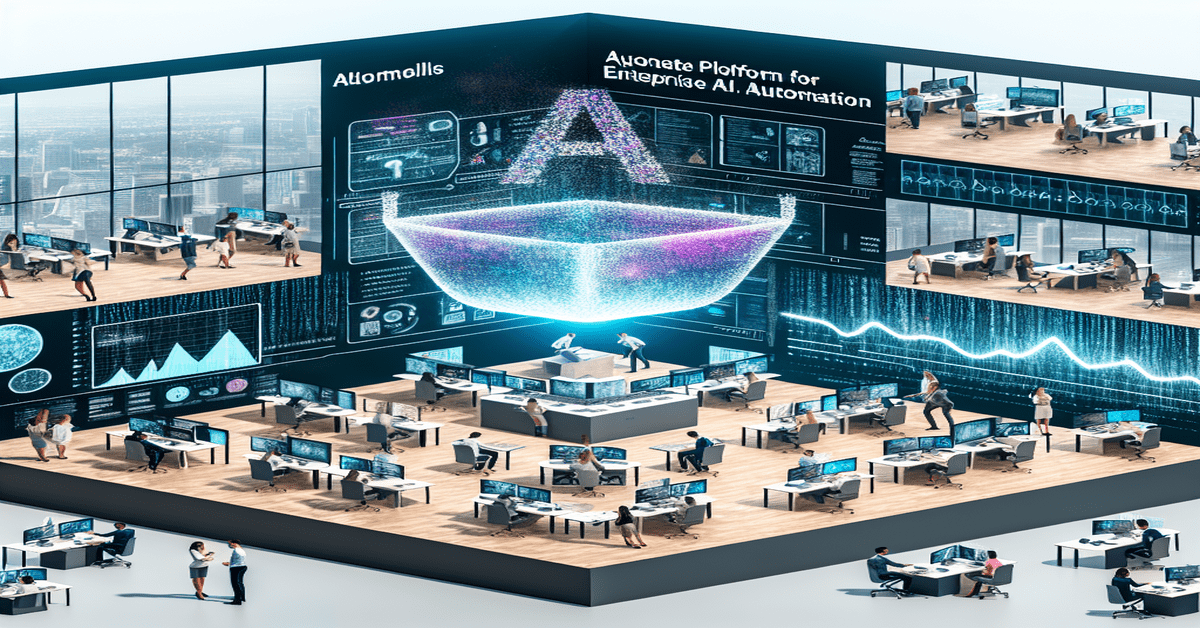
The AI Revolution: How Autonomous Agents are Transforming Enterprise Analytics
The world of enterprise technology is undergoing a seismic shift as autonomous AI agents rapidly move from niche concepts to central roles in data analytics and automation. Distinguished Data Architect Mahesh Kumar Goyal recently shared his insights on this transformative trend, highlighting the potential for AI agents to revolutionize how businesses operate and make decisions[1].
The Rise of AI Agents in Enterprise Automation
As powerful new AI models emerge and developer toolkits improve, the adoption of autonomous agents is becoming increasingly widespread across industries. These intelligent systems are no longer confined to research labs or limited applications; they are now being integrated into the core processes of enterprises worldwide[1].
The driving force behind this shift is the immense potential of generative AI (GenAI) to automate and optimize critical business functions. By leveraging the power of machine learning and natural language processing, AI agents can analyze vast amounts of data, identify patterns, and make informed decisions at a scale and speed that would be impossible for human teams alone[1].
Navigating the Challenges of AI Adoption
While the benefits of AI agents are clear, organizations must also navigate significant challenges as they seek to deploy these technologies at scale. One major hurdle is the issue of vendor lock-in, where businesses find themselves tied to proprietary platforms that limit their flexibility and control over their AI systems[1].
Data quality and security are also critical concerns, as the effectiveness and trustworthiness of AI agents depend on the integrity and protection of the data they process. Establishing robust security frameworks and ensuring the privacy of sensitive information is essential for the responsible deployment of autonomous agents[1][4].
The Promise of Open Source Solutions
To address these challenges, initiatives like the Open Platform for Enterprise AI (OPEA) are emerging as potential solutions. OPEA aims to provide a flexible, enterprise-ready architecture for building and deploying intelligent agents, allowing organizations to avoid vendor lock-in and maintain greater control over their AI systems[1].
By leveraging open-source technologies and promoting interoperability across platforms, OPEA and similar efforts are paving the way for a more accessible and sustainable approach to AI adoption in the enterprise[1].
Real-World Applications of AI Agents
The impact of autonomous agents is already being felt across various industries, with numerous examples showcasing their potential to transform business processes. One such application is in the realm of automated purchasing, where AI agents can intelligently track prices, consider factors like customer reviews and real-time stock availability, and make informed recommendations to streamline procurement workflows[1].
For instance, imagine an AI agent tasked with purchasing office supplies for a large corporation. By continuously monitoring multiple vendors, comparing prices, and analyzing customer feedback, the agent can identify the best deals and ensure that the company always has the necessary supplies on hand. This not only saves time and resources but also enables employees to focus on higher-value tasks[1].
The Future of Enterprise Analytics and Automation
As AI agents continue to evolve and mature, their potential to revolutionize enterprise analytics and automation is becoming increasingly evident. However, realizing this potential will require ongoing innovation and collaboration between technology providers, businesses, and regulatory bodies[1][4].
The establishment of robust security, governance, and interoperability frameworks will be critical to ensuring the trustworthy and scalable deployment of autonomous agents. By working together to address these challenges, we can unlock the full power of AI and drive transformative change across industries[1][4].
Embracing the AI Revolution
The rise of autonomous AI agents represents a pivotal moment in the history of enterprise technology. As these intelligent systems become increasingly central to business operations, organizations that embrace this shift and strategically integrate AI into their processes will be well-positioned to thrive in the digital age[1].
By staying informed about the latest developments in AI, investing in the necessary infrastructure and talent, and collaborating with trusted technology partners, businesses can harness the power of autonomous agents to drive innovation, improve decision-making, and achieve unprecedented levels of efficiency and productivity[1].
The AI revolution is here, and the future belongs to those who are ready to seize the opportunities it presents. Are you prepared to embark on this transformative journey and unlock the full potential of autonomous agents in your organization? The time to act is now.
#EnterpriseAI #DataAnalytics #Automation #ArtificialIntelligence #FutureOfWork
-> Original article and inspiration provided by ReviewAgent.ai
-> Connect with one of our AI Strategists today at ReviewAgent.ai