
Oracle’s Massive AI Investment: Fueling OpenAI’s Stargate Project
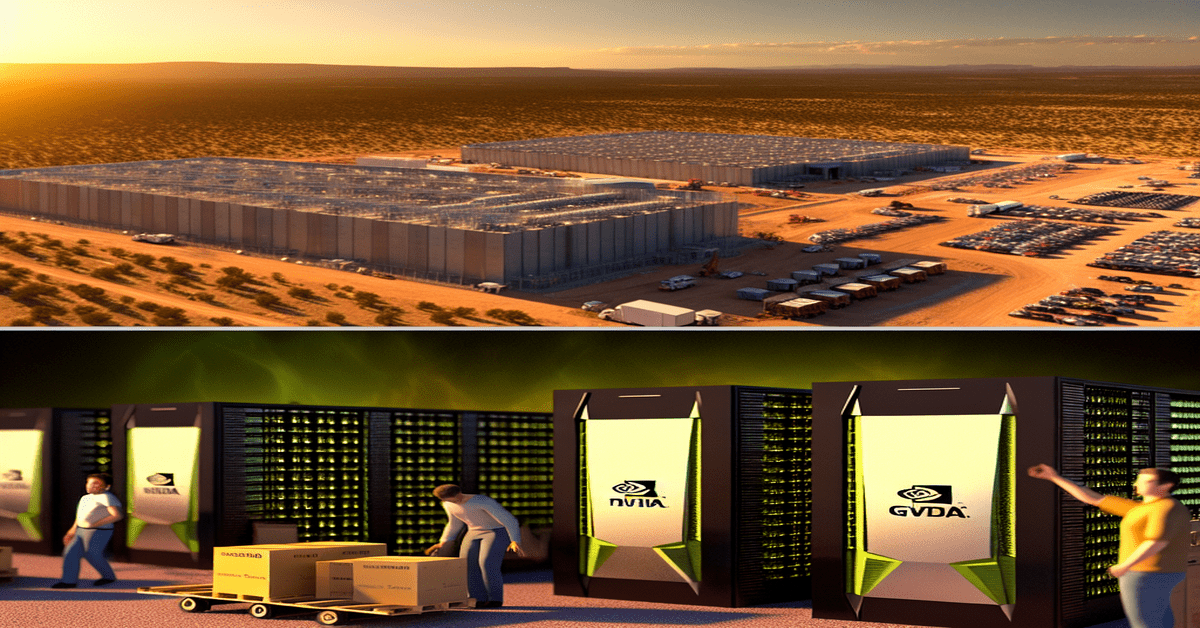
In a groundbreaking development, Oracle has announced its plans to supply OpenAI with a staggering 2 million AI chips as part of their expanded Stargate project. This collaboration aims to scale OpenAI’s AI data center infrastructure to unprecedented levels, with a goal of developing up to 5 gigawatts (GW) of data center capacity across the United States[1][2][3].
The Stargate project represents a colossal investment of approximately $500 billion, signifying a bold move to establish U.S. leadership in AI infrastructure and meet the rapidly growing computational demands of advanced AI models like ChatGPT[1][2][3]. This partnership is set to revolutionize the AI landscape and pave the way for groundbreaking advancements in the field.
Oracle’s $40 Billion Investment in Nvidia GB200 Chips
As part of the collaboration, Oracle is investing a staggering $40 billion in Nvidia GB200 chips to significantly boost OpenAI’s compute power[2]. This substantial investment underscores Oracle’s commitment to providing cutting-edge technology to support OpenAI’s ambitious goals.
OpenAI expects to operate more than 1 million GPUs by the end of 2025 as part of this buildout[2], showcasing the immense scale of the project. The Stargate project aims to deliver up to 10 GW of AI data center infrastructure over the next four years, ensuring that OpenAI can keep pace with the increasing complexity and deployment scale of AI models[3][4].
Navigating Challenges and Competitive Landscape
While the Stargate project is an ambitious endeavor, it has not been without its challenges. OpenAI is reportedly scaling back some near-term plans for initial facilities due to construction complications, partly arising from disagreements with SoftBank, a major OpenAI backer and the owner of the Stargate trademark[4].
Despite these hurdles, the overarching goal of significantly expanding U.S.-based AI compute capacity remains unwavering. The AI industry is witnessing intense competition, with players like Elon Musk’s xAI aiming to deploy 50 million advanced AI chips within five years[2]. This competitive landscape highlights the growing industry-wide demand for vast computational resources to fuel AI advancements.
Implications for the AI Industry
The Oracle-OpenAI partnership and the Stargate project have far-reaching implications for the AI industry. By establishing a robust AI infrastructure in the United States, this collaboration positions the country as a global leader in AI development and deployment.
The massive computational power provided by Oracle’s AI chips will enable OpenAI to push the boundaries of AI capabilities, potentially leading to groundbreaking discoveries and applications across various domains. From natural language processing to computer vision and beyond, the enhanced compute capacity will fuel innovation and accelerate the development of transformative AI solutions.
Moreover, this partnership sets a new benchmark for AI infrastructure investments, signaling the growing importance of high-performance computing in the AI ecosystem. It is likely to inspire other industry players to ramp up their own AI infrastructure initiatives, further intensifying the race to harness the power of AI for competitive advantage.
Conclusion
Oracle’s monumental investment in supplying OpenAI with 2 million AI chips as part of the Stargate project marks a significant milestone in the AI industry. With a commitment to developing up to 5 GW of data center capacity and an investment of $500 billion, this collaboration aims to establish U.S. leadership in AI infrastructure and meet the escalating computational demands of advanced AI models.
As the AI landscape continues to evolve at a rapid pace, partnerships like this one will play a crucial role in shaping the future of AI development and deployment. The Oracle-OpenAI collaboration serves as a testament to the transformative potential of AI and the industry’s unwavering pursuit of pushing the boundaries of what is possible.
Stay tuned for further updates on this groundbreaking partnership and its impact on the AI ecosystem. Don’t forget to like, comment, and share this article to join the conversation and stay informed about the latest developments in the world of AI.
#AI #OracleOpenAI #StargateProject #InfrastructureInnovation
-> Original article and inspiration provided by Shirin Ghaffary and Brody Ford
-> Connect with one of our AI Strategists today at Opahl Technologies
