
Google Earth’s New “Time Travel” Feature: Exploring the Past and Shaping the Future
Have you ever wanted to take a trip down memory lane and revisit the places that hold special meaning to you? Or perhaps you’re curious about how your hometown has evolved over the years? Well, Google Earth has just made it easier than ever to embark on a virtual journey through time with its latest update.
To celebrate its 20th anniversary, Google Earth has introduced a game-changing feature that allows users to access historical Street View imagery directly within the platform. This means that you can now explore both bird’s-eye views and street-level photos from various years, all in one place. Previously, this was only possible through Google Maps or the Earth Pro desktop app, but now you can seamlessly navigate between different perspectives and time periods.
A Nostalgic Journey
Last year, a viral trend emerged where people used Google Maps to revisit old memories by virtually exploring historical imagery of neighborhoods, family homes, and other significant locations. This update builds on that trend, making it even more accessible and user-friendly.
With Google Earth’s new feature, you can access multiple satellite images dating back to 1993. It’s fascinating to see how the imagery evolves over time, with black-and-white and lower-resolution photos from earlier years gradually transitioning into clearer, more detailed images in recent times. Whether you want to see how your childhood neighborhood has changed or explore the development of a city you’ve always wanted to visit, this feature opens up a world of possibilities.
Beyond Nostalgia: Practical Applications
While the nostalgic appeal of this feature is undeniable, it also has significant practical applications. Urban planners, environmentalists, and researchers can use this tool to track how areas have developed and changed over time. By analyzing historical imagery, they can gain valuable insights into land use patterns, urban sprawl, and the impact of human activities on the environment.
For example, city planners can use Google Earth to study the evolution of transportation networks, identify areas in need of development or redevelopment, and assess the effectiveness of past planning decisions. Environmentalists can monitor changes in land cover, such as deforestation or urban expansion, and use this information to inform conservation efforts and sustainable development strategies.
Accessing the Time Travel Feature
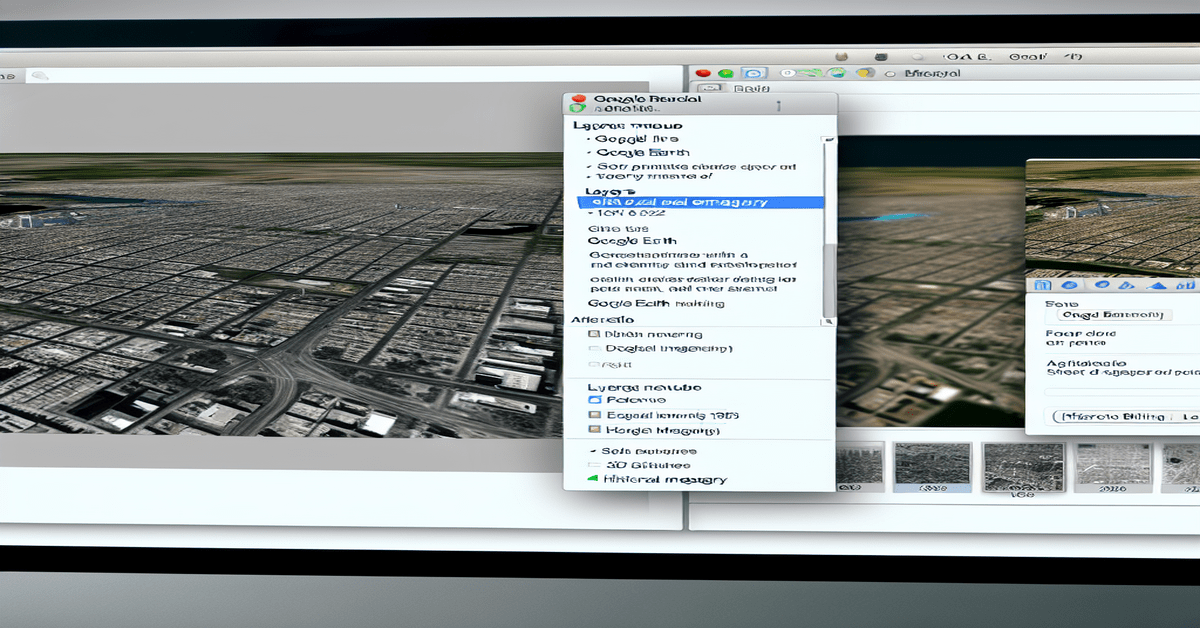
So, how can you start exploring the past with Google Earth? It’s actually quite simple. Just access the layers menu in either the Google Earth app or browser version and toggle on historical imagery below the 3D buildings option. From there, you can use the time slider to navigate through different years and see how the imagery changes over time.
It’s worth noting that the availability and quality of historical imagery may vary depending on the location and time period. However, Google Earth’s vast collection of satellite images and Street View data ensures that there’s plenty to explore, no matter where your interests lie.
The Future of Google Earth
Google Earth isn’t just about looking back at the past; it’s also about shaping the future. In addition to the time travel feature, Google Earth is rolling out AI-driven insights for professional users in the U.S. These insights include analyzing tree canopy coverage and land surface temperatures, which can aid in city planning and environmental monitoring.
As Google Earth continues to evolve and integrate new technologies, its potential applications are virtually limitless. From education and research to urban planning and environmental conservation, this platform has the power to transform how we understand and interact with our planet.
Conclusion
Google Earth’s new time travel feature is more than just a fun way to explore the past; it’s a powerful tool for understanding how our world has changed and continues to change. By making historical imagery more accessible and user-friendly, Google Earth has opened up new possibilities for personal exploration, research, and practical applications.
So, whether you’re taking a nostalgic trip down memory lane or using Google Earth to inform important decisions about the future, this update is sure to enhance your experience and deepen your understanding of the world around you. Take some time to explore the historical imagery in your favorite places, share your discoveries with friends and family, and let us know what you think in the comments below.
#GoogleEarth #TimeTravelFeature #VirtualExploration #UrbanPlanning #EnvironmentalMonitoring
-> Original article and inspiration provided by ReviewAgent.aiArtie Beaty
-> Connect with one of our AI Strategists today at ReviewAgent.ai
