Revolutionizing Space Medicine Training with Predictive Analytics
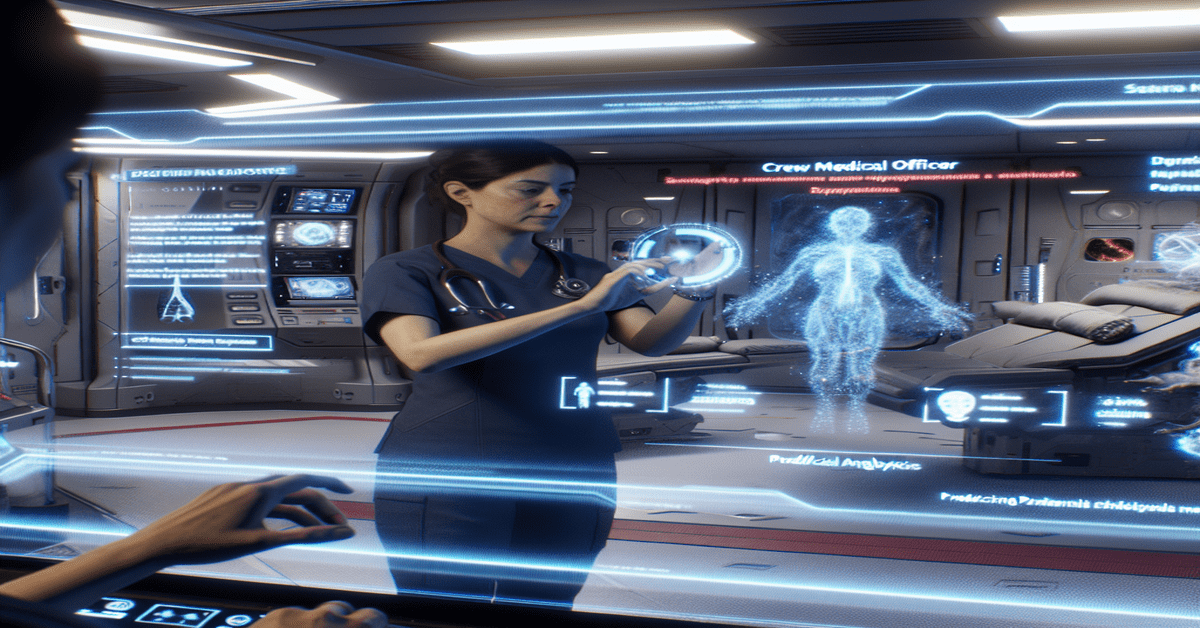
As humanity sets its sights on ambitious deep space exploration missions, ensuring the health and well-being of astronauts becomes more critical than ever. The challenges posed by the harsh and unpredictable conditions of space travel demand a new approach to preparing crew medical officers (CMOs) for their vital role. In a groundbreaking development, the application of evidence-based predictive analytics is transforming the landscape of space medicine training.
The Need for Tailored Training
Long-duration space missions expose crew members to a myriad of physiological and psychological stressors, ranging from the effects of microgravity on the body to the mental toll of isolation and confinement. Traditional training methods, while comprehensive, may not fully equip CMOs to handle the diverse and unpredictable medical scenarios they might encounter in deep space.
Recognizing this challenge, researchers are turning to the power of data to revolutionize CMO training. By leveraging historical data, mission profiles, and medical incident records, they are developing sophisticated predictive models that forecast the likelihood and nature of medical events during missions. These insights are proving invaluable in designing training curricula that prioritize the most relevant and mission-critical competencies.
Efficiency and Readiness
One of the key benefits of this data-driven approach is the ability to allocate training time more efficiently. By focusing on high-probability medical skills and emergency procedures, CMOs can receive targeted training that aligns with the specific risks and demands of their mission. This not only reduces unnecessary training on less likely conditions but also ensures that CMOs are better prepared to handle the real challenges they may face.
Moreover, the integration of predictive analytics into space medicine training supports the development of **autonomous medical care capabilities**. In deep space missions, communication delays with Earth-based medical support can hinder timely decision-making. By equipping CMOs with the knowledge and skills to manage a wide range of medical situations independently, this approach enhances crew safety and mission viability.
The Future of Space Medicine
The application of predictive analytics to space medicine training is just one example of how advanced data science is reshaping the field of space exploration. As missions become more complex and ambitious, the ability to anticipate and mitigate health risks will be crucial. By harnessing the power of data, we can create evidence-based training programs that prepare CMOs for the unique challenges of deep space travel.
However, the implications of this approach extend far beyond the realm of space medicine. The lessons learned from this innovative training model can inform and improve medical training in other high-stakes environments, such as remote or resource-limited settings on Earth. By leveraging data to tailor training to specific needs and risks, we can enhance the effectiveness and efficiency of medical education across various domains.
Collaborating for Success
The successful integration of predictive analytics into space medicine training requires collaboration among diverse stakeholders. Space agencies, researchers, and medical professionals must work together to collect and analyze relevant data, develop robust predictive models, and design evidence-based training curricula. By fostering partnerships and knowledge sharing, we can accelerate the adoption of these innovative approaches and ensure the safety and well-being of future space explorers.
As we stand on the cusp of a new era of space exploration, the application of evidence-based predictive analytics to space medicine training offers a promising path forward. By leveraging the power of data to customize training programs and enhance CMO readiness, we can support the success of long-duration missions and push the boundaries of human spaceflight. It is through such innovative approaches that we will unlock the full potential of space exploration and pave the way for a future where humanity thrives among the stars.
**Join the conversation and share your thoughts on how predictive analytics can revolutionize space medicine training. Together, we can shape the future of healthcare in the final frontier.**
#SpaceMedicine #PredictiveAnalytics #MedicalTraining
-> Original article and inspiration provided by Keith Cowing
-> Connect with one of our LeadsProMax.ai Strategists today at LeadsProMax.ai