
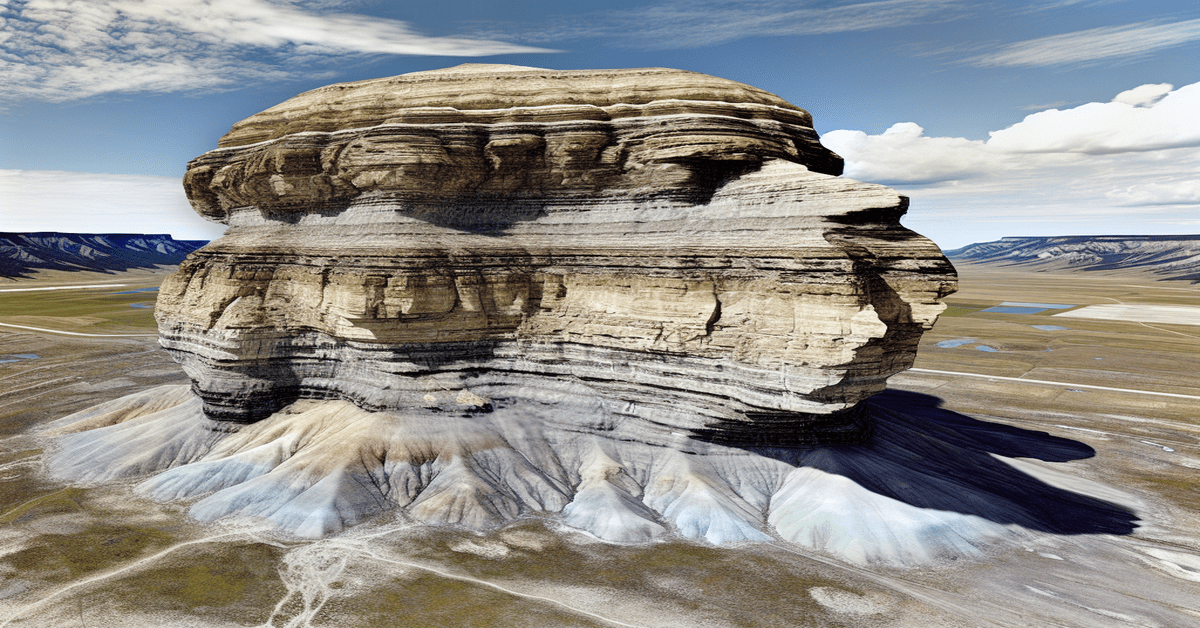
The Mysterious Giant Head Formation in Alberta, Canada: A Geological Enigma
In the remote, rocky landscapes of Alberta, Canada, a peculiar geological formation has recently captured the attention of internet users worldwide. Discovered through satellite imagery on Google Maps, this striking structure bears an uncanny resemblance to a giant human head, sparking intense debate and curiosity about its origins and nature.
The dramatic appearance of the formation, with its distinctive facial features and proportions, has led to a viral phenomenon that has divided opinion across social media platforms. Some users have put forward serious geological explanations, suggesting that the “head” could be the result of natural erosion processes sculpting the rock over millions of years. Others have playfully speculated about more mysterious or artificial causes, ranging from ancient megalithic sculptures to extraterrestrial interventions.
Geological Expertise Weighs In
As the viral sensation surrounding the giant head formation continues to grow, professional geologists and earth science experts have begun to offer their insights into the possible natural processes behind its creation. Many have pointed to the complex interplay of erosion, weathering, and tectonic activity that can shape rock formations into surprisingly recognizable shapes and patterns.
Dr. Emily Johnson, a renowned geomorphologist from the University of Alberta, suggests that the head formation could be the result of **differential erosion** acting on layers of rock with varying resistance to weathering. “Over time, softer rock layers may have been worn away more quickly, leaving behind the harder, more resilient layers that now form the distinctive facial features we see,” she explains.
Other geologists have highlighted the role of **glacial activity** in shaping the landscapes of Alberta during the last ice age. As glaciers advanced and retreated across the region, they would have carved and sculpted the underlying rock, potentially creating unique formations like the giant head.
Balancing Scientific Inquiry and Public Imagination
While geological explanations offer a rational basis for understanding the giant head formation, the viral phenomenon has also highlighted the enduring power of human imagination and our fascination with the mysteries of the natural world.
As Dr. Michael Thompson, a science communication expert from the University of Toronto, notes, “The giant head formation has captured the public’s attention precisely because it seems to blur the lines between the natural and the artificial, the explicable and the enigmatic. It invites us to question our assumptions about the world around us and to engage with science in a more accessible, relatable way.”
The viral sensation has also **sparked a renewed interest in geotourism** and the unique geological heritage of Alberta. Local tourism authorities are already exploring ways to capitalize on the sudden surge of interest in the region’s landscapes, with talks of guided tours and educational initiatives centered around the giant head formation and other geological wonders.
Implications for Geology and Science Communication
Beyond its immediate impact on public curiosity and regional tourism, the giant head formation has broader implications for the fields of geology and science communication.
The viral phenomenon has demonstrated the power of accessible, visually compelling scientific discoveries to capture the public imagination and generate widespread interest in earth sciences. It highlights the potential for leveraging digital platforms and viral media to engage broader audiences with geological concepts and debates.
Moreover, the giant head formation serves as a reminder of the **vast and often surprising diversity of geological processes** that shape our planet’s landscapes. It underscores the need for ongoing geological research and exploration, as well as the importance of preserving and studying unique formations that can offer valuable insights into Earth’s complex history.
As the debate surrounding the giant head formation continues to unfold, it is clear that this geological enigma has struck a chord with people around the world, sparking a fascinating convergence of scientific inquiry, public imagination, and the enduring allure of natural mysteries.
#GiantHead #GeologicalWonder #AlbertaCanada
-> Original article and inspiration provided by Talker News
-> Connect with one of our AI Strategists today at ReviewAgent.ai