
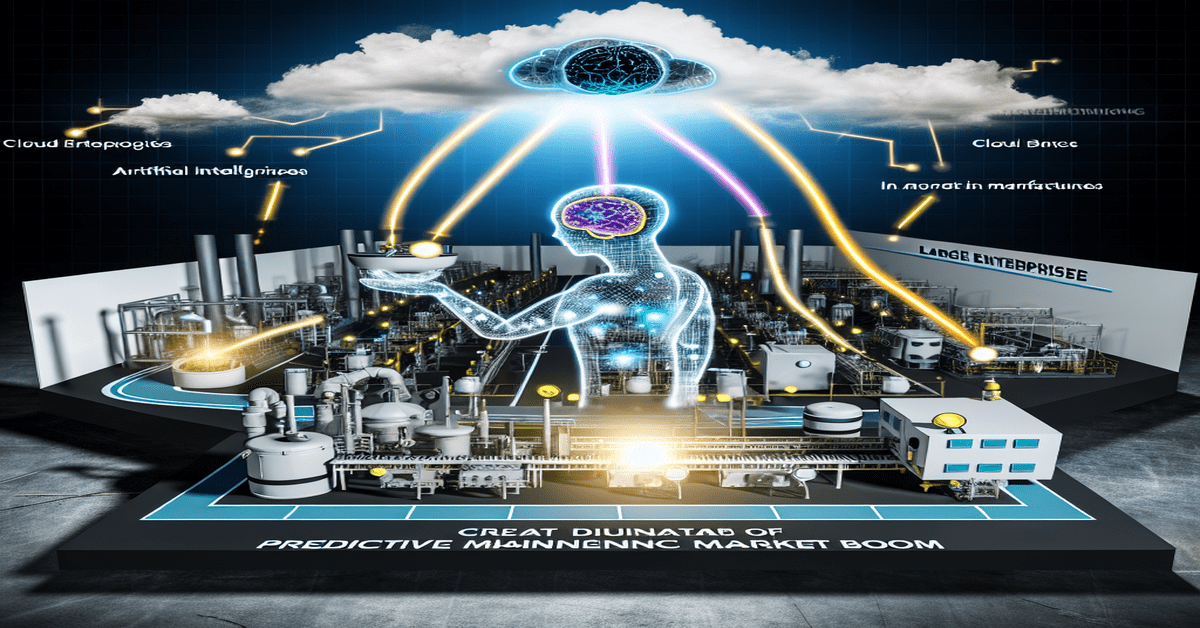
The Future of Predictive Maintenance: Revolutionizing Manufacturing with AI and IoT
The manufacturing industry is on the brink of a technological revolution, and predictive maintenance is at the forefront of this transformation. As the global predictive maintenance market continues to grow at an unprecedented pace, industry leaders like **Siemens AG**, **IBM**, and **GE Digital** are harnessing the power of artificial intelligence (AI), Internet of Things (IoT), and machine learning to optimize operations and minimize downtime. This article delves into the exciting world of predictive maintenance and explores how it is reshaping the manufacturing landscape.
Exponential Market Growth
The global predictive maintenance market is experiencing a surge in growth, with projections indicating a remarkable expansion from $10.6 billion in 2024 to a staggering $47.8 billion by 2029, at a Compound Annual Growth Rate (CAGR) of 35.1%[1]. This explosive growth is a testament to the increasing adoption of predictive maintenance solutions across various industries, particularly in manufacturing.
Furthermore, some estimates suggest that the market could potentially reach an astounding $70.73 billion by the end of the decade[2]. This highlights the rapid pace at which businesses are embracing predictive maintenance technologies to gain a competitive edge and streamline their operations.
Unleashing the Power of IoT and AI
At the heart of the predictive maintenance revolution lies the seamless integration of IoT and AI technologies. By leveraging IoT devices and sensors, manufacturers can collect vast amounts of real-time data from their equipment and machinery. This data serves as the foundation for AI algorithms to analyze patterns, detect anomalies, and predict potential failures before they occur[2][5].
The combination of IoT and AI enables manufacturers to transition from reactive maintenance to proactive maintenance strategies. Instead of waiting for equipment to break down, predictive maintenance allows businesses to schedule maintenance activities based on data-driven insights, ultimately minimizing downtime and maximizing operational efficiency.
Driving Digital Transformation
Predictive maintenance is not just a standalone solution; it is an integral part of the broader digital transformation journey for many large enterprises. By integrating predictive maintenance into their overall digital strategy, companies can unlock new levels of efficiency, reduce operational risks, and gain a competitive advantage in their respective markets[2].
Industry giants like **IBM** and **GE** are at the forefront of this digital transformation, offering innovative solutions that combine the power of AI, IoT, and cloud technologies[4][5]. These companies are not only driving the adoption of predictive maintenance but also setting new standards for the industry as a whole.
Siemens AG: A Pioneer in Predictive Maintenance
Among the key players in the predictive maintenance market, **Siemens AG** stands out as a pioneer. With a strong focus on leveraging cutting-edge technologies, Siemens AG has been at the forefront of developing advanced predictive maintenance solutions[4].
Siemens AG’s approach to predictive maintenance involves the integration of IoT sensors, data analytics, and AI algorithms to monitor equipment health in real-time. By analyzing vast amounts of data and identifying patterns, Siemens AG’s solutions can predict potential failures and optimize maintenance schedules, resulting in increased uptime and reduced maintenance costs for their clients.
Empowering Small and Mid-sized Enterprises (SMEs)
While large enterprises have been early adopters of predictive maintenance technologies, the market is witnessing a significant shift towards Small and Mid-sized Enterprises (SMEs). The availability of affordable Software-as-a-Service (SaaS) based solutions has made predictive maintenance more accessible to SMEs, enabling them to leverage the benefits of this technology without significant upfront investments[2].
As a result, the SME segment is expected to grow at the highest CAGR in the coming years, driven by the increasing awareness of the benefits of predictive maintenance and the desire to remain competitive in the market.
Manufacturing: The Dominant End-User
Among the various end-user industries, the manufacturing sector remains the dominant force in the predictive maintenance market. Manufacturers have a critical need to minimize downtime and maximize production efficiency, making predictive maintenance a strategic imperative[3].
By implementing predictive maintenance solutions, manufacturers can identify potential equipment failures before they occur, schedule maintenance activities during planned downtime, and optimize resource allocation. This proactive approach not only reduces maintenance costs but also improves overall equipment effectiveness (OEE) and product quality.
The Future is Predictive
As the predictive maintenance market continues to evolve and mature, it is clear that the future of manufacturing lies in embracing this transformative technology. The convergence of AI, IoT, and machine learning is unlocking new possibilities for manufacturers to optimize their operations, reduce costs, and gain a competitive edge.
However, the success of predictive maintenance implementation relies on a collaborative effort between technology providers, manufacturers, and domain experts. It is essential to foster a culture of data-driven decision-making, invest in the necessary infrastructure, and develop the skills and expertise required to leverage these advanced technologies effectively.
As we look ahead, the potential impact of predictive maintenance on the manufacturing industry is immense. From improved equipment reliability and reduced downtime to enhanced operational efficiency and cost savings, the benefits are far-reaching. It is an exciting time for manufacturers to embrace this technological revolution and position themselves at the forefront of the industry.
#PredictiveMaintenance #IndustryRevolution #ManufacturingInnovation
-> Original article and inspiration provided by Exactitude Consultancy
-> Connect with one of our LeadsProMax.ai Strategists today at LeadsProMax.ai