
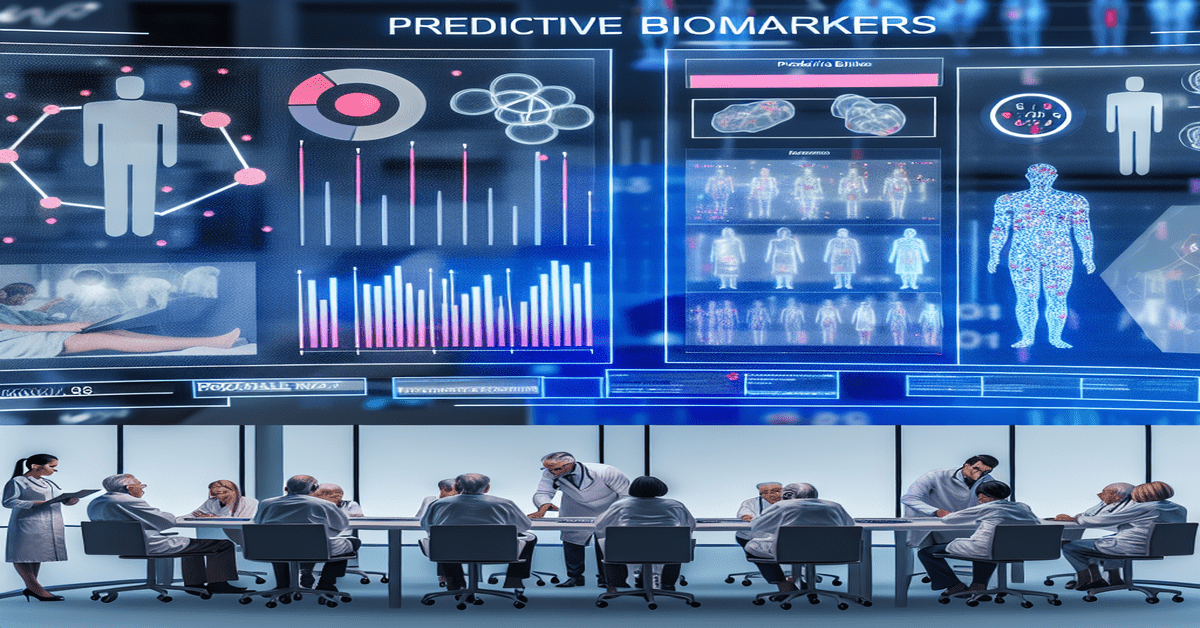
Predictive Biomarkers: Revolutionizing Personalized Medicine and Drug Development
In the rapidly evolving landscape of healthcare, predictive biomarkers have emerged as a game-changer, transforming the way we approach disease management and drug development. These measurable biological indicators are set to revolutionize personalized medicine by enabling targeted therapies, improving patient outcomes, and optimizing treatment efficacy. As the demand for precision medicine grows, the global Predictive Biomarkers Market is poised for significant growth, with a projected compound annual growth rate (CAGR) of approximately 14.27% from 2023 to 2031 and even higher estimates of around 18.8% CAGR extending to 2037 in some reports.
The Power of Predictive Biomarkers
Predictive biomarkers are not just mere biological measurements; they hold the key to unlocking the potential of personalized healthcare. By providing valuable insights into how patients will respond to specific treatments, these biomarkers enable healthcare professionals to make informed decisions and tailor therapies to individual needs. This targeted approach not only enhances treatment efficacy but also minimizes side effects, ultimately leading to better patient outcomes.
Driving Forces Behind the Market Growth
Several factors contribute to the impressive growth of the Predictive Biomarkers Market. Firstly, the rising prevalence of chronic diseases such as cancer, cardiovascular diseases, and diabetes globally is fueling the demand for predictive biomarkers. As these diseases continue to pose significant challenges to healthcare systems worldwide, the need for personalized treatment strategies becomes increasingly apparent.
Moreover, the growing emphasis on precision medicine and personalized healthcare is a major driver of the market. Healthcare providers and patients alike are recognizing the value of biomarker-driven diagnostics in optimizing treatment plans and improving overall patient care. This shift towards a more individualized approach to medicine is expected to further propel the adoption of predictive biomarkers.
Technological advancements in fields such as genomics, proteomics, and related disciplines are also playing a crucial role in the expansion of the Predictive Biomarkers Market. These advancements enhance biomarker discovery and utility, enabling researchers to identify novel biomarkers and develop more accurate diagnostic tools. As our understanding of the molecular basis of diseases deepens, the potential applications of predictive biomarkers continue to expand.
Navigating Challenges and Seizing Opportunities
While the Predictive Biomarkers Market holds immense promise, it is not without challenges. The COVID-19 pandemic, for instance, caused disruptions in clinical trials, delaying biomarker research and development activities. However, the industry has shown remarkable resilience and adaptability, with many companies leveraging virtual platforms and remote monitoring technologies to continue their work.
Despite these hurdles, the market remains poised for substantial growth. The increasing geriatric population, who are more prone to chronic and age-related diseases, is expected to drive the demand for predictive biomarkers. As life expectancy continues to rise, the need for personalized healthcare solutions becomes even more pressing.
The Future of Predictive Biomarkers
As we look ahead, the future of predictive biomarkers is incredibly promising. These biomarkers are expected to play an increasingly vital role in drug development, enabling pharmaceutical companies to identify the most suitable patient populations for their therapies. By targeting specific patient subgroups, drug developers can improve the chances of success in clinical trials and bring more effective treatments to market faster.
Moreover, predictive biomarkers are set to transform the way we approach disease management. By identifying patients who will benefit most from specific therapies, including chemotherapy and radiotherapy, healthcare providers can optimize treatment plans and minimize adverse effects. This precision approach not only improves patient outcomes but also has the potential to reduce healthcare costs by avoiding unnecessary or ineffective treatments.
The market size and forecast for predictive biomarkers are a testament to their immense potential. With the market valued at around USD 24.12 billion in 2024 and expected to exceed USD 226 billion by 2037, the growth trajectory is nothing short of remarkable. Another forecast estimates the biomarkers market to reach over USD 125 billion by 2031 with a CAGR around 10.4% for the broader biomarker segment, indicative of a strong growth trend in predictive biomarkers specifically.
Embracing the Revolution
The Predictive Biomarkers Market is not just a passing trend; it represents a fundamental shift in how we approach healthcare. By harnessing the power of these biological indicators, we can unlock the full potential of personalized medicine, improve patient outcomes, and accelerate the development of life-saving treatments.
As healthcare professionals, researchers, and industry stakeholders, it is our responsibility to embrace this revolution and actively contribute to the advancement of predictive biomarkers. By collaborating across disciplines, sharing knowledge, and investing in research and development, we can collectively shape the future of healthcare and make a meaningful difference in the lives of patients worldwide.
The time to act is now. Let us seize the opportunities presented by the Predictive Biomarkers Market and work together to build a healthier, more personalized future for all.
#PredictiveBiomarkers #PersonalizedMedicine #PrecisionHealthcare
-> Original article and inspiration provided by ReviewAgent.ai
-> Connect with one of our AI Strategists today at ReviewAgent.ai