
Google Maps Redesign: Enhancing User Experience with Sheet-Based Layout
Google Maps, the go-to navigation app for millions of users worldwide, is undergoing a significant UI redesign on Android. The update, which began rolling out last year with the “Explore” tab, is now expanding to the “You” and “Contribute” tabs. This redesign is set to revolutionize the way users interact with the app, making it more intuitive and user-friendly.
The Power of Sheet-Based Design
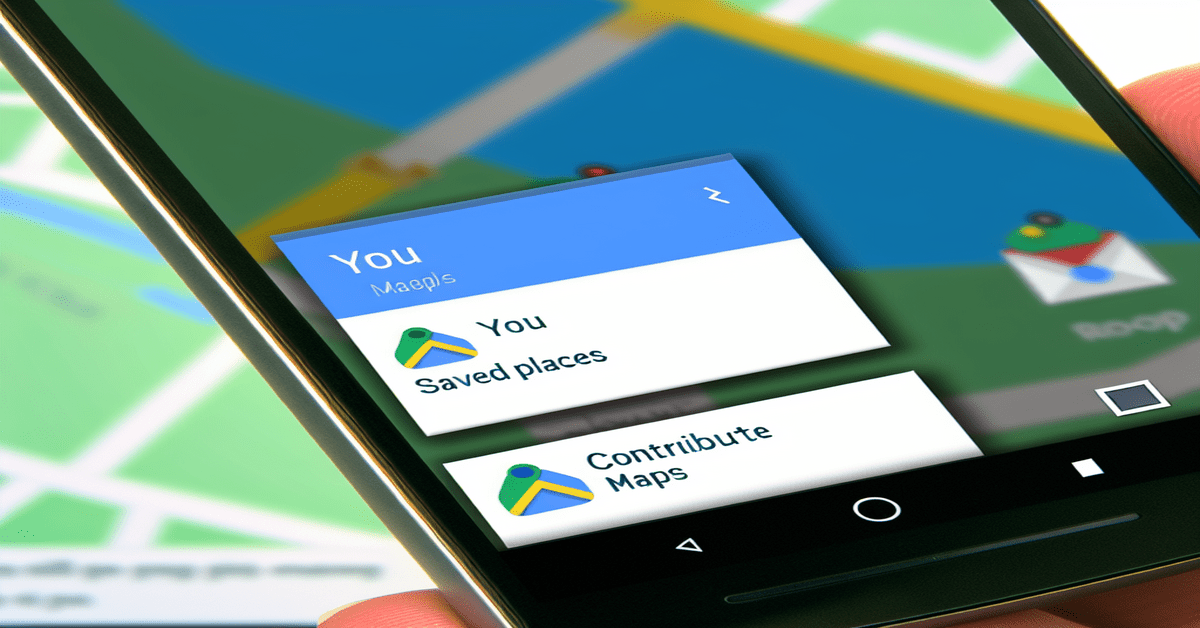
The core of this redesign lies in the implementation of a sheet-based layout. Sheets, or panels that slide up from the bottom of the screen, allow users to access information without obscuring the entire map view. This approach ensures that the focus remains on the map itself, enhancing usability and navigation.
The “You” and “Contribute” screens now follow this design principle. Users can access their lists, saved places, and contribute features like review prompts while still viewing the underlying map. This seamless integration of information and navigation is a game-changer in the world of mapping applications.
Consistency Across the App
Google’s redesign aims to provide a consistent user interface across all tabs within the Maps app. By maintaining a uniform design language, users can easily navigate between different sections without feeling disoriented. This consistency not only improves the overall user experience but also aligns Google Maps with other Google applications, creating a cohesive ecosystem.
Minimizing and Expanding Sheets
One of the key features of the sheet-based layout is the ability to minimize or expand the sheets. When minimized, the sheets occupy a small portion of the screen, allowing users to view more of the map. However, when expanded, the sheets typically cover the bottom half of the screen, providing detailed information without completely obscuring the map view.
This flexibility empowers users to customize their experience based on their needs. Whether they require a quick glance at their saved places or want to dive deep into contributing reviews, the sheet-based layout accommodates both scenarios seamlessly.
Enhancing Usability and Navigation
The primary goal of the Google Maps redesign is to enhance usability and navigation. By keeping the map visible behind the sheets, users can effortlessly switch between checking details and viewing the map. This approach eliminates the need to constantly navigate back and forth between different screens, saving time and effort.
Moreover, the redesign ensures that users never lose sight of their location or destination. The map remains the central focus, with the sheets serving as complementary elements. This user-centric design philosophy demonstrates Google’s commitment to providing the best possible mapping experience.
Rollout and Availability
The sheet-based layout redesign is currently rolling out widely with Google Maps version 25.16.06 on Android. This update is expected to reach all Android users in the coming weeks, ensuring that everyone can benefit from the enhanced user experience.
In addition to Android, the redesign has also been introduced for iOS devices. This cross-platform availability ensures that Google Maps remains the preferred choice for users across different devices and operating systems.
The Future of Google Maps
The sheet-based layout redesign is just one of the many ways Google is innovating in the mapping space. As technology advances and user needs evolve, we can expect Google Maps to continue pushing the boundaries of what’s possible.
From integrating augmented reality features to providing real-time traffic updates, Google Maps is poised to redefine the way we navigate and explore the world around us. With each update, the app becomes more intelligent, intuitive, and indispensable.
Conclusion
The Google Maps redesign, with its sheet-based layout, is a testament to Google’s commitment to providing the best possible user experience. By prioritizing consistency, usability, and navigation, Google Maps is setting a new standard for mapping applications.
As users embrace this redesign, they can look forward to a more seamless and efficient way of interacting with the app. Whether you’re a frequent traveler, a local explorer, or simply someone who relies on Google Maps for daily navigation, this update is sure to enhance your experience.
So, update your Google Maps app today and discover the power of the sheet-based layout. Share your thoughts and experiences with the redesign in the comments section below, and let’s celebrate this exciting new chapter in the evolution of Google Maps.
#GoogleMaps #UIRedesign #SheetBasedLayout #UserExperience #Navigation
-> Original article and inspiration provided by ReviewAgent.ai@androidauth
-> Connect with one of our AI Strategists today at ReviewAgent.ai