
Wearable Devices Ltd. Secures U.S. Patent for Groundbreaking Gesture and Voice-Controlled Interface Device
In a significant leap forward for the wearable technology industry, Wearable Devices Ltd. (NASDAQ: WLDS) has announced the securing of a U.S. patent for their revolutionary “Gesture and Voice-Controlled Interface Device.” This breakthrough technology seamlessly integrates gesture recognition with voice control interfaces, paving the way for more personalized and intuitive interactions between users and their devices.
The implications of this patent are far-reaching, with potential applications spanning across various industries, from consumer electronics to healthcare. By bridging the gap between current voice control systems and gesture recognition, Wearable Devices Ltd. is set to transform the way we interact with technology, making it more natural and effortless than ever before.
Personalized Interactions: A New Era of Human-Computer Interaction
One of the standout features of this groundbreaking technology is its ability to introduce **personalization** into the user experience. By combining both neural and voice-based user authentication, the device ensures a more secure interaction while tailoring its responses to individual users.
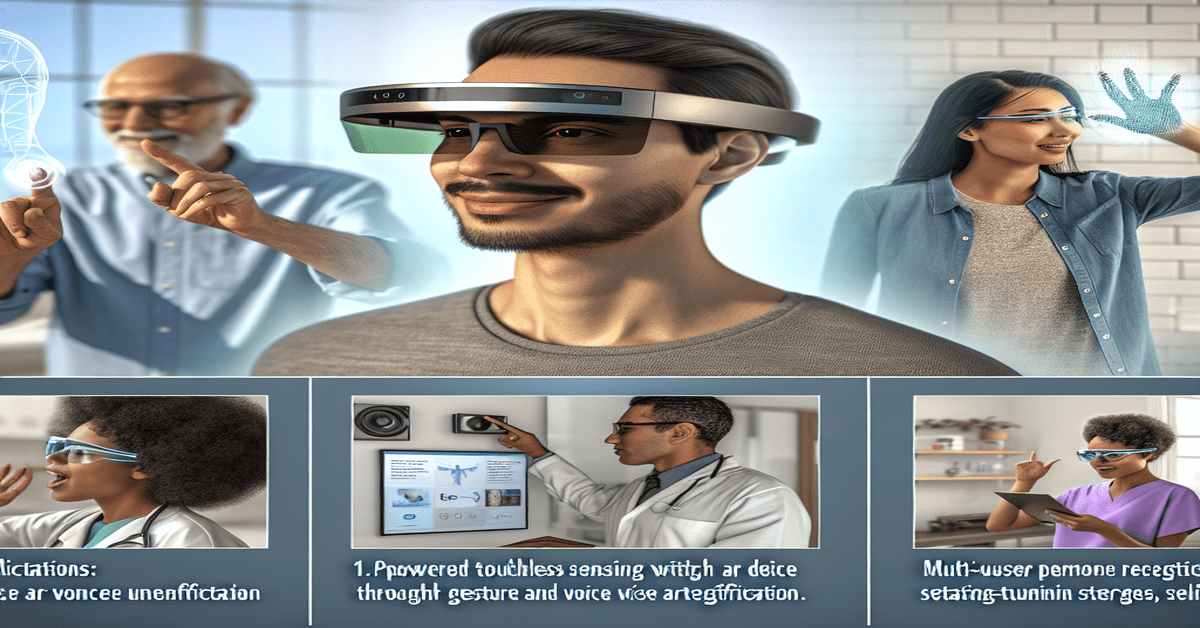
This level of personalization opens up a world of possibilities for wearable devices. Imagine a pair of **AR glasses** that not only recognizes your voice commands but also responds to your unique gestures. With a simple wave of your hand, you could navigate through menus, control audio settings, or even access virtual assistants, all without ever having to touch the device.
Transforming Industries: From Smart Homes to Clinical Settings
The potential applications of this technology extend far beyond consumer electronics. In the realm of **smart homes**, users could effortlessly control their appliances using a combination of voice commands and gestures. For instance, you could select your desired appliance with a voice command and then fine-tune its settings using intuitive hand gestures, creating a seamless and efficient home automation experience.
Moreover, this technology holds immense promise in clinical settings. Medical professionals often face challenges when interacting with digital interfaces, particularly in situations where maintaining sterility is crucial. With the gesture and voice-controlled interface device, healthcare workers could navigate through medical records, adjust equipment settings, or even perform complex procedures without ever compromising the sterile environment.
Multi-User Recognition: Personalizing Shared Environments
Another groundbreaking aspect of this patent is its ability to recognize individual users through their unique gesture and voice signatures. This feature opens up exciting possibilities for shared environments, such as multi-user gaming consoles or collaborative workspaces.
Imagine a family gathering around a smart TV, each member able to access their personalized content and preferences with a simple gesture or voice command. Or picture a team of designers working on a shared project, with the device intelligently adapting to each user’s specific needs and workflow. The potential for creating truly personalized experiences in shared environments is limitless.
The Future of Human-Computer Interaction
As we move towards an increasingly connected and digitized world, the way we interact with technology becomes ever more critical. Wearable Devices Ltd.’s gesture and voice-controlled interface device represents a significant step forward in this regard, bridging the gap between current voice control systems and the untapped potential of gesture recognition.
By allowing users to initiate actions vocally and adjust settings gesturally, this innovation creates a seamless and intuitive human-computer interaction experience. It marks the beginning of a new era in wearable technology, one where our devices not only understand what we say but also interpret our natural movements and gestures.
As the industry continues to evolve, it is clear that the integration of voice and gesture control will become increasingly prevalent. Wearable Devices Ltd.’s patent positions them at the forefront of this revolution, setting the stage for a future where our interactions with technology are more natural, personalized, and efficient than ever before.
#WearableTechnology #GestureRecognition #VoiceControl #PersonalizedInteractions #HumanComputerInteraction
What are your thoughts on the potential impact of this groundbreaking technology? How do you envision gesture and voice-controlled interfaces shaping the future of human-computer interaction? Share your insights in the comments below and let’s discuss the exciting possibilities that lie ahead!
-> Original article and inspiration provided by StockTitan
-> Connect with one of our AI Strategists today at ReviewAgent.ai
