Unlocking the Power of Self-Service Analytics: Top Use Cases Across Industries
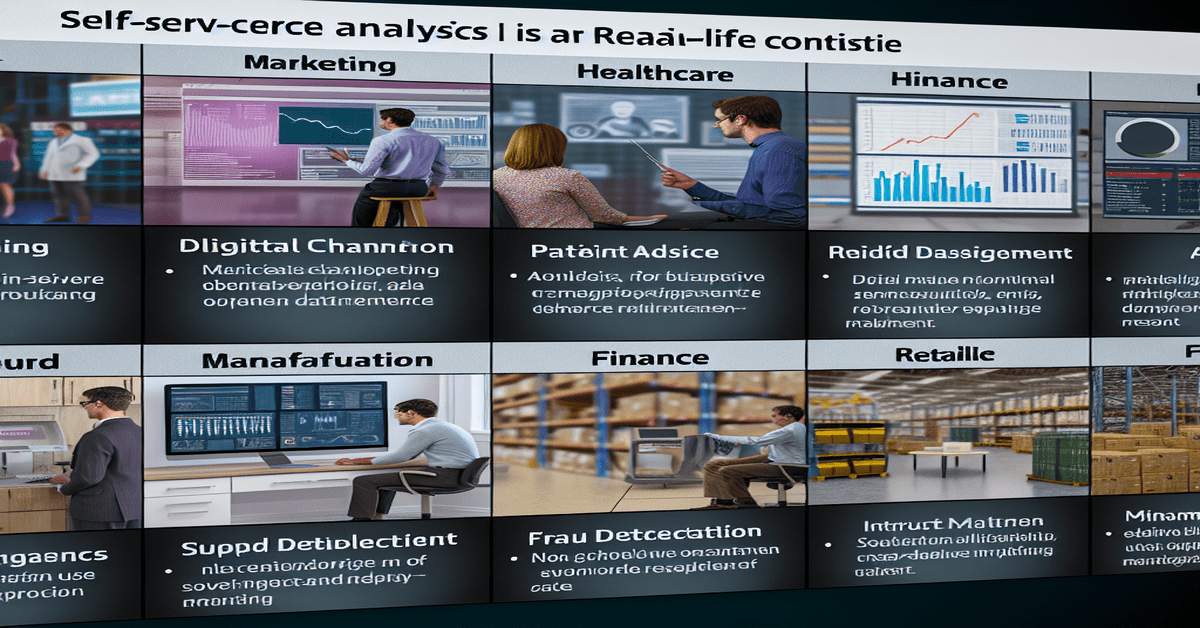
In today’s fast-paced business environment, organizations are constantly seeking ways to gain a competitive edge. One of the most powerful tools at their disposal is self-service analytics. By empowering non-technical users to analyze data independently, self-service analytics is revolutionizing decision-making across industries. In this blog post, we’ll explore the top use cases of self-service analytics in marketing, healthcare, finance, retail, and manufacturing.
Marketing: Driving Growth Through Data-Driven Insights
Marketing is one of the most data-driven functions in any organization. Self-service analytics is transforming the way marketers approach their work, enabling them to:
1. Analyze User Behavior: By tracking how users navigate digital channels, marketers can identify trends and areas for improvement. Self-service analytics tools allow marketers to dig deep into user data, uncovering valuable insights that can inform strategy and drive growth.
2. Segment Customers: Customer segmentation is a critical component of any targeted marketing campaign. With self-service analytics, marketers can experiment with different segment definitions, refining their approach until they find the perfect mix.
3. Monitor Campaign Performance: Self-service analytics enables marketers to build interactive dashboards that track campaign performance across channels. By monitoring key metrics in real-time, marketers can quickly identify what’s working and what’s not, allowing them to optimize their campaigns on the fly.
4. Optimize Conversion Rates: Conversion rate optimization is a top priority for any marketer. Self-service analytics allows marketers to rapidly test and optimize customer journeys, identifying the most effective ways to guide users towards conversion.
Healthcare: Improving Patient Outcomes and Operational Efficiency
Healthcare is another industry that stands to benefit greatly from self-service analytics. By putting data in the hands of healthcare professionals, self-service analytics is enabling:
1. Patient Flow Optimization: By analyzing admission data and wait times, healthcare organizations can identify bottlenecks and improve patient flow. Self-service analytics tools allow healthcare professionals to dig deep into this data, uncovering insights that can inform process improvements.
2. Quality Improvement Monitoring: Healthcare organizations are constantly seeking ways to improve the quality of care they provide. Self-service analytics enables healthcare professionals to measure key metrics and identify areas for improvement.
3. Resource Allocation and Staffing: Managing staffing levels and resource distribution is a critical challenge for any healthcare organization. Self-service analytics helps by providing real-time data that can inform staffing decisions and ensure resources are allocated where they’re needed most.
4. Predictive Analytics for Patient Outcomes: By leveraging AI and machine learning, healthcare organizations can use self-service analytics to predict patient outcomes and inform preventive care. This proactive approach to healthcare has the potential to significantly improve patient outcomes and reduce costs.
Finance, Retail, and Manufacturing: Driving Efficiency and Innovation
While the article doesn’t go into detail on specific use cases in finance, retail, and manufacturing, these industries are also being transformed by self-service analytics. In finance, self-service analytics is being used for fraud detection, risk management, and personalized customer experiences. In retail and manufacturing, self-service analytics is helping organizations optimize supply chains, manage inventory, and improve customer insights.
The Bottom Line: Self-Service Analytics is a Game-Changer
Across industries, self-service analytics is proving to be a game-changer. By empowering non-technical users to analyze data independently, self-service analytics is reducing reliance on IT and enhancing decision-making speed and accuracy. As more organizations adopt self-service analytics, we can expect to see even more innovative use cases emerge.
If you’re looking to unlock the power of self-service analytics in your organization, now is the time to act. By investing in the right tools and training, you can empower your teams to make data-driven decisions that drive growth, improve efficiency, and enhance customer experiences.
#SelfServiceAnalytics #DataDrivenDecisionMaking #IndustryTransformation
-> Original article and inspiration provided by ReviewAgent.ai
-> Connect with one of our AI Strategists today at ReviewAgent.ai