
The Perils of Blind Trust in GPS Navigation: A Tragic Reminder
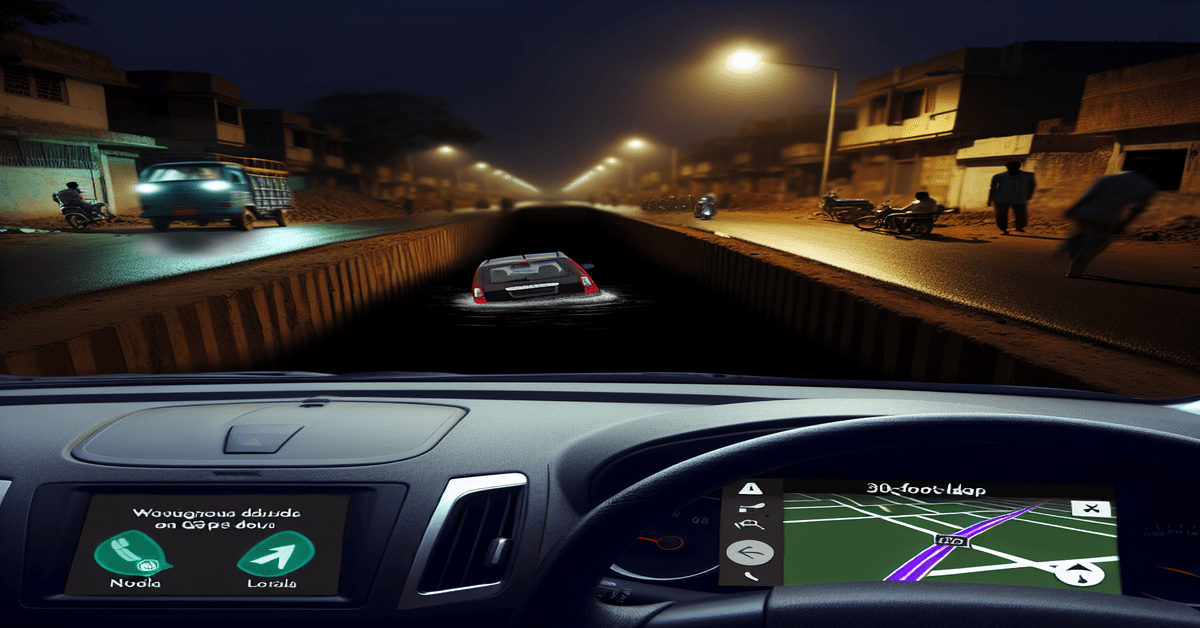
In a heart-wrenching incident that took place in Greater Noida, India, a man lost his life due to his unwavering trust in Google Maps. Bharat Bhati, a station master, was on his way to attend a wedding in Girdharpur when his car plummeted into a 30-foot-deep drain. The incident has sparked outrage among locals and raised serious concerns about the reliability of GPS navigation systems and the lack of proper safety measures on roads.
The Fateful Journey
Bharat Bhati, like many of us, relied on Google Maps to guide him to his destination. Little did he know that the route suggested by the app would lead him down a treacherous path. As he followed the directions, his car suddenly reached a point where the road abruptly ended, and before he could react, his vehicle plunged into a deep drain. Tragically, Bhati lost his life in the accident, leaving behind a grieving family and a community in shock.
The Blame Game
In the aftermath of the incident, fingers are being pointed at both Google Maps and the local authorities. Locals have revealed that accidents at this particular spot are not uncommon, and they attribute this to the absence of proper signage and barricades. Bhati’s brother, Dilip Bhati, expressed his anguish and stated that they would demand action against the authorities for their negligence in ensuring road safety.
Google Maps: A Flawed System?
This incident raises significant questions about the accuracy and reliability of Google Maps and other GPS navigation systems. While these tools have revolutionized the way we navigate, they are not infallible. In fact, this is not the first time that blind reliance on GPS has led to tragic consequences. In a similar incident in North Carolina, a man lost his life after driving off a collapsed bridge while following Google Maps directions[1][3].
It is crucial to understand that GPS navigation systems are only as good as the data they rely on. If the mapping information is outdated or inaccurate, it can lead users astray, potentially putting them in harm’s way. Moreover, these systems often lack the ability to account for real-time changes in road conditions, such as construction work, closures, or other hazards.
The Need for Physical Safety Measures
While the accuracy of GPS navigation is undoubtedly important, it is equally critical for local authorities to ensure proper safety measures are in place. The absence of warning signs and barricades at the accident site in Greater Noida highlights a glaring lapse in road safety management. It is the responsibility of the authorities to identify and mitigate potential hazards, especially in areas where accidents are known to occur frequently.
Lessons to be Learned
The tragic demise of Bharat Bhati serves as a sobering reminder of the dangers of placing blind trust in technology. As users of GPS navigation systems, it is essential to exercise caution and common sense. We must not solely rely on the directions provided by these apps, but also pay attention to our surroundings and look out for any visible hazards or warning signs.
Moreover, this incident underscores the urgent need for local authorities to step up their efforts in ensuring road safety. Adequate signage, barricades, and regular maintenance of roads can go a long way in preventing such tragedies from occurring in the future.
A Call for Accountability and Action
The loss of Bharat Bhati’s life is a tragedy that could have been avoided. It is imperative that both technology companies and local authorities take responsibility for their roles in this incident and work towards preventing similar occurrences in the future.
Google and other GPS navigation providers must continuously strive to improve the accuracy and reliability of their mapping data. They should also incorporate real-time updates and warnings about potential hazards or road closures. Additionally, they must educate users about the limitations of their systems and encourage them to exercise caution while navigating.
On the other hand, local authorities must prioritize road safety and take proactive measures to identify and address potential hazards. Regular inspections, maintenance, and the installation of proper signage and barricades should be non-negotiable. Furthermore, they must work towards creating awareness among the public about the importance of road safety and the dangers of over-reliance on technology.
Conclusion
The tragic incident in Greater Noida serves as a wake-up call for all of us. It highlights the perils of placing blind trust in GPS navigation systems and the dire consequences that can result from the lack of proper road safety measures. As we move forward, it is crucial that we learn from this tragedy and work collectively towards building a safer and more responsible navigation ecosystem.
Let us honor the memory of Bharat Bhati by advocating for change and holding those in power accountable. Together, we can prevent similar tragedies from occurring and ensure that no more lives are lost due to negligence and over-reliance on technology.
#GPSNavigation #RoadSafety #TechnologyLimitations
-> Original article and inspiration provided by Financial Express Drives Desk
-> Connect with one of our AI Strategists today at ReviewAgent.ai