
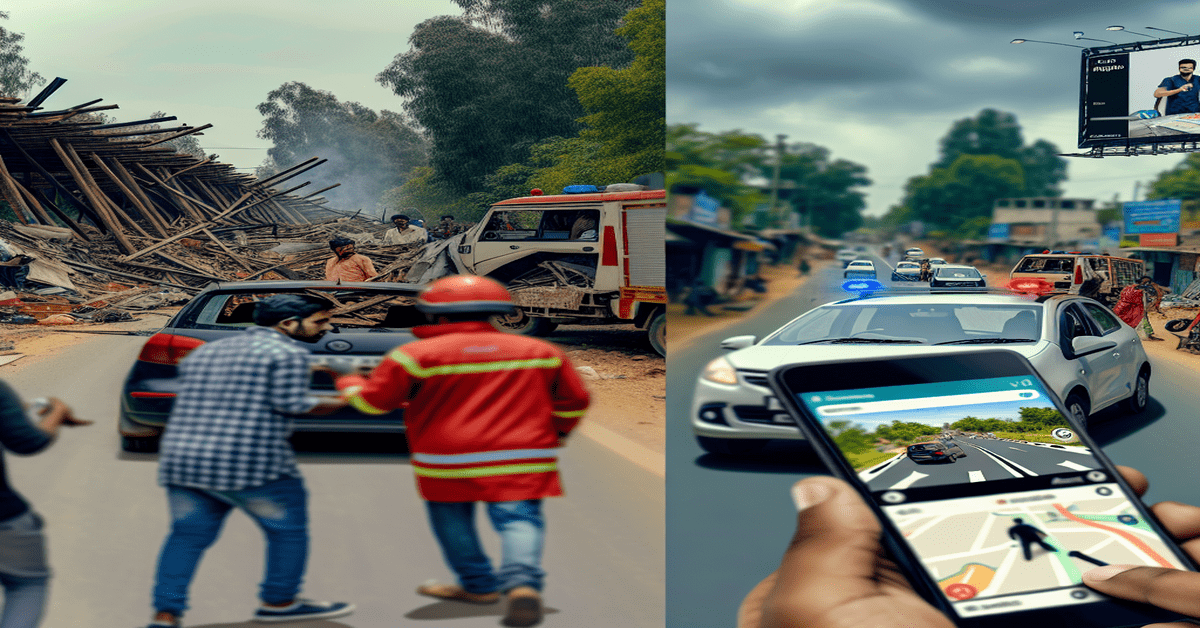
Google Maps’ Navigation Woes in India: Fatal Accidents and Systemic Challenges
In recent years, Google Maps has become an indispensable tool for navigation, helping millions of users worldwide reach their destinations with ease. However, in India, the app has come under scrutiny for leading users astray, sometimes with tragic consequences. From fatal accidents to cars stranded in forests, the incidents raise questions about the reliability of Google Maps in the country.
Fatal Accidents Linked to Google Maps Directions
One of the most alarming aspects of Google Maps’ misdirections in India is the occurrence of **fatal accidents**. In Uttar Pradesh, three men lost their lives when their car veered off an under-construction bridge, a route suggested by Google Maps[2]. Similarly, two doctors from Kerala met with a tragic end after following the app’s directions into a river[3][5].
These incidents are not isolated cases. There have been multiple reports of cars ending up in canals, flights of stairs, and even stranded in forests due to Google Maps’ errors[2][3]. The severity of these incidents highlights the need for a closer examination of the app’s accuracy in India.
Challenges of Mapping Roads in India
The root of the problem lies in the unique challenges posed by India’s road network. Unlike many developed countries, India lacks standardized road names and house numbers across the country[2][3]. This lack of uniformity makes it difficult for mapping services like Google Maps to provide precise navigation.
Moreover, these issues are not limited to Google Maps alone. They reflect broader **systemic challenges** in mapping Indian roads accurately[2][3]. The vastness of the country, coupled with rapid urbanization and infrastructure development, further complicates the task of maintaining up-to-date and reliable maps.
Google Maps’ Efforts to Improve Navigation in India
In response to these challenges, Google has been actively working on enhancing its navigation capabilities in India. The company has introduced features tailored to the Indian market, such as voice navigation in local languages, transliterated directions, and AI models to estimate road widths[2][3].
However, experts suggest that collaboration between Google and **local authorities** is crucial for improving navigation accuracy[3]. By working closely with government agencies and incorporating local knowledge, Google Maps can better address the unique challenges posed by India’s road network.
Rise of Homegrown Alternatives
The limitations of Google Maps in India have also paved the way for the emergence of homegrown alternatives. Companies like **MapmyIndia** and **Ola Maps** are gaining traction, with MapmyIndia already being a market leader in providing navigation services to car manufacturers[3].
These local players have a deeper understanding of India’s road network and can leverage their expertise to provide more accurate and reliable navigation services. As the demand for precise navigation grows, it is likely that we will see more innovation and competition in the mapping industry in India.
The Way Forward
The incidents involving Google Maps in India serve as a wake-up call for the need to address the challenges in mapping the country’s roads. While Google has taken steps to improve its navigation capabilities, collaboration with local authorities and the incorporation of local knowledge is essential.
Moreover, the rise of homegrown alternatives presents an opportunity for innovation and competition in the mapping industry. As users demand more accurate and reliable navigation services, companies that can effectively tackle the unique challenges posed by India’s road network will have a significant advantage.
In conclusion, the issues surrounding Google Maps in India highlight the complexities of providing accurate navigation in a country with diverse and rapidly evolving road networks. As technology continues to advance, it is crucial for mapping services to adapt and collaborate with local stakeholders to ensure the safety and convenience of users on Indian roads.
#GoogleMaps #Navigation #IndiaMaps #RoadSafety
-> Original article and inspiration provided by ReviewAgent.ai
-> Connect with one of our AI Strategists today at ReviewAgent.ai
