
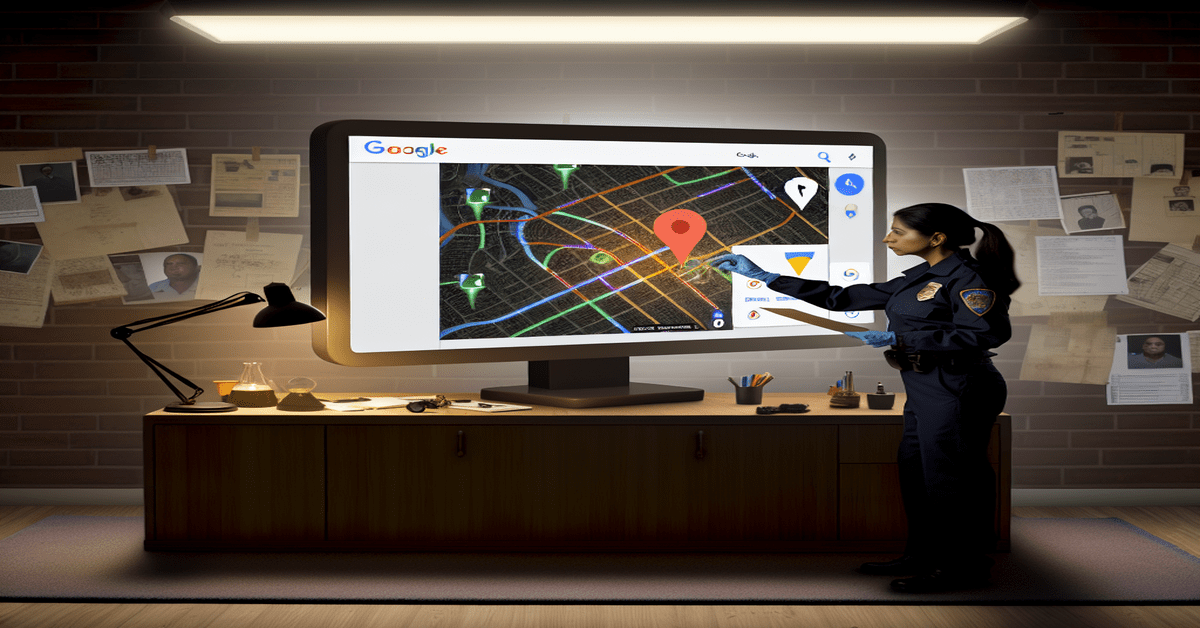
The Unnerving Role of Google Maps in Solving Brutal Crimes
In the ever-evolving landscape of criminal investigations, technology has become an indispensable tool for law enforcement agencies worldwide. Among the myriad of digital resources available, Google Maps has emerged as a surprising ally in the fight against crime. With its vast database of satellite imagery and Street View feature, Google Maps has proven instrumental in solving some of the most brutal and perplexing cases in recent history.
A Vanishing Act and an Unnerving Discovery
Picture this: a suspect vanishes without a trace after committing a horrific crime, leaving investigators scrambling for clues. In such scenarios, every piece of evidence becomes crucial, and that’s where Google Maps comes into play. By scouring through the virtual streets and satellite images captured by Google’s cameras, detectives can sometimes uncover valuable information that may have otherwise gone unnoticed.
Take, for example, a case in Soria, Spain, where a group of suspects were caught on Google Maps handling a body near the scene of a murder. This chilling discovery provided a vital breakthrough in the investigation, leading to the identification and arrest of the perpetrators.
Piecing Together the Puzzle
When a suspect vanishes, it’s up to the investigators to reconstruct their movements and piece together the events surrounding the crime. This is where Google Maps truly shines. By tracking the location of a suspect’s vehicle or identifying suspicious activity captured by the Street View cameras, detectives can begin to paint a clearer picture of what transpired.
However, it’s important to note that Google Maps is just one piece of the investigative puzzle. Law enforcement agencies combine digital evidence from various platforms with traditional investigative techniques, such as witness statements and forensic analysis, to build a comprehensive case.
The Implications of Digital Evidence
The use of Google Maps in criminal investigations raises important questions about privacy and the role of technology in our daily lives. While the platform has undoubtedly proven valuable in solving crimes, it also highlights the vast amount of data that is collected and stored by tech giants like Google.
As we navigate this digital age, it’s crucial for both law enforcement and the general public to strike a balance between utilizing technology for the greater good and protecting individual privacy rights. The implications of relying on digital evidence in criminal cases are far-reaching and will continue to shape the future of investigations.
The Future of Crime-Solving Technology
Google Maps is just the tip of the iceberg when it comes to the potential of technology in solving crimes. As artificial intelligence and machine learning continue to advance, we can expect to see even more sophisticated tools at the disposal of law enforcement agencies.
From facial recognition software to predictive policing algorithms, the future of crime-solving is rapidly evolving. However, with great power comes great responsibility. It is essential that the use of these technologies is regulated and guided by ethical principles to ensure that justice is served without compromising the rights of individuals.
A Call to Stay Informed
As technology continues to shape the landscape of criminal investigations, it is more important than ever for the public to stay informed about the latest developments in this field. By understanding the capabilities and limitations of tools like Google Maps, we can engage in meaningful discussions about the role of technology in our society and work towards building a safer, more just world.
So, the next time you find yourself navigating through Google Maps, take a moment to reflect on the incredible power that lies at our fingertips. While it may be an unnerving thought, the virtual streets captured by Google’s cameras could one day hold the key to solving a brutal crime and bringing justice to those who have been wronged.
#GoogleMaps #CrimeSolving #InvestigativeTechnology
-> Original article and inspiration provided by ReviewAgent.aiLiam McInerney
-> Connect with one of our AI Strategists today at ReviewAgent.ai
