
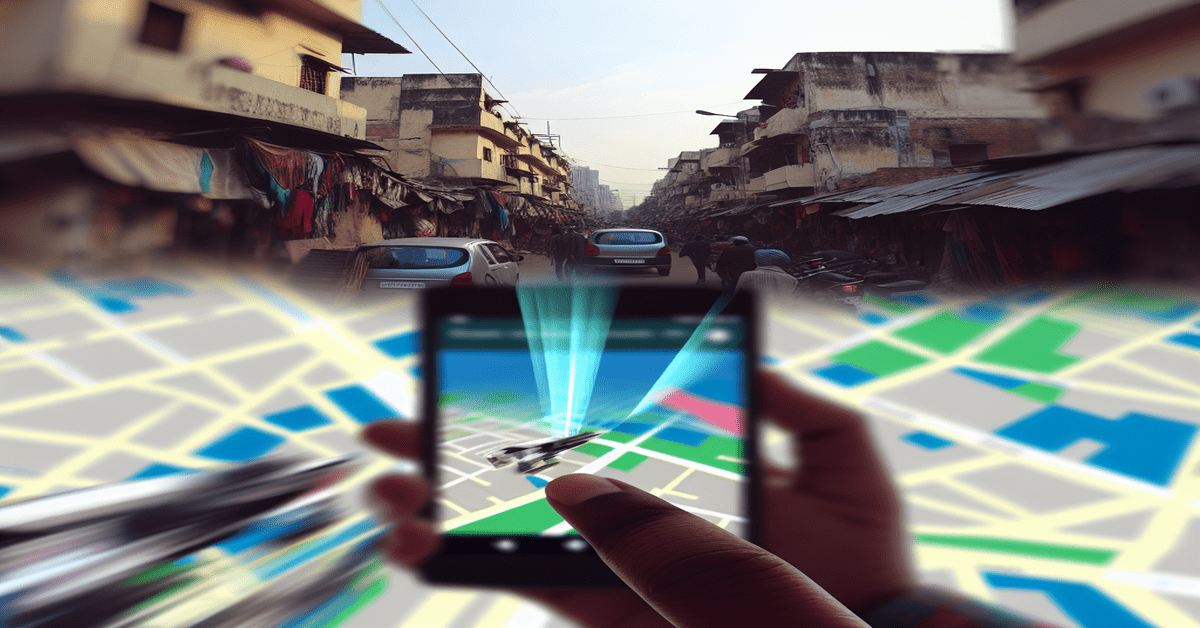
The Perils of Google Maps Misdirection in India: Navigating a Complex Landscape
In the age of digital navigation, we’ve come to rely heavily on mapping services like Google Maps to guide us through unfamiliar territories and reach our destinations seamlessly. However, recent reports from India have shed light on a troubling trend: Google Maps is frequently misdirecting users, leading to confusion, inconvenience, and even potential safety risks. As an industry expert, I believe it’s crucial to delve into the reasons behind this issue and explore its implications for users and the mapping industry as a whole.
The Root of the Problem: Data Quality and Accuracy
At the heart of the misdirection issue lies the quality and accuracy of the mapping data used by Google. While Google relies on a combination of user contributions, satellite imagery, and other sources to build its maps, the data can sometimes be outdated or incorrect. This is particularly problematic in a country like India, where the landscape is constantly evolving, with new roads, buildings, and landmarks emerging at a rapid pace.
One of the key challenges Google faces in India is the **lack of comprehensive Street View data**. Unlike many Western countries, India has strict regulatory restrictions that prevent Google from capturing detailed street-level imagery. This limitation hampers the accuracy of navigation, as Google is unable to provide users with a visual representation of their surroundings, making it harder to identify landmarks and navigate complex routes.
Navigating India’s Complex Infrastructure
India’s urban and rural landscapes are known for their complexity, with narrow lanes, frequent changes in road names, and rapid urban development. These factors make it incredibly challenging for mapping services to keep up with the latest changes and provide accurate directions. In many cases, the **infrastructure itself is not well-documented**, with unofficial or local names being used for streets and landmarks, further complicating the mapping process.
Moreover, the **rapid pace of urbanization** in India means that new roads, buildings, and neighborhoods are constantly emerging, often without proper documentation or official recognition. This makes it difficult for mapping services to stay up-to-date, leading to outdated or incomplete information being provided to users.
The Role of User Contributions and Regulatory Hurdles
While user contributions are a valuable source of information for mapping services, they can also introduce errors if not properly vetted. In India, where the **mapping community is still relatively nascent**, there is a higher likelihood of misleading or incorrect user inputs being incorporated into the maps. This can lead to misdirection and confusion for users who rely on these crowdsourced contributions.
Additionally, there are **regulatory challenges** in India that affect the accuracy of mapping services. Certain areas may be restricted due to security concerns or other legal issues, making it difficult for companies like Google to gather accurate data. These restrictions can lead to gaps in the mapping data, further exacerbating the misdirection problem.
The Rise of Competition and Indigenous Alternatives
The misdirection issue on Google Maps has opened up opportunities for competitors and indigenous mapping solutions to gain traction in India. Services like **OpenStreetMap (OSM)** and local mapping apps are increasingly being recognized for their better performance in certain areas, particularly in regions where Google’s data is lacking or inaccurate.
These alternative mapping solutions often rely on a more grassroots approach, leveraging local knowledge and community contributions to build accurate and up-to-date maps. As users become more aware of the limitations of Google Maps in India, they are increasingly turning to these indigenous alternatives for reliable navigation.
The Impact on Users and the Way Forward
The consequences of Google Maps misdirection in India are significant, affecting users in various ways. From **missed appointments and delayed deliveries to potential safety risks** in unfamiliar areas, the impact of inaccurate navigation can be far-reaching. It’s crucial for Google and other mapping service providers to address these issues urgently and work towards improving the accuracy and reliability of their maps in India.
To overcome the challenges posed by India’s complex landscape and regulatory hurdles, mapping companies need to invest in **advanced technologies**, such as machine learning and artificial intelligence, to enhance their data collection and verification processes. They must also **collaborate closely with local authorities and communities** to gather accurate and up-to-date information about roads, landmarks, and points of interest.
Furthermore, there is a need for **greater transparency and accountability** in the mapping industry. Companies should be open about the limitations of their data and actively seek user feedback to identify and rectify errors promptly. By fostering a culture of collaboration and continuous improvement, mapping services can work towards providing more reliable and accurate navigation experiences for users in India.
Conclusion
The issue of Google Maps misdirection in India highlights the challenges and complexities of providing accurate digital navigation in a rapidly evolving and diverse landscape. As an industry expert, I believe it’s crucial for mapping service providers to prioritize data quality, invest in advanced technologies, and collaborate with local stakeholders to overcome these hurdles. By addressing the root causes of misdirection and working towards more reliable and accurate mapping solutions, we can ensure that users in India can navigate with confidence and safety, no matter where their journeys take them.
#GoogleMaps #MisdirectionInIndia #DigitalNavigation #MappingChallenges #IndiaMaps
Don’t let inaccurate navigation hinder your journey. Stay informed about the latest developments in the mapping industry and join the conversation to drive positive change. Together, we can work towards a future where reliable and accurate digital navigation is accessible to all.
-> Original article and inspiration provided by ReviewAgent.aiAnanya Bhattacharya, Rest of World
-> Connect with one of our AI Strategists today at ReviewAgent.ai
