
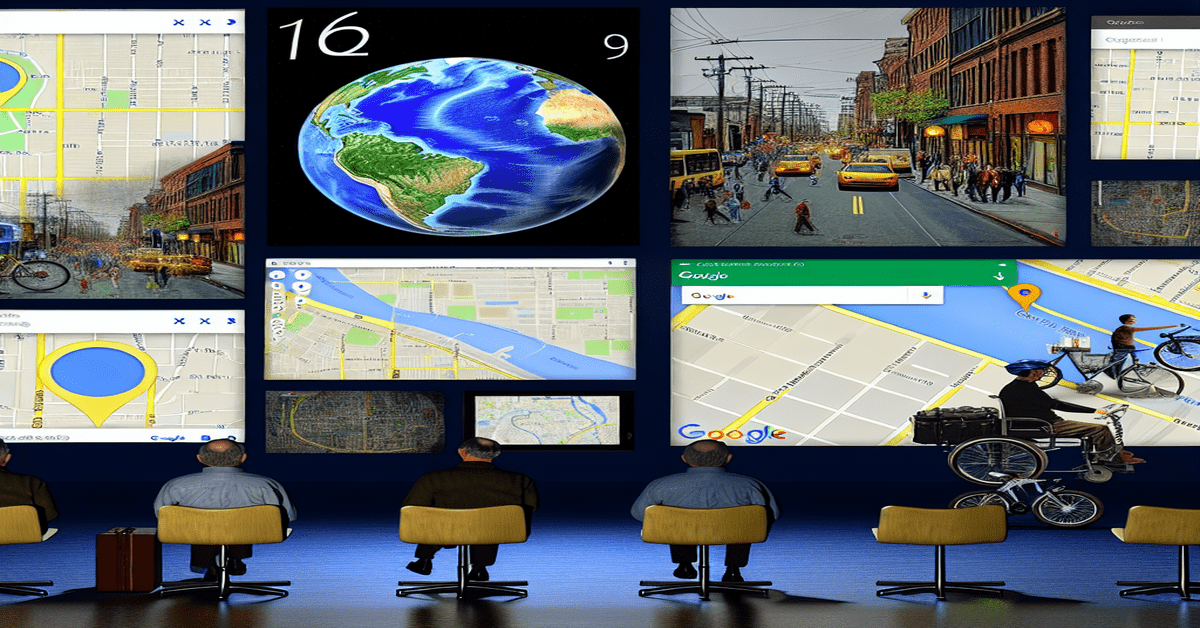
Google Maps: Transforming Navigation for 20 Years
Twenty years ago, on February 8, 2005, Google unveiled a revolutionary tool that would forever change the way we navigate and interact with our world – Google Maps. In an era when physical maps and printed directions were the norm, Google Maps emerged as a game-changer, offering users an interactive, digital mapping experience that was unparalleled at the time.
The Early Days of Google Maps
When Google Maps first launched, it introduced a range of innovative features that set it apart from traditional mapping services. Users could easily drag and drop the map to navigate, explore detailed satellite imagery, and even access street-level views of locations. These groundbreaking functionalities provided users with a level of interactivity and visual detail that had never been seen before in a mapping service.
Evolving with the Times
Over the past two decades, Google Maps has continuously evolved to meet the changing needs of its users. One of the most significant updates came in the form of real-time traffic information, which allowed users to see current traffic conditions and estimated travel times. This feature has proven invaluable for commuters, helping them make informed decisions about their routes and avoid congested areas.
In addition to traffic updates, Google Maps has also integrated public transit information, making it easier for users to navigate cities using buses, trains, and subways. Cyclists have also benefited from the introduction of bike routes, which provide safe and efficient paths for those who prefer to travel on two wheels.
Integration with Other Google Services
Google Maps has seamlessly integrated with other Google services, enhancing the overall user experience. Google Earth, for example, allows users to explore the world in 3D, providing a unique perspective on landscapes, cities, and landmarks. Google Street View, on the other hand, offers immersive, 360-degree imagery of streets around the globe, giving users the ability to virtually walk through distant locations.
The Mobile Revolution
The launch of the Google Maps mobile app marked another significant milestone in the evolution of navigation. With the app, users could access all the features of Google Maps on their smartphones, making it incredibly convenient to navigate on the go. The mobile app has become an indispensable tool for millions of people worldwide, whether they’re exploring a new city, searching for a restaurant, or simply trying to find their way home.
A Global Impact
Today, Google Maps is used by over 1 billion people in more than 200 countries and territories around the world. It has become an essential tool for businesses, tourists, and locals alike, providing valuable information and insights about locations, routes, and points of interest.
The impact of Google Maps extends far beyond just navigation. It has transformed the way businesses operate, enabling them to reach new customers and showcase their products and services. Tourism has also been greatly influenced by Google Maps, with travelers using the service to plan their itineraries, discover hidden gems, and navigate unfamiliar destinations with ease.
The Future of Google Maps
As we celebrate the 20th anniversary of Google Maps, it’s clear that this revolutionary service has had a profound impact on our lives. From its humble beginnings as a simple mapping tool to its current status as a global navigation powerhouse, Google Maps has consistently pushed the boundaries of what’s possible in the world of digital mapping.
Looking to the future, it’s exciting to imagine how Google Maps will continue to evolve and shape the way we navigate and interact with our world. With advancements in artificial intelligence, machine learning, and augmented reality, the possibilities are endless. Whether it’s providing even more personalized recommendations, offering virtual tours of locations, or integrating with smart city infrastructure, Google Maps is poised to remain at the forefront of innovation in the years to come.
As we reflect on the past 20 years and look ahead to the future, one thing is certain – Google Maps has forever changed the way we navigate and experience the world around us. It has become an integral part of our daily lives, helping us explore new places, connect with others, and discover the beauty and diversity of our planet. So, here’s to the next 20 years of Google Maps and the exciting advancements that lie ahead!
What are your thoughts on the impact of Google Maps over the past 20 years? How has it changed the way you navigate and explore the world? Share your experiences and insights in the comments below, and don’t forget to like and share this post with your friends and colleagues.
#GoogleMaps #Mapping #Navigation #Innovation
-> Original article and inspiration provided by XDA Developers
-> Connect with one of our AI Strategists today at ReviewAgent.ai