
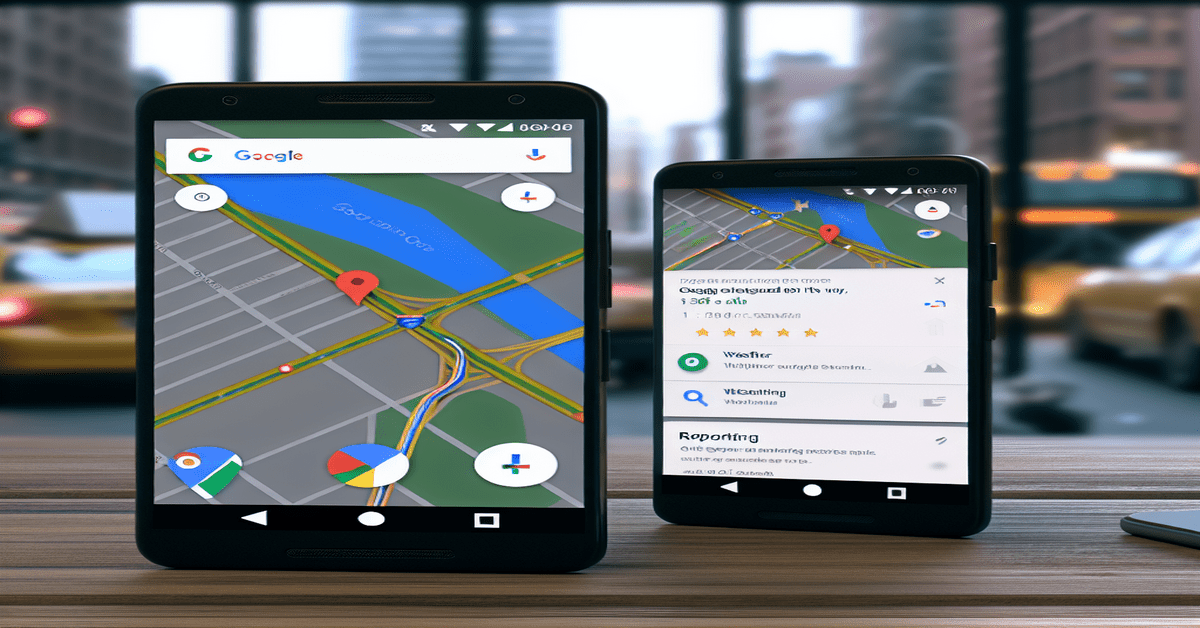
Google Maps Evolves: Embracing Community-Driven Navigation for Enhanced User Experience
In the ever-evolving world of navigation apps, Google Maps has long been a go-to choice for many users. However, with the rise of community-driven apps like Waze, which was acquired by Google in 2013, the competition has become fiercer than ever. In a bid to stay ahead of the curve and provide users with the best possible experience, Google has recently introduced a series of updates to Google Maps that aim to incorporate some of the most beloved features of Waze.
Real-Time Reporting: Putting the Power in Users’ Hands
One of the most significant updates to Google Maps is the introduction of real-time reporting features. Users can now actively contribute to the app by reporting traffic incidents, road closures, and other hazards they encounter during their journeys. This **crowdsourced** information is then used to update the app in real-time, providing other users with the most accurate and up-to-date information possible.
This feature is reminiscent of Waze’s community-driven reporting system, which has been a key factor in its popularity. By allowing users to actively participate in the app’s functionality, Google Maps is not only enhancing its accuracy but also fostering a sense of community among its user base.
Detailed Contributions: Every Bit of Information Counts
In addition to reporting incidents, users can now provide more detailed information about traffic conditions, accidents, and roadwork directly within the Google Maps app. This granular data is invaluable in improving the app’s traffic predictions and routing algorithms.
For instance, if a user reports that a particular stretch of road is experiencing heavy congestion due to construction work, Google Maps can use this information to suggest alternative routes to other users, helping them avoid delays and reach their destinations more efficiently.
Smarter Navigation: Getting You There Faster and Safer
The recent updates to Google Maps also include enhancements to its navigation features. Users can now expect more precise traffic estimates and intelligent alternative route suggestions based on real-time data.
This means that if an accident or road closure occurs along your planned route, Google Maps will promptly notify you and suggest the best alternative path to take. By leveraging the power of **real-time data** and advanced algorithms, Google Maps is ensuring that users always have access to the most efficient and safe navigation options.
Integration with Google Ecosystem: A Seamless User Experience
The recent updates to Google Maps are not just about incorporating Waze-like features; they are also part of a broader strategy to integrate the app more seamlessly with other Google services. By doing so, Google aims to create a more cohesive and convenient user experience across its ecosystem.
For example, Google Maps can now better integrate with Google Calendar, automatically adding your upcoming appointments and events to your navigation feed. This means that you’ll receive timely reminders and traffic updates based on your schedule, ensuring that you never miss an important meeting or event due to unexpected delays.
The Future of Navigation: Community-Driven and Data-Powered
As Google Maps continues to evolve and incorporate more community-driven features, it is clear that the future of navigation lies in the power of crowdsourced data and user participation. By leveraging the strengths of Waze and combining them with its own robust platform, Google is positioning itself at the forefront of this trend.
Moreover, the integration of Google Maps with other Google services hints at a future where navigation is not just about getting from point A to point B, but rather an integral part of our daily lives. As our devices become more interconnected and intelligent, apps like Google Maps will play an increasingly crucial role in helping us navigate not just the roads, but also our schedules and routines.
Conclusion: Embracing Change for a Better Tomorrow
The recent updates to Google Maps are a testament to the company’s commitment to innovation and user satisfaction. By incorporating community-driven features and leveraging the power of real-time data, Google is ensuring that its users always have access to the most accurate and efficient navigation tools.
As we move forward into an increasingly connected and data-driven world, it is clear that apps like Google Maps will continue to evolve and adapt to meet the changing needs of their users. By embracing these changes and actively participating in the app’s functionality, we can all contribute to a future where navigation is not just a tool, but a collaborative effort towards a safer, more efficient, and more enjoyable journey.
#GoogleMaps #CommunityDriven #RealTimeNavigation #WazeFeatures #SmartNavigation
-> Original article and inspiration provided by Matt Jancer at Vice
-> Connect with one of our AI Strategists today at ReviewAgent.ai
