
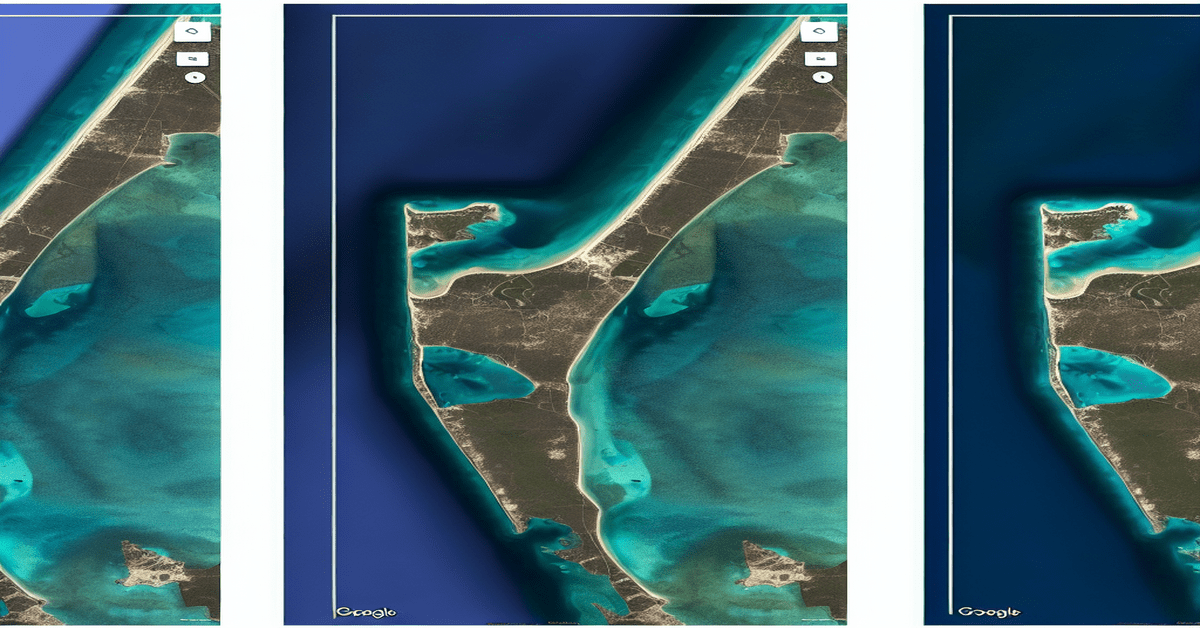
Google Maps Reigns Supreme in Depicting the Gulf of Mexico
In the ever-evolving world of digital mapping, three tech giants – Google, Apple, and Microsoft – are constantly vying for dominance. While each platform has its strengths, a recent revelation has highlighted a significant difference in how they represent the Gulf of Mexico. According to a CNET article, Google Maps emerges as the clear winner when it comes to providing a more detailed and accurate depiction of this vast body of water.
The Gulf of Mexico: A Tale of Three Maps
At first glance, the differences between Google Maps, Apple Maps, and Microsoft’s Bing Maps may seem subtle. However, upon closer inspection, it becomes evident that Google’s representation of the Gulf of Mexico is far more comprehensive. From **precise coastlines** to meticulously mapped islands and underwater features, Google Maps offers users an unparalleled level of detail.
In contrast, Apple Maps and Bing Maps present a more simplified version of the Gulf. While they capture the general outline of the coastline, they lack the intricacies that make Google’s offering stand out. For users who require accurate geographical information, such as sailors, fishermen, or researchers, this disparity can have significant implications.
The Power of Data: Google’s Secret Weapon
So, what sets Google Maps apart from its competitors? The answer lies in the company’s approach to data collection and integration. Google has long been known for its commitment to gathering and leveraging vast amounts of information to enhance its products. In the case of mapping, this translates to a multi-faceted strategy that combines **satellite imagery**, user contributions, and partnerships with various organizations.
By tapping into a diverse range of data sources, Google can continuously refine and update its maps, ensuring that users have access to the most accurate information available. This dedication to detail is particularly evident in the Gulf of Mexico, where Google’s maps showcase a level of precision that its rivals have yet to match.
User Experience: The Importance of Accurate Mapping
The implications of these mapping differences extend far beyond mere aesthetics. For individuals and industries that rely on precise geographical data, the choice between Google Maps and its competitors can have real-world consequences.
Consider, for example, a sailor navigating the Gulf of Mexico. With Google Maps, they can confidently chart their course, knowing that the platform provides a reliable representation of the coastline, islands, and underwater hazards. In contrast, relying on a less detailed map could lead to navigation errors or even safety concerns.
Similarly, for businesses operating in the region, such as oil and gas companies or tourism operators, having access to accurate mapping data is crucial. Google Maps empowers these organizations to make informed decisions, optimize their operations, and provide better services to their customers.
The Future of Mapping: Continuous Improvement
While Google Maps currently holds the advantage in representing the Gulf of Mexico, it’s important to recognize that the world of digital mapping is constantly evolving. Apple and Microsoft are undoubtedly aware of the gap and are likely working to enhance their offerings.
As new technologies emerge and data collection methods improve, we can expect to see even more detailed and accurate maps in the future. However, for now, Google’s commitment to leveraging cutting-edge technology and vast data resources has given it a significant competitive edge.
The Bottom Line: Choose Your Map Wisely
In conclusion, the CNET article serves as a reminder that not all mapping platforms are created equal. When it comes to the Gulf of Mexico, Google Maps stands head and shoulders above its competitors, providing users with an unrivaled level of detail and accuracy.
For anyone who relies on precise geographical information in this region, whether for personal or professional purposes, Google Maps is the clear choice. Its commitment to leveraging data and technology has resulted in a product that is not only visually impressive but also functionally superior.
As we move forward, it will be fascinating to see how Apple, Microsoft, and other players in the mapping industry respond to Google’s dominance. Will they be able to close the gap and provide users with equally detailed representations of the Gulf of Mexico? Only time will tell.
In the meantime, if you find yourself in need of reliable mapping data for the Gulf region, you can trust Google Maps to guide you in the right direction. And if you’re curious to learn more about the differences between these mapping platforms, be sure to check out the original CNET article for a deeper dive into this fascinating topic.
#GoogleMaps #GulfofMexico #MappingTechnology
-> Original article and inspiration provided by CNET
-> Connect with one of our AI Strategists today at ReviewAgent.ai