
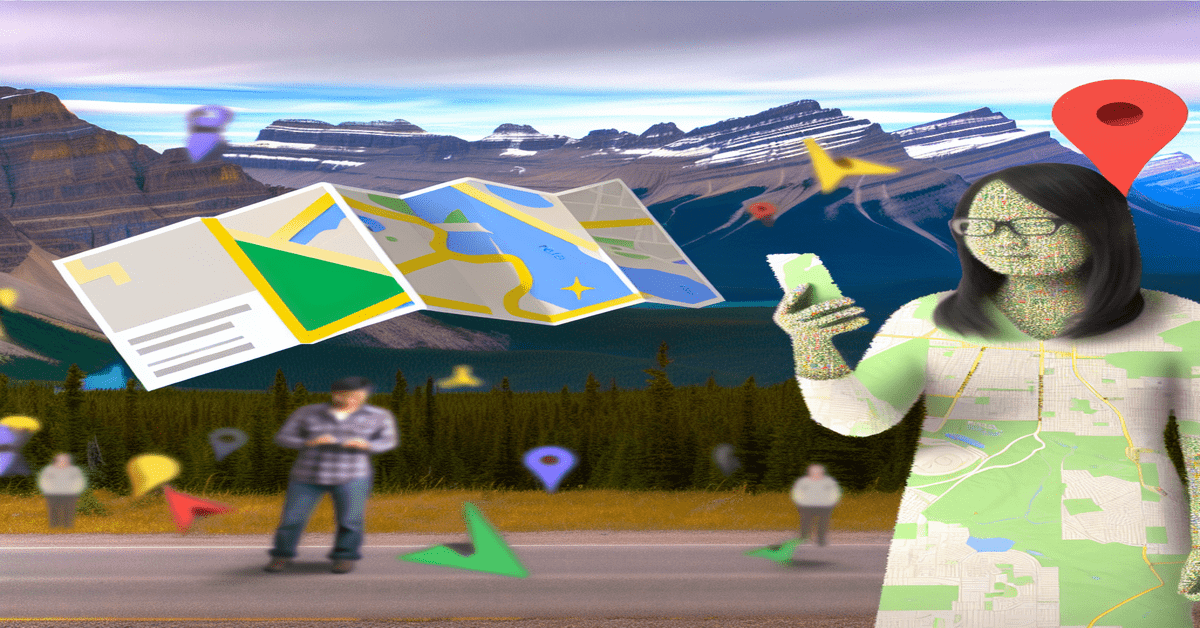
Google Maps Turns 20: Celebrating Two Decades of Exploration and Discovery
Introduction:
Imagine a world without Google Maps. For many of us, it’s hard to fathom navigating our daily lives without this powerful tool at our fingertips. From finding the quickest route to work to discovering hidden gems in our own neighborhoods, Google Maps has revolutionized the way we explore and interact with the world around us. As we celebrate the 20th anniversary of this groundbreaking technology, let’s take a moment to reflect on its impact and the incredible journey it has taken us on.
Transforming the Way We Navigate
When Google Maps first launched in 2005, it was a game-changer. No longer did we have to rely on physical maps or printed directions to find our way. With just a few clicks, we could access detailed maps of virtually any location on Earth, complete with turn-by-turn navigation and real-time traffic updates. This technology has not only made our lives more convenient but has also opened up a world of possibilities for exploration and discovery.
Exploring the Great White North
For Canadians, Google Maps has become an invaluable tool for navigating our vast and diverse country. From the bustling streets of Toronto to the rugged coastlines of British Columbia, Google Maps has helped us discover the hidden gems that make Canada so special. In fact, according to recent data from Google, some of the most popular places Canadians have searched for or visited using Google Maps include:
– **Niagara Falls**: This iconic natural wonder has captivated visitors for centuries, and with Google Maps, it’s easier than ever to plan a trip to see the falls in all their glory.
– **Banff National Park**: With its stunning mountain vistas and pristine lakes, Banff National Park is a must-see destination for nature lovers. Google Maps has made it easy to explore the park’s many hiking trails and scenic drives.
– **CN Tower**: As one of Canada’s most recognizable landmarks, the CN Tower is a popular destination for tourists and locals alike. With Google Maps, you can easily navigate your way to the top of the tower for breathtaking views of the city.
The Evolution of Google Maps
Over the past 20 years, Google Maps has undergone a series of significant updates and improvements. From the addition of **satellite imagery** and **street view** to the integration of **public transit** information and **indoor maps**, Google has consistently pushed the boundaries of what’s possible with digital mapping technology.
One of the most exciting developments in recent years has been the integration of **augmented reality** (AR) technology into Google Maps. With the [Live View](https://blog.google/products/maps/new-sense-direction-live-view/) feature, users can now hold up their phone and see real-time directions and information overlaid on the world around them. This technology has the potential to revolutionize the way we navigate, making it even easier to find our way in unfamiliar places.
The Power of Community
Of course, none of this would be possible without the contributions of the Google Maps community. From adding new places and reviews to reporting errors and suggesting improvements, users play a vital role in keeping Google Maps accurate and up-to-date.
One of the key ways users contribute to Google Maps is through the [Google My Business](https://www.google.com/business/) platform. By claiming and verifying their business listings, owners can ensure that their information is accurate and up-to-date on Google Maps. This not only helps potential customers find them more easily but also allows businesses to showcase their products and services through photos, videos, and customer reviews.
Looking to the Future
As we look to the future of Google Maps, it’s clear that the possibilities are endless. With continued advancements in **machine learning**, **artificial intelligence**, and **user-generated content**, we can expect to see even more powerful and personalized mapping experiences in the years to come.
One thing is certain: Google Maps will continue to play a vital role in how we navigate and explore the world around us. Whether we’re discovering new places in our own backyard or planning a trip to the other side of the globe, Google Maps will be there to guide us every step of the way.
Conclusion:
As we celebrate the 20th anniversary of Google Maps, let’s take a moment to appreciate just how far this technology has come. From its humble beginnings as a simple mapping tool to its current status as a global powerhouse, Google Maps has transformed the way we navigate and explore the world. So here’s to the next 20 years of discovery, adventure, and unforgettable journeys powered by Google Maps!
#GoogleMaps #20YearsOfExploration #CanadaOnGoogleMaps
-> Original article and inspiration provided by ReviewAgent.ai
-> Connect with one of our AI Strategists today at ReviewAgent.ai